The Berber tradition is deeply rooted in the cultural heritage of North Africa and the Middle East, where weaving has long been an essential domestic craft. While often associated with nomadic tribes, these rugs have evolved over centuries, spreading across various regions and adapting to local aesthetics. The rugs produced in Afghanistan today continue this legacy, blending ancient techniques with a vibrant, modern sensibility that appeals to global collectors.
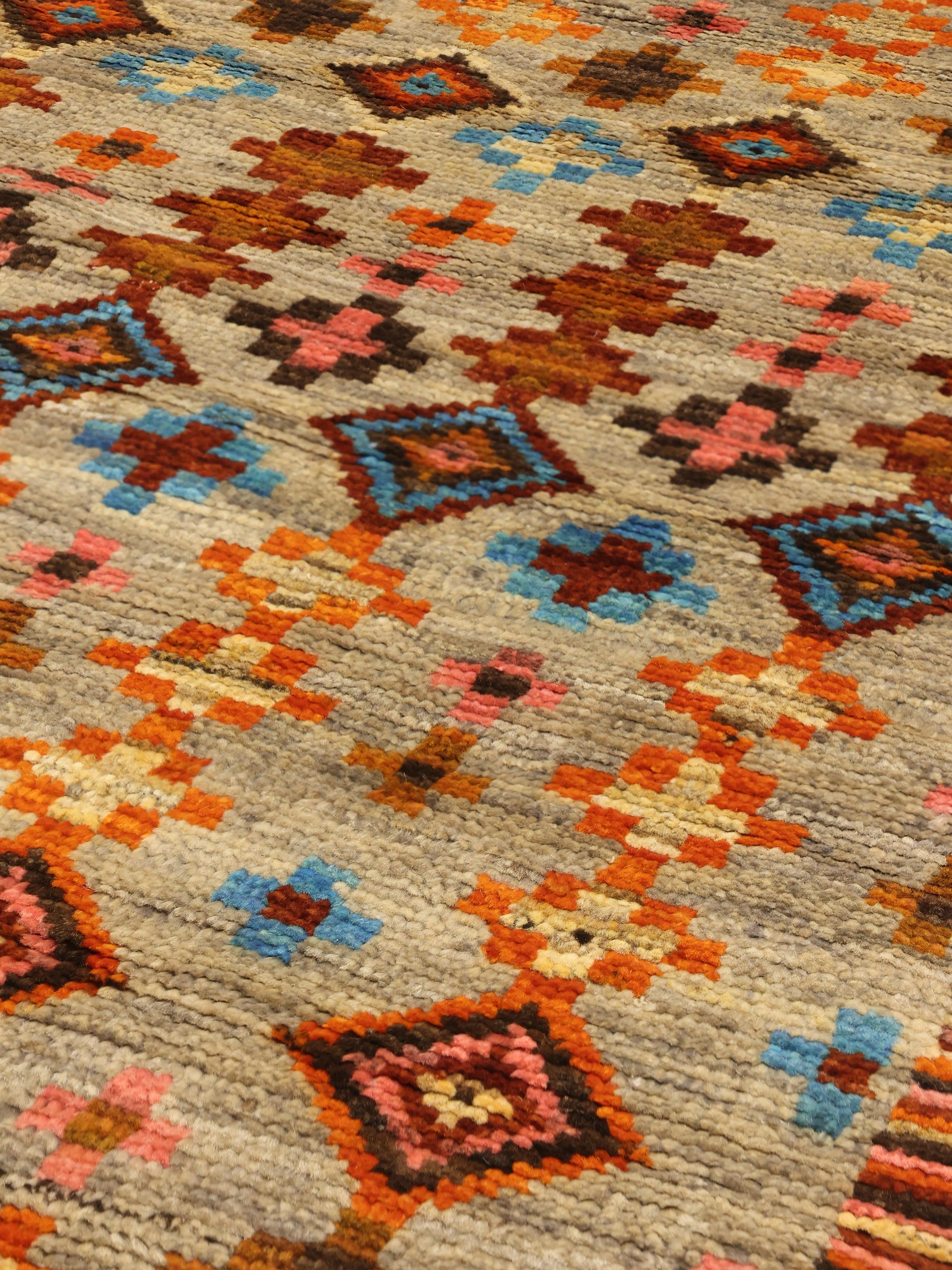
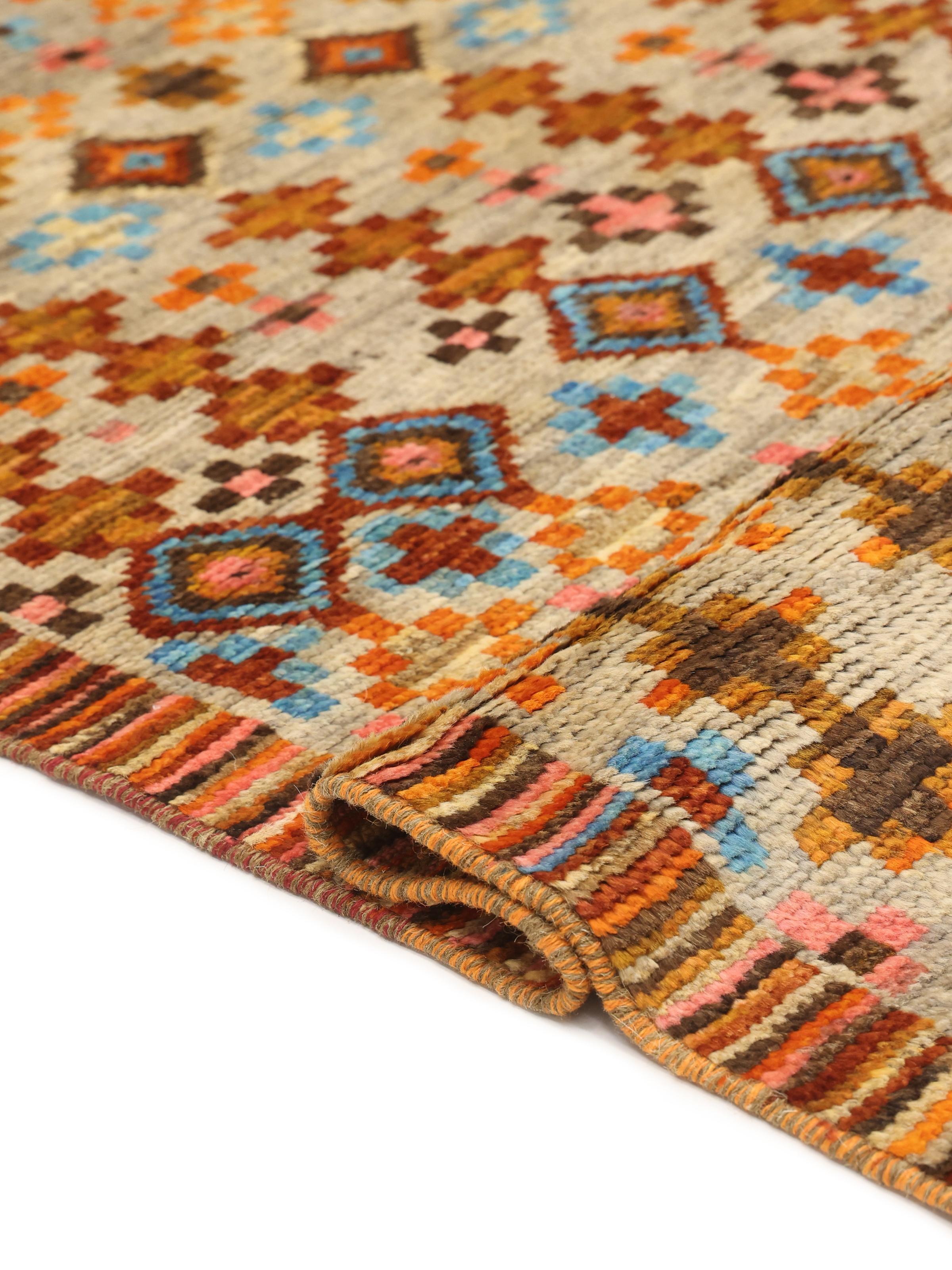
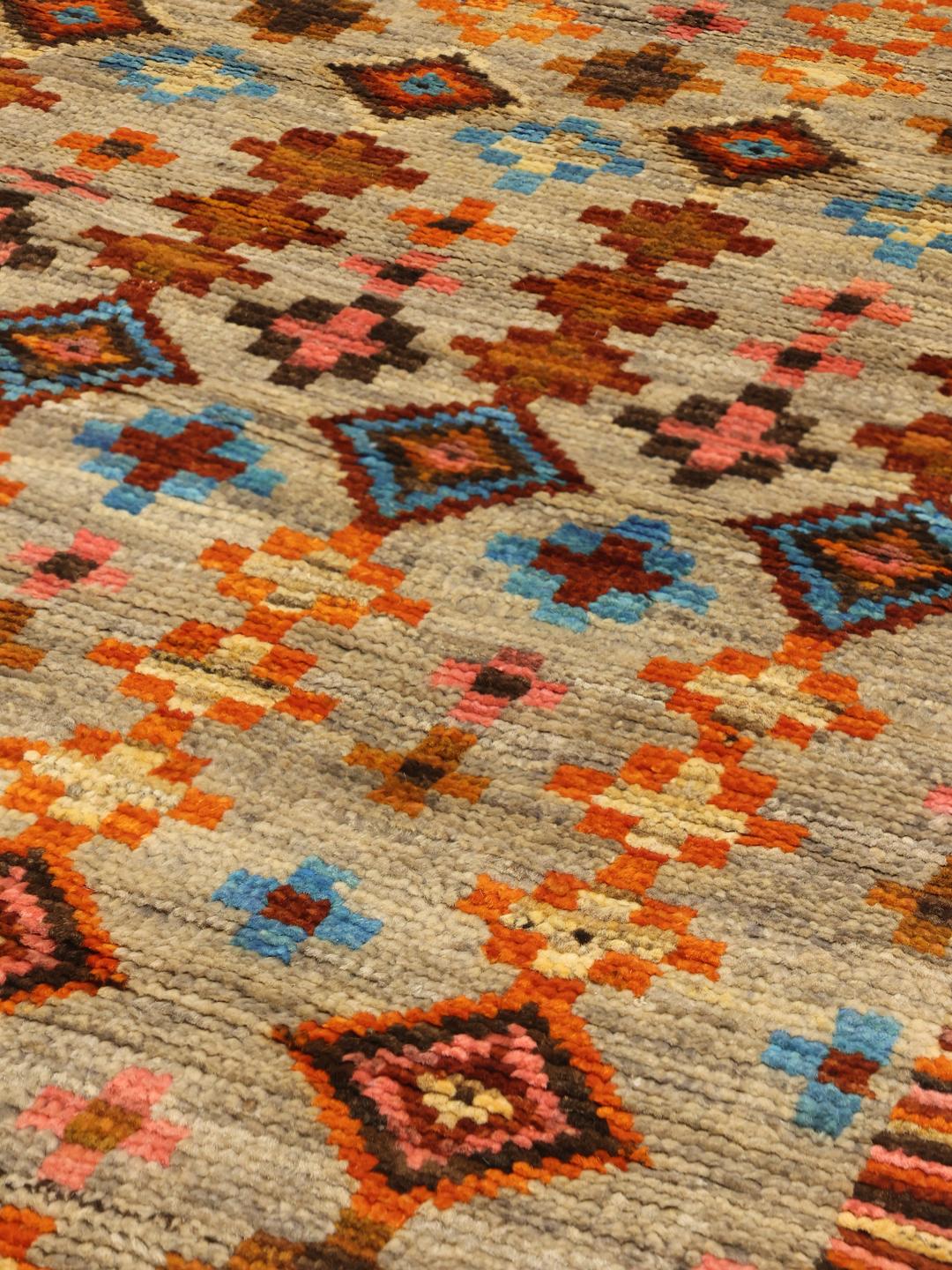
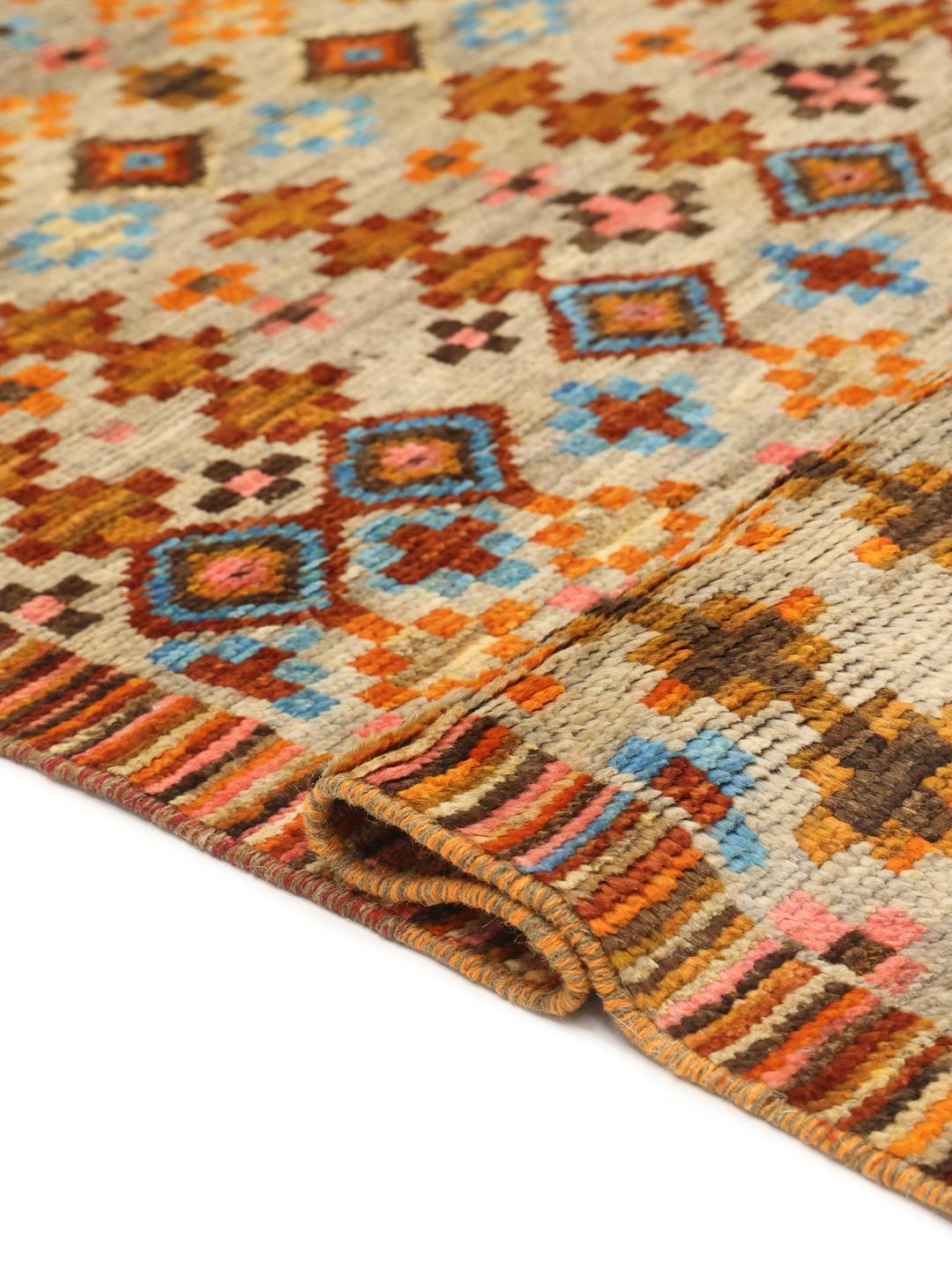
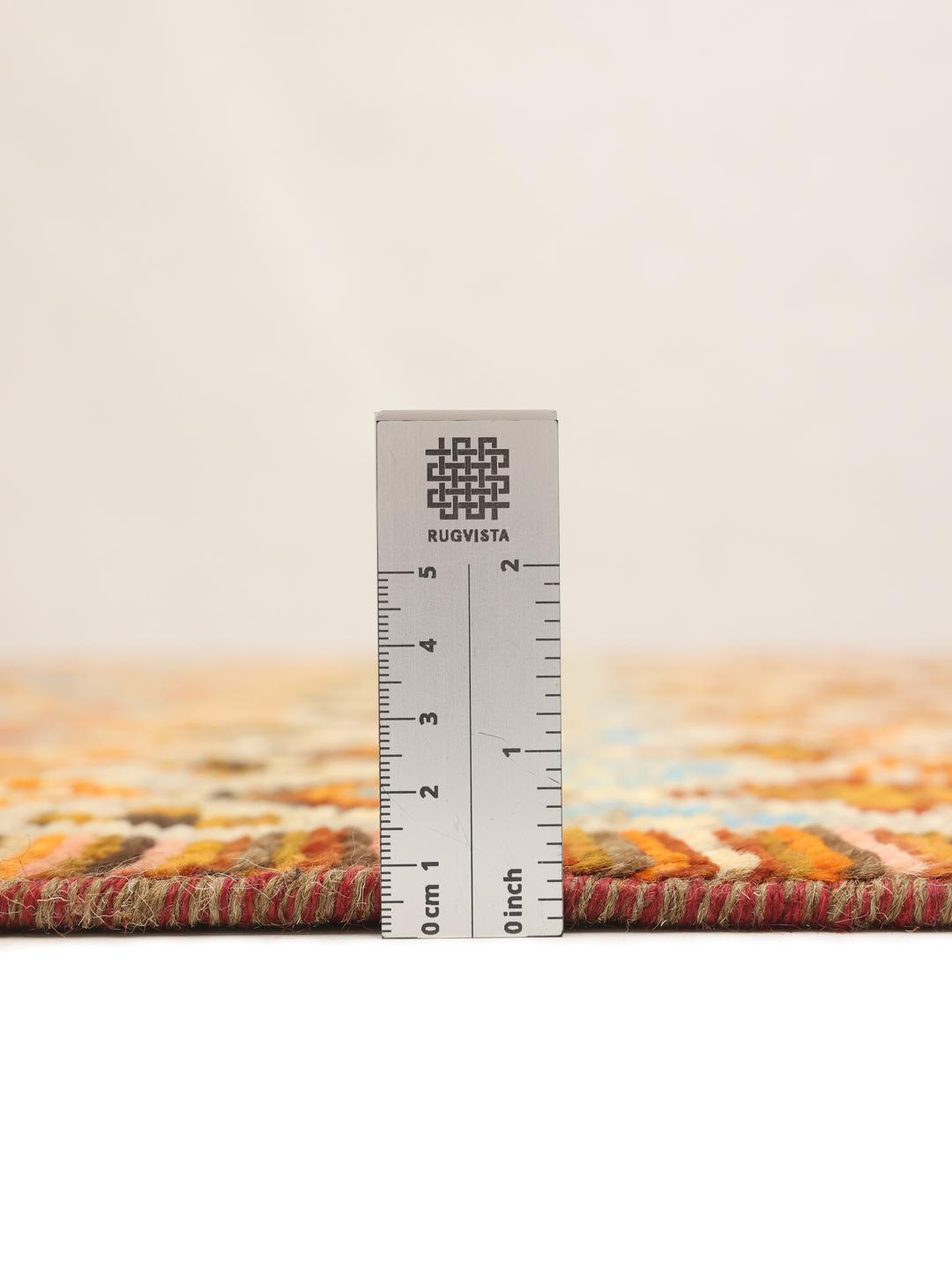
In the world of hand-knotted rugs, the quality is often defined by the precision of the weave and the quality of the Wool used. The term hand-knotted refers to the process where individual strands of Wool are wrapped around the foundation threads, creating a dense and durable pile. This method is highly valued because it allows for intricate pattern work and ensures that the rug is strong enough to withstand generations of daily wear.
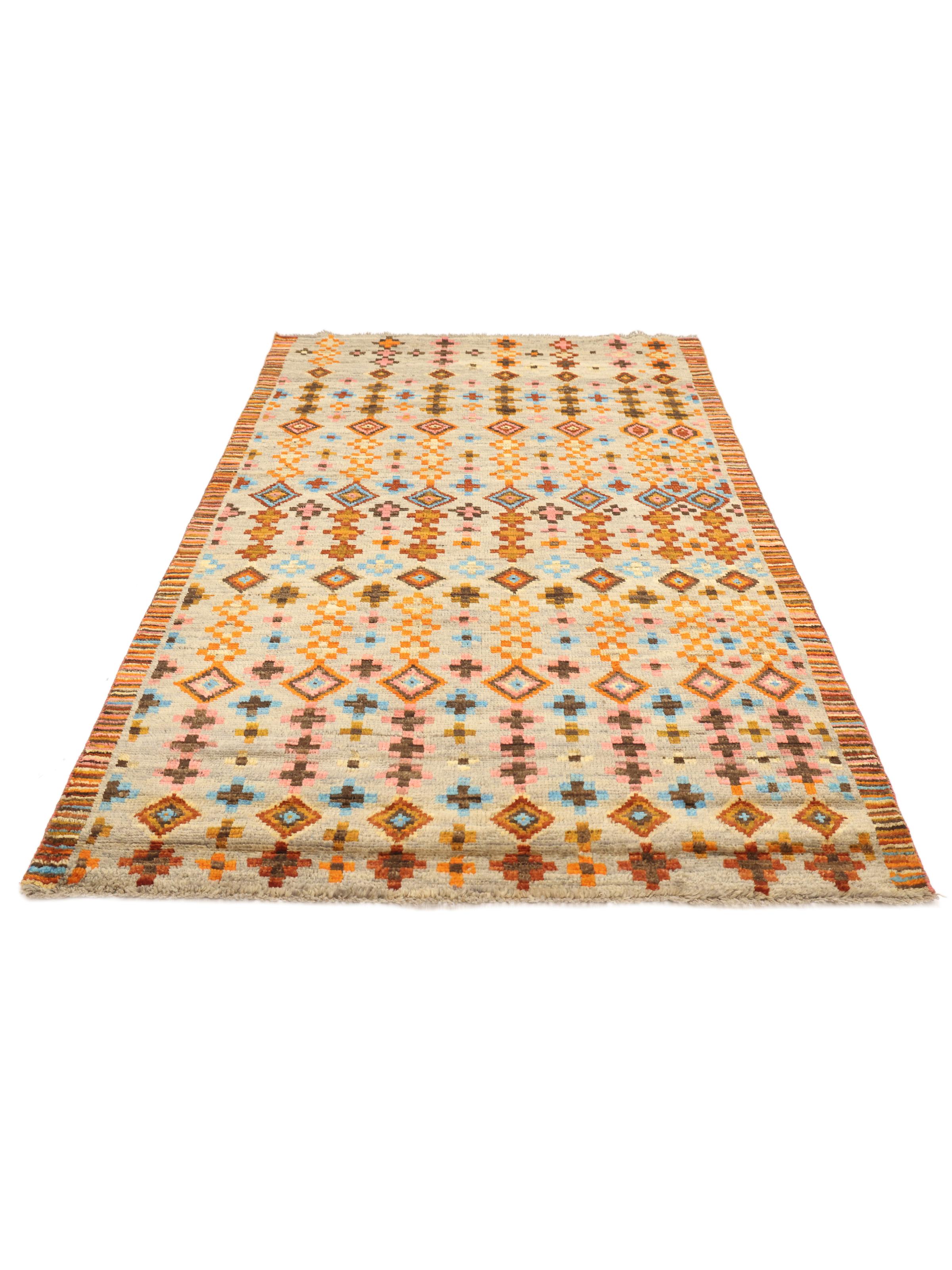
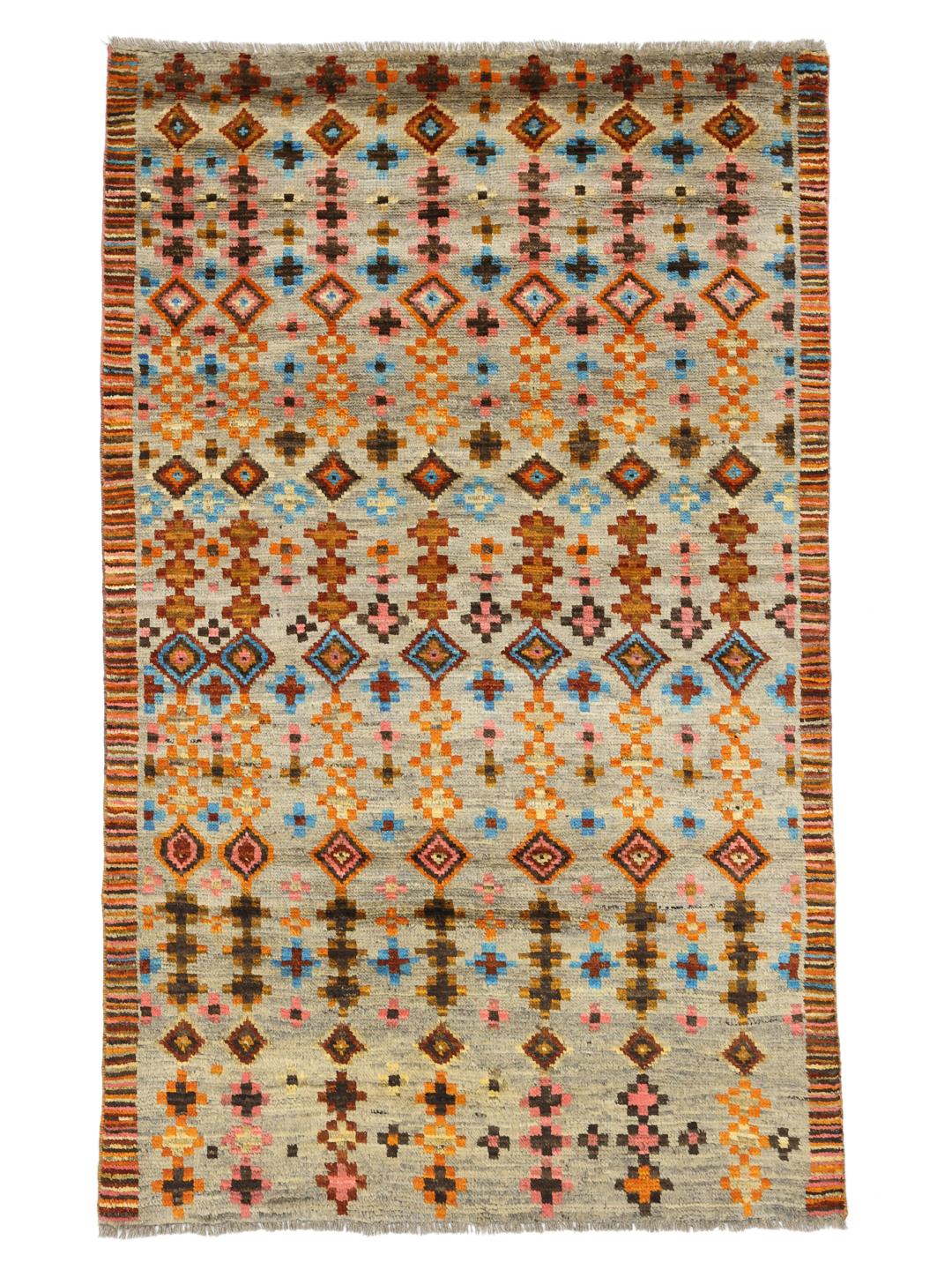
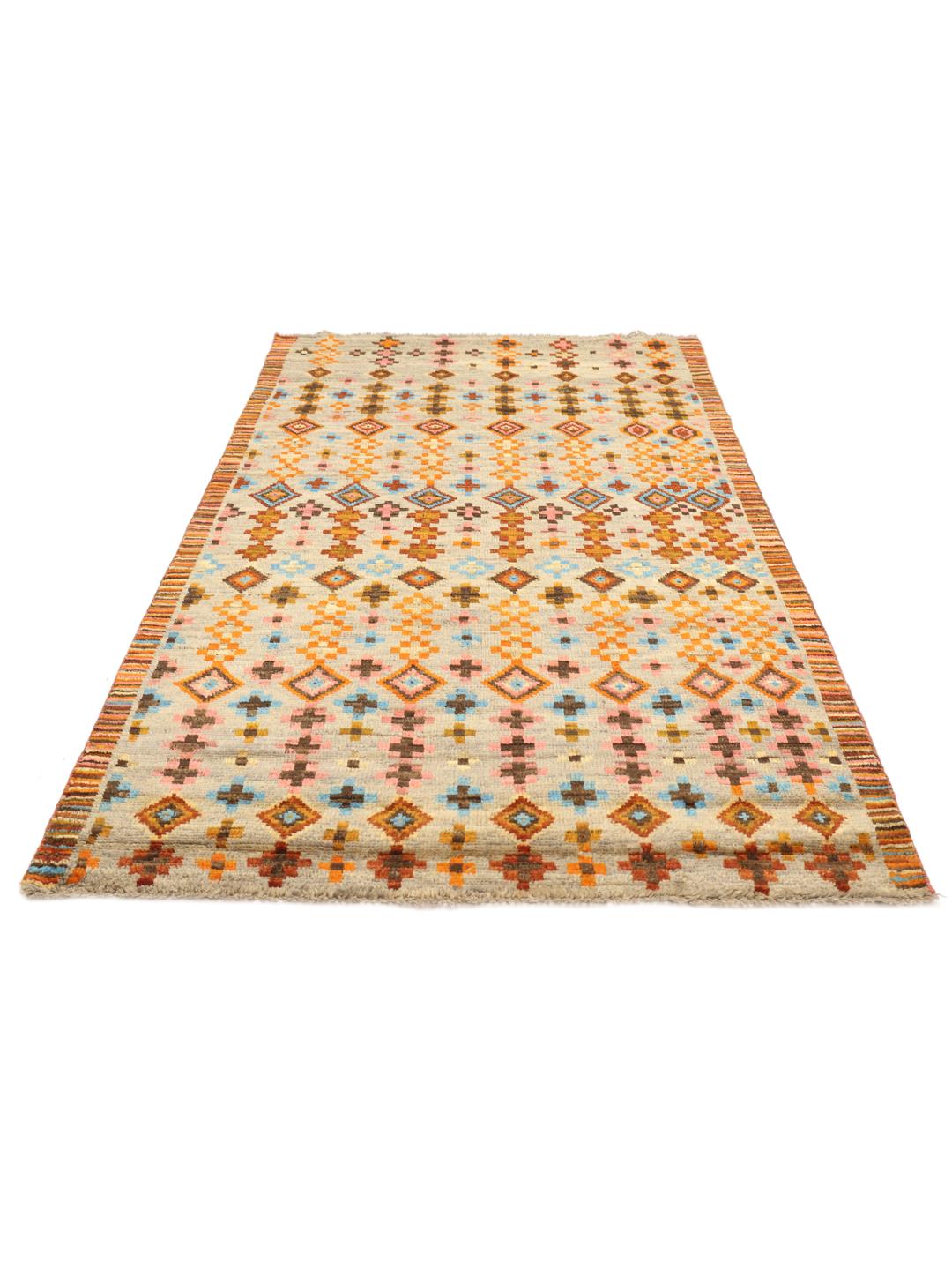
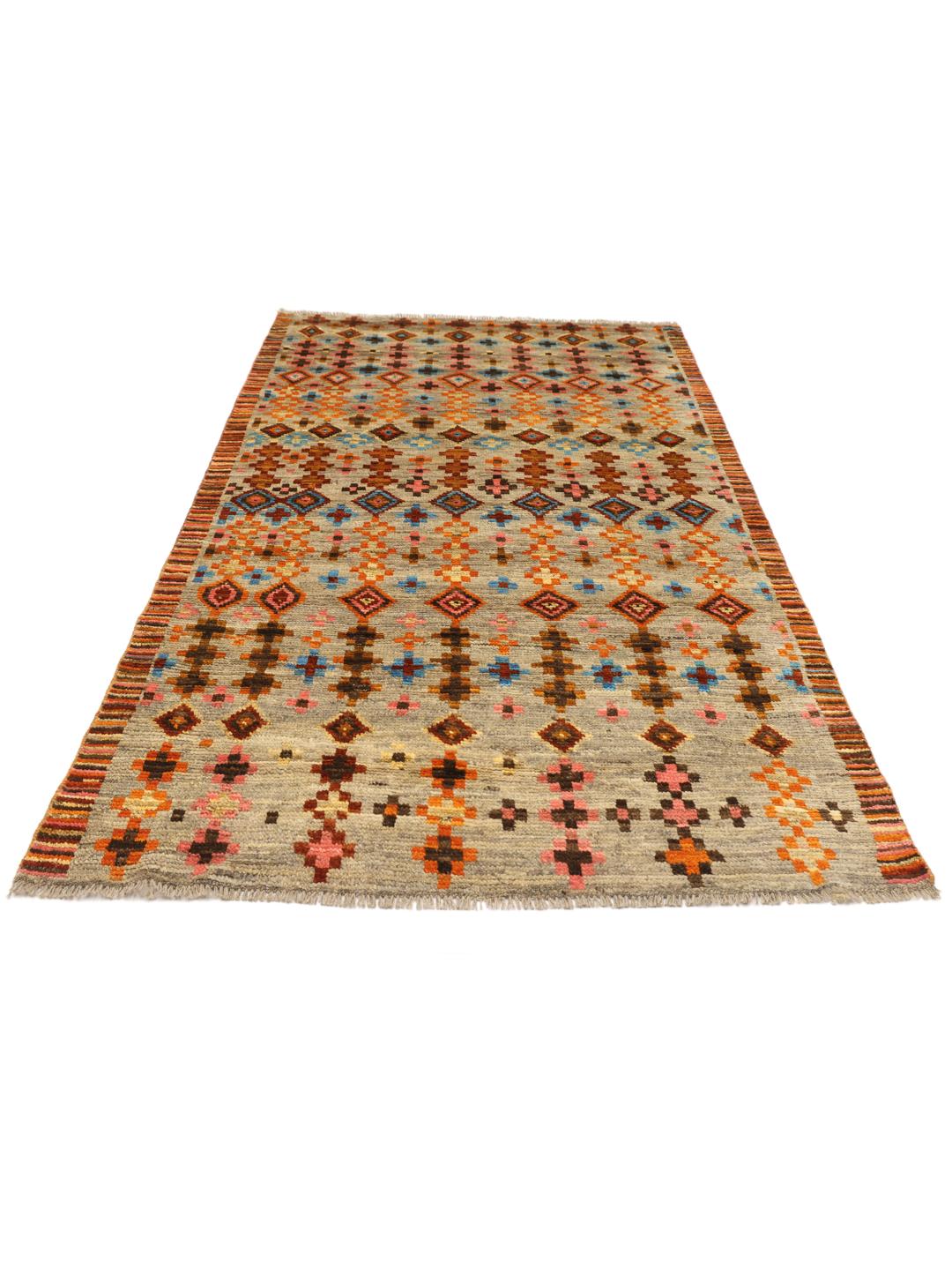
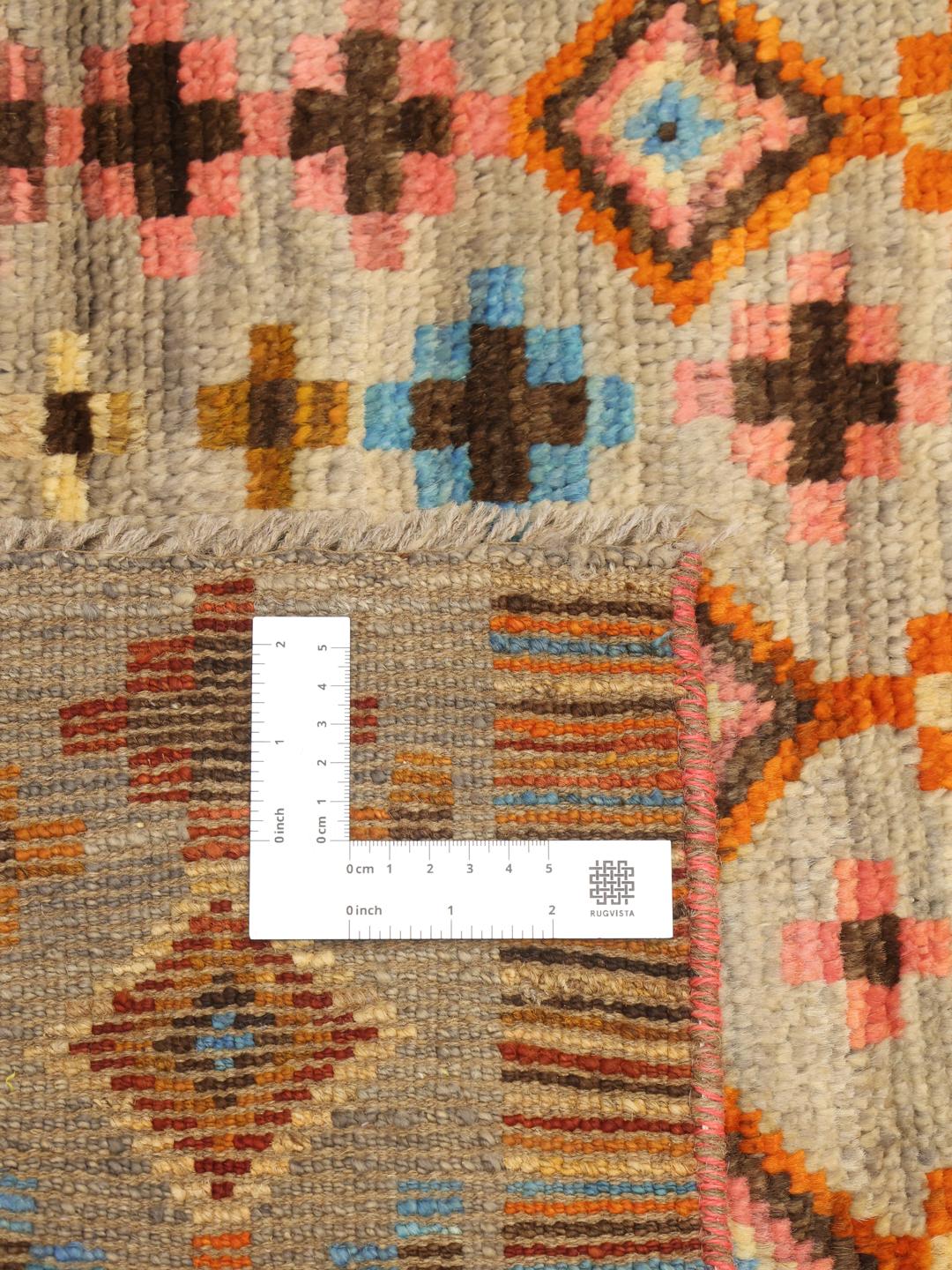
The design language of this rug is characterised by its geometric motifs, which often hold symbolic meaning within their culture of origin. These shapes are typically arranged in a way that creates a sense of harmony and movement. The use of a grey field combined with a bold, multicolour palette is a distinctive choice, showcasing an artistic flair that makes this particular rug a standout example of the genre.
Collecting rugs from this tradition is about more than just floor coverage; it is about preserving a form of human expression that has survived for generations. Each rug represents the skill and vision of the weaver, acting as a tangible connection to the past. By bringing such a piece into your home, you are honouring a legacy of craftsmanship and ensuring that these traditional skills continue to be valued in the modern world.