The tradition of weaving in Afghanistan is deeply rooted in the cultural history of the Middle East, where rug making has served as both a practical necessity and a form of artistic expression for generations. These rugs often draw inspiration from the nomadic Berber style, blending ancient techniques with designs that have evolved over centuries. The migration of these weaving traditions has led to a distinct Afghan interpretation, characterised by a focus on durability and bold, expressive aesthetics.
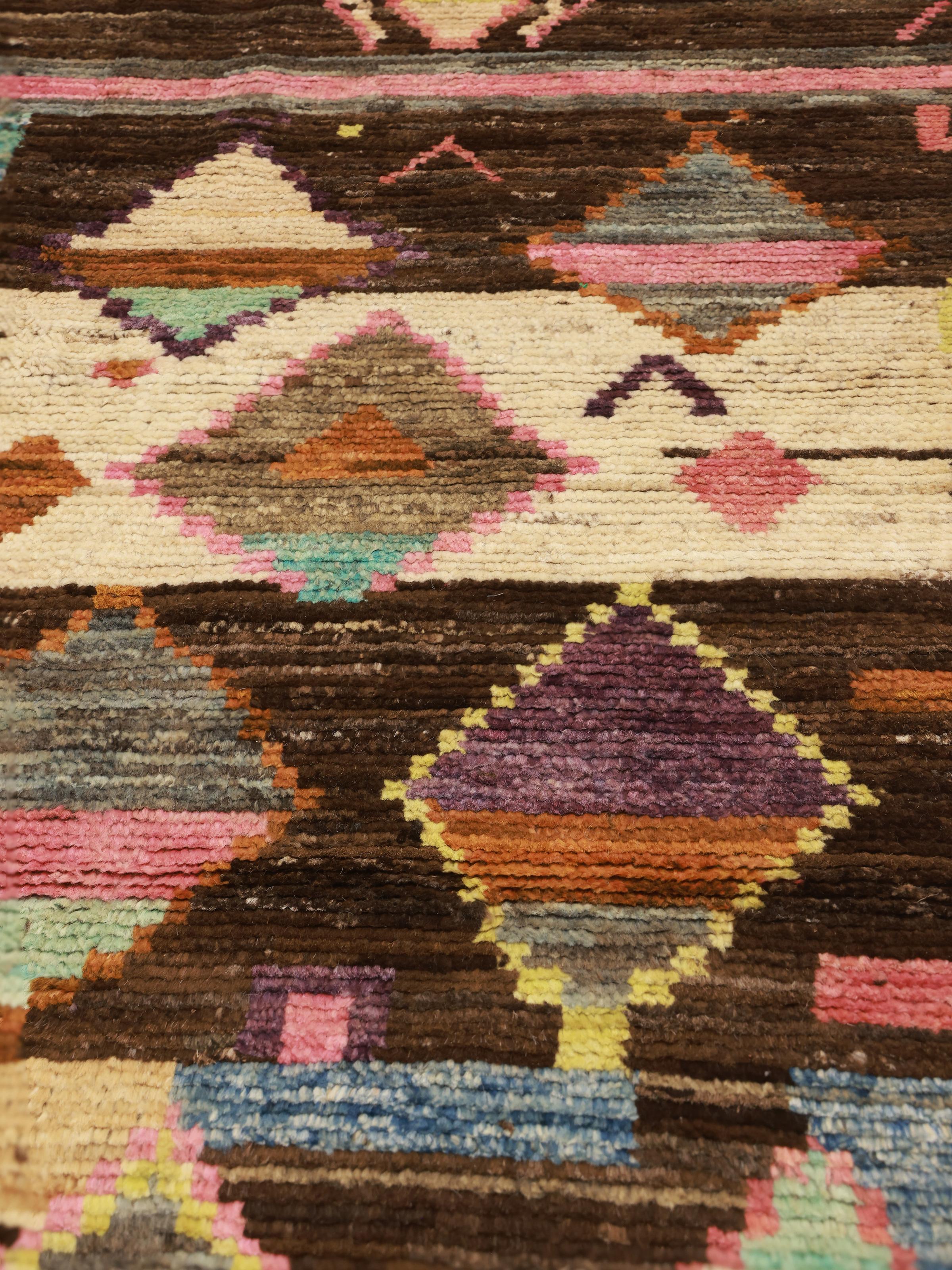
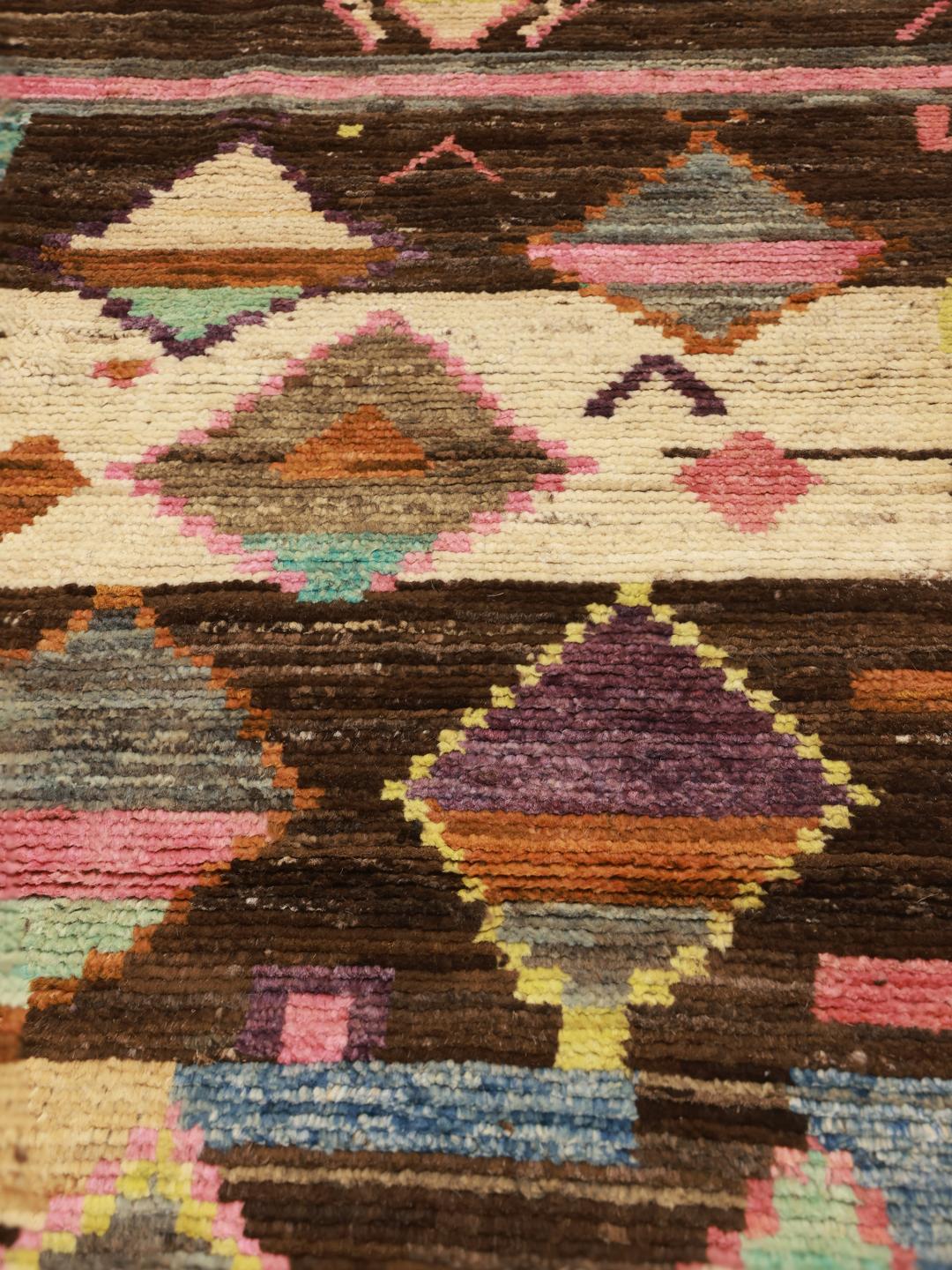
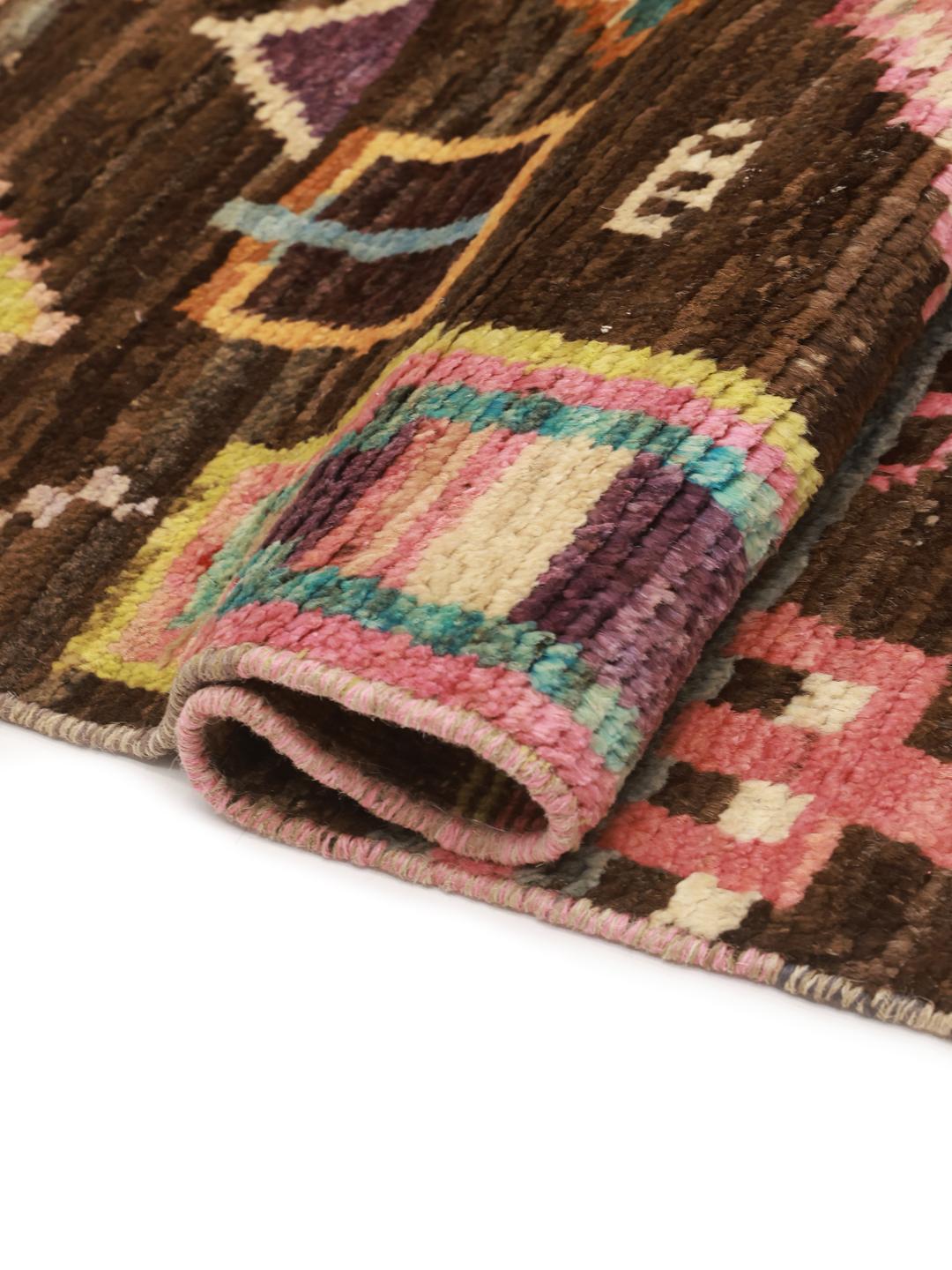
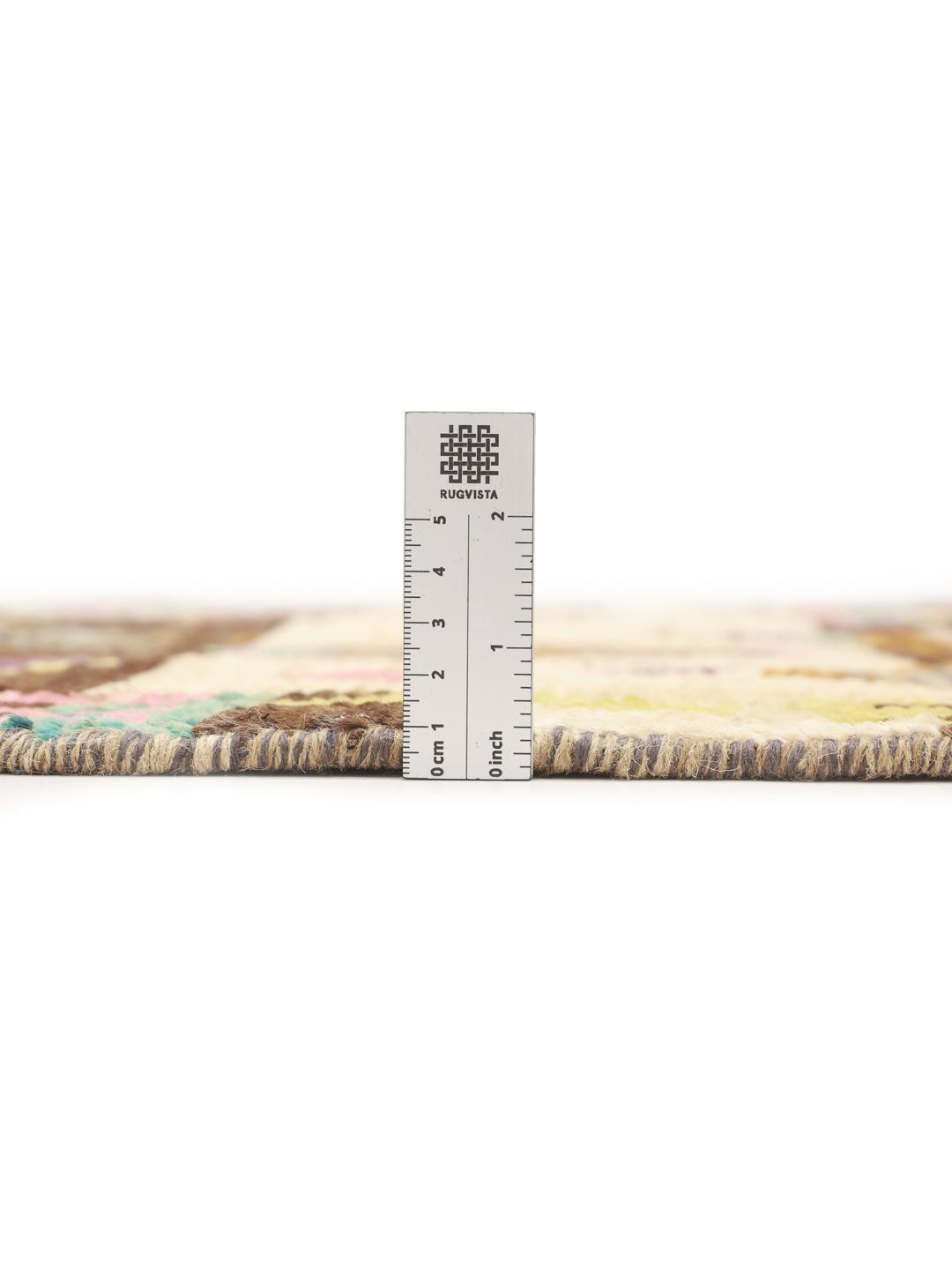
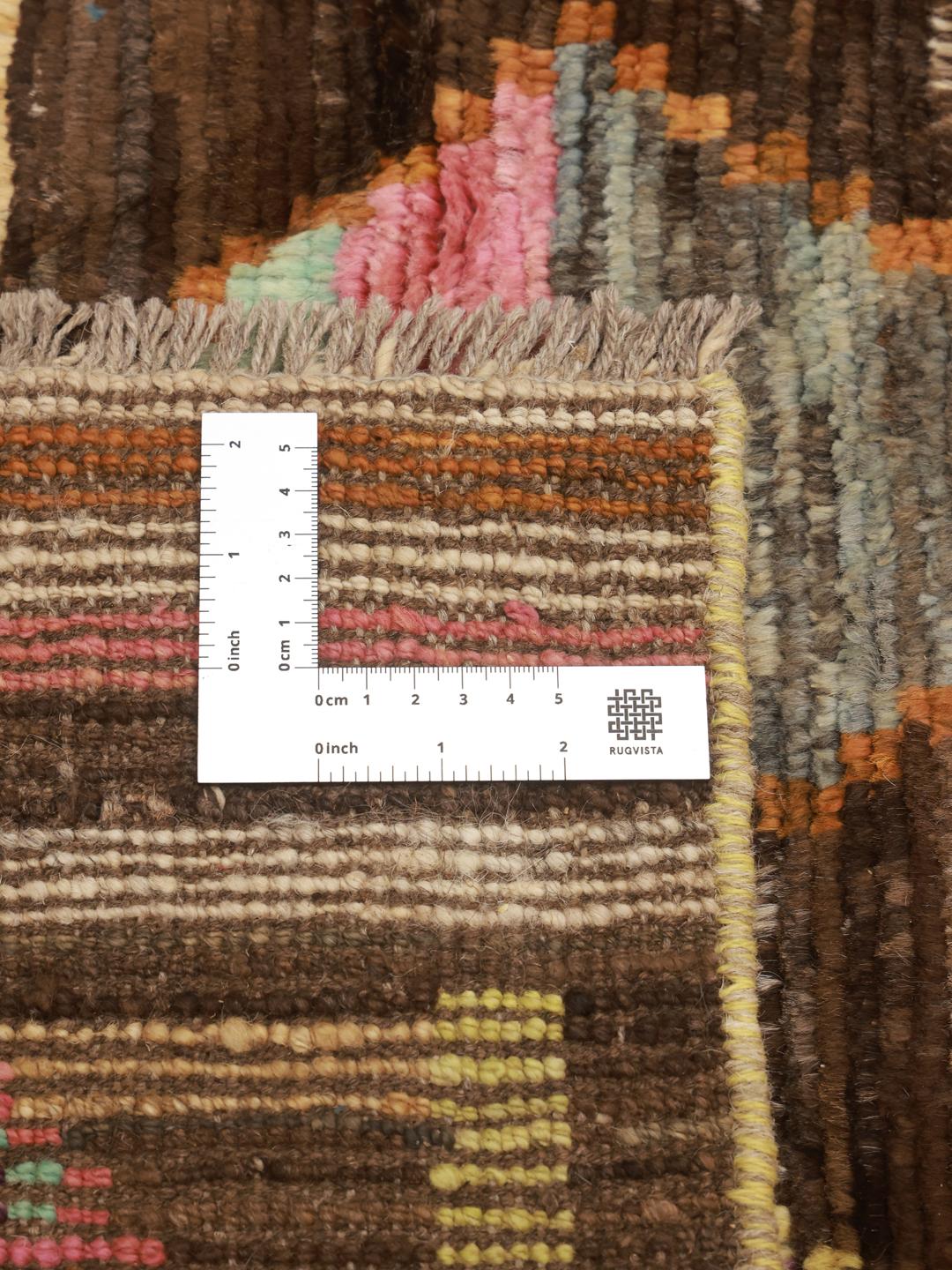
Technical terms such as hand-knotted refer to the specific method where each individual knot is tied by hand to the warp and weft foundation. This creates a highly durable and dense pile that is far more resilient than tufted or machine-made versions. The use of wool as the primary material is a hallmark of this tradition, chosen for its natural strength, ease of cleaning, and ability to hold rich, vibrant dyes that age gracefully over time.
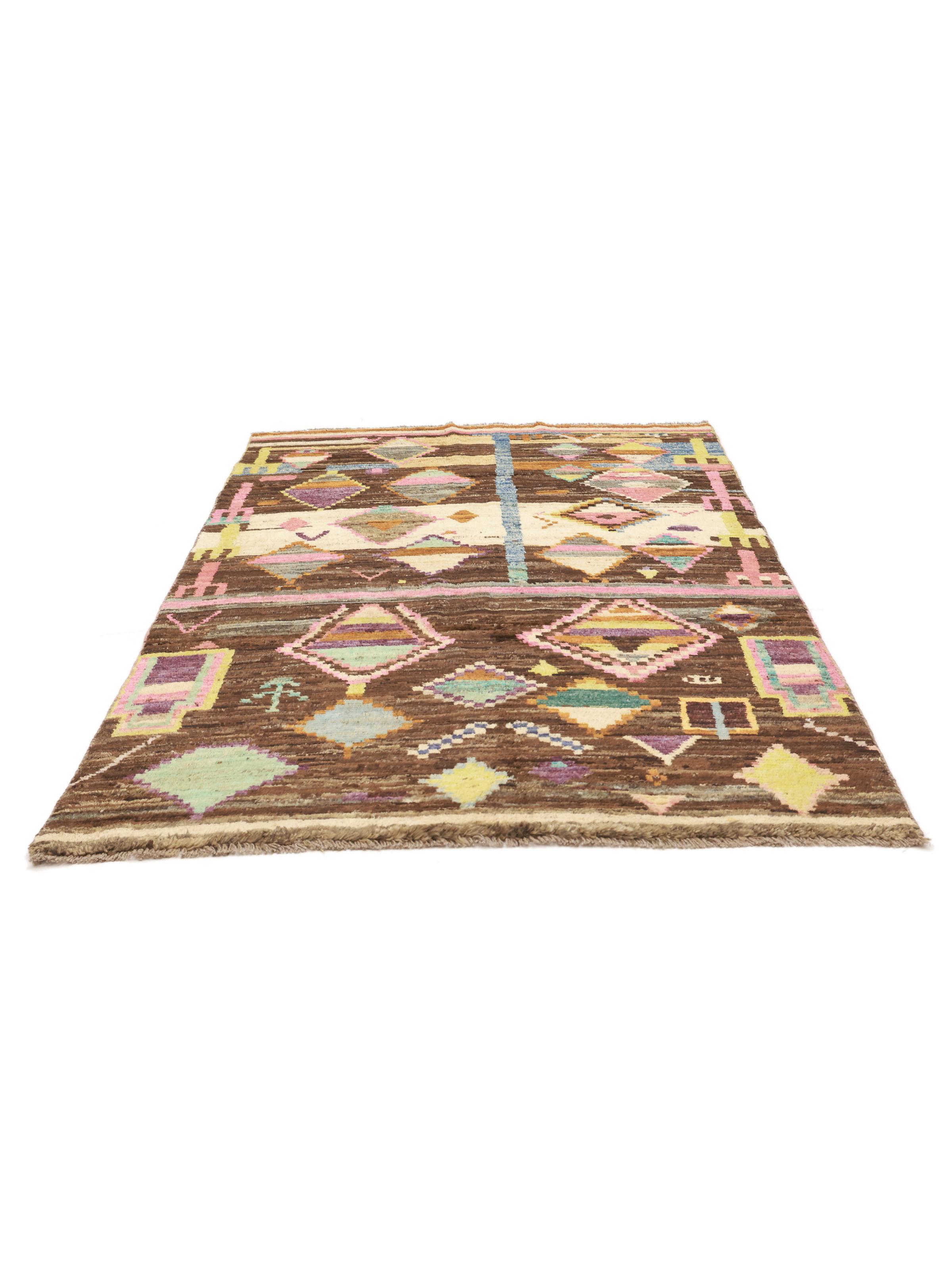
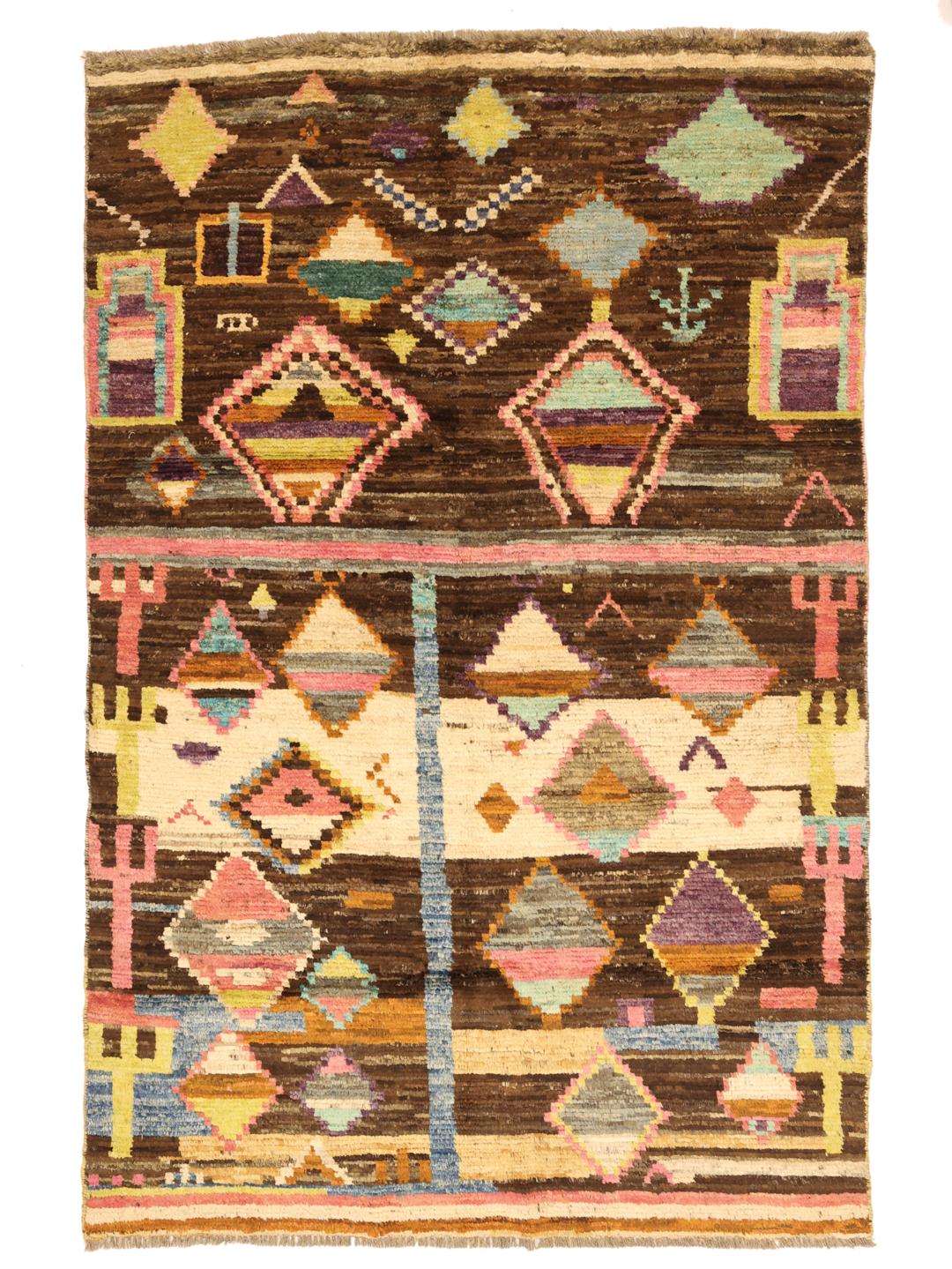
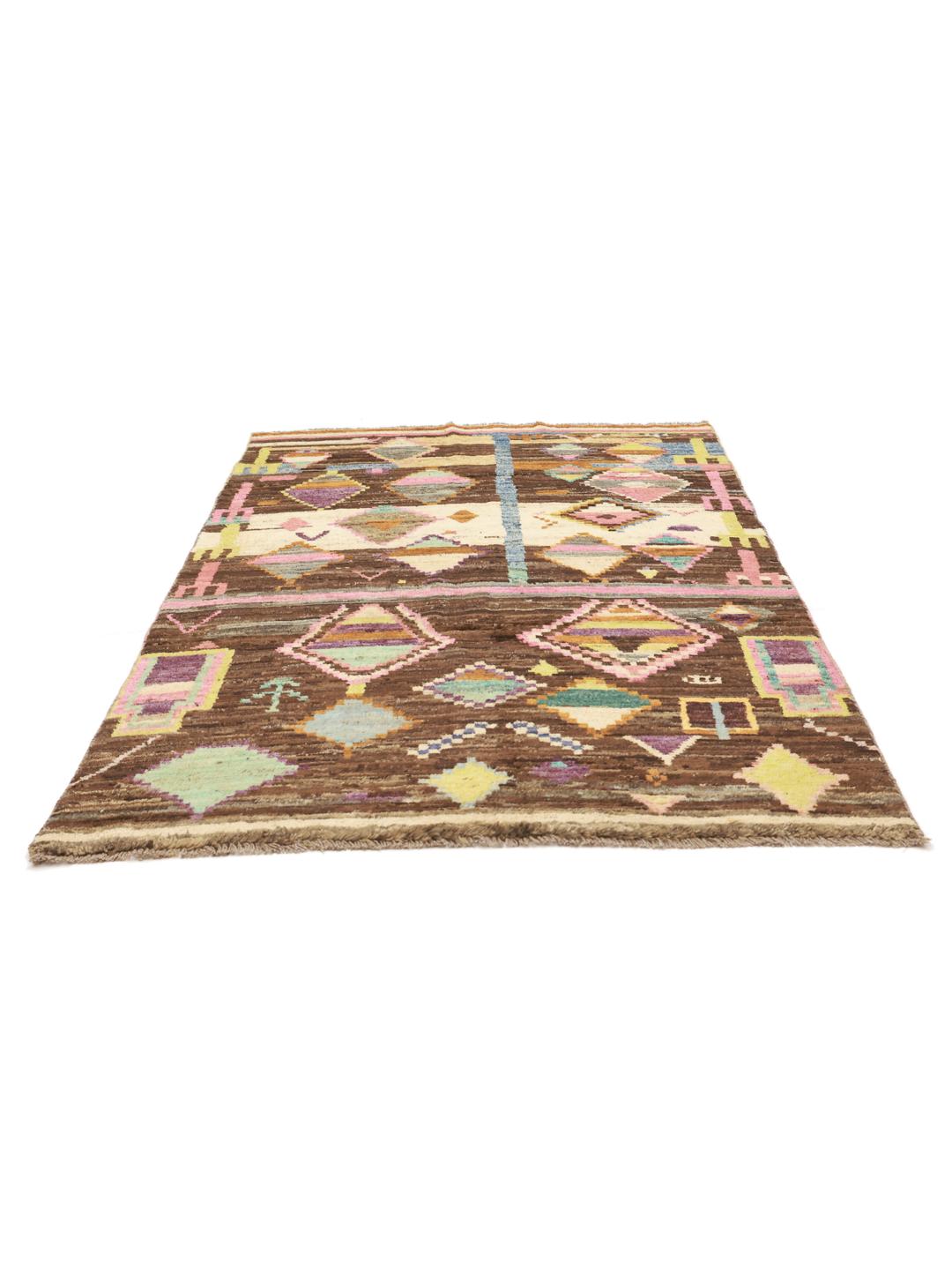
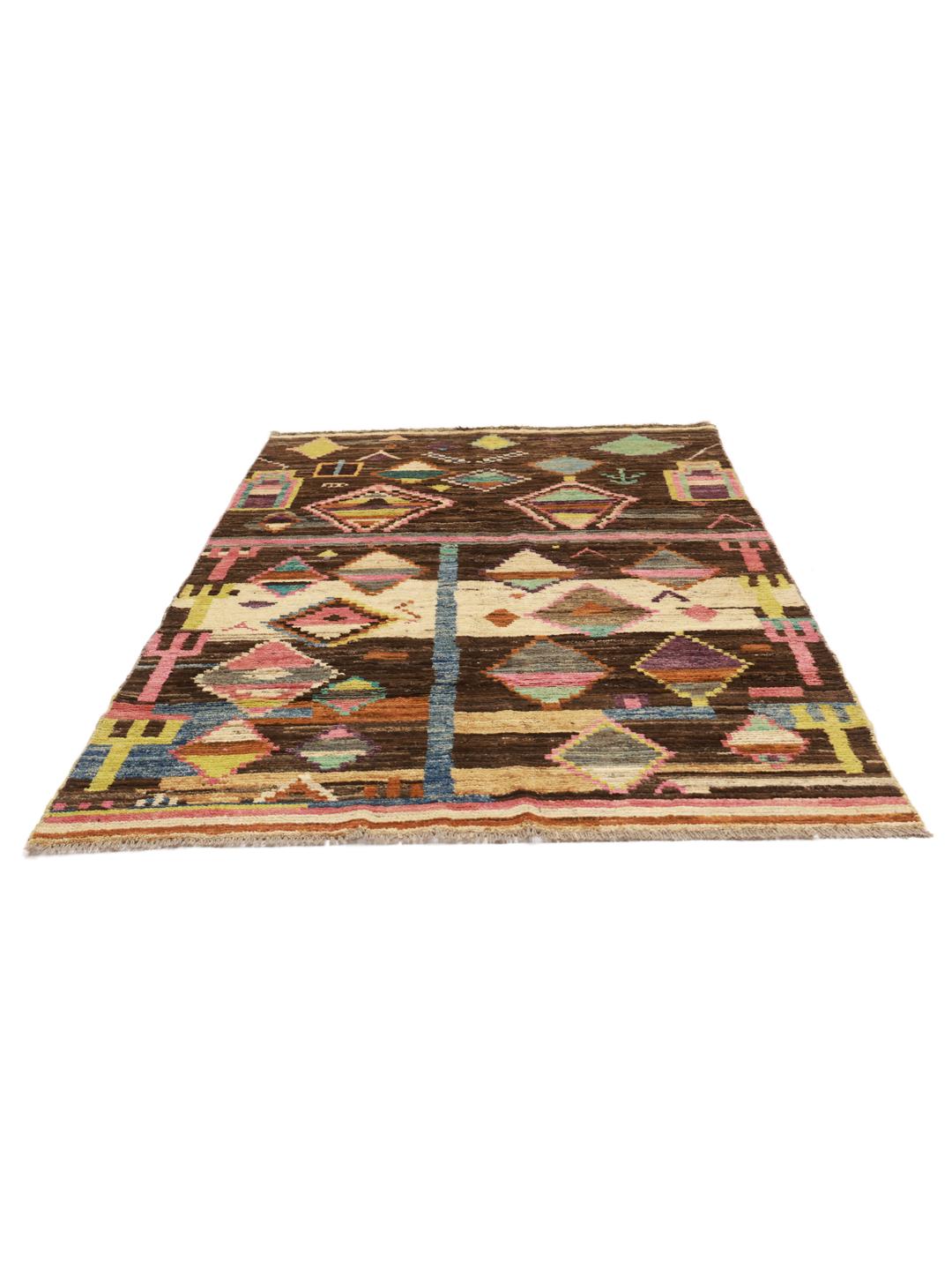
Visually, these rugs are defined by their geometric language. You will often see motifs such as diamonds, stylised animals, and symbolic borders that carry deep cultural meanings. In this particular piece, the interplay of vibrant colours against a dark brown field is a striking departure from more muted traditions, showcasing a creative spirit that values both symmetry and spontaneous, artistic flair.
Collectors value these rugs for their authenticity and the human story behind every knot. Owning a piece from this tradition is an opportunity to connect with a long-standing heritage of craft and skill. Each rug serves as a document of the maker's hand, making it a meaningful addition to any collection and a testament to the lasting power of traditional, slow-made goods in a modern world.