Berber-style rugs trace their origins to the indigenous weaving traditions of North Africa, where nomadic tribes developed distinct, geometric design languages. Over generations, these weaving techniques migrated and were adapted by artisans in various regions, including Afghanistan. The resulting style is a beautiful cultural synthesis, where the raw, expressive energy of classic tribal patterns meets the sophisticated, refined weaving techniques found in modern Afghan workshops.
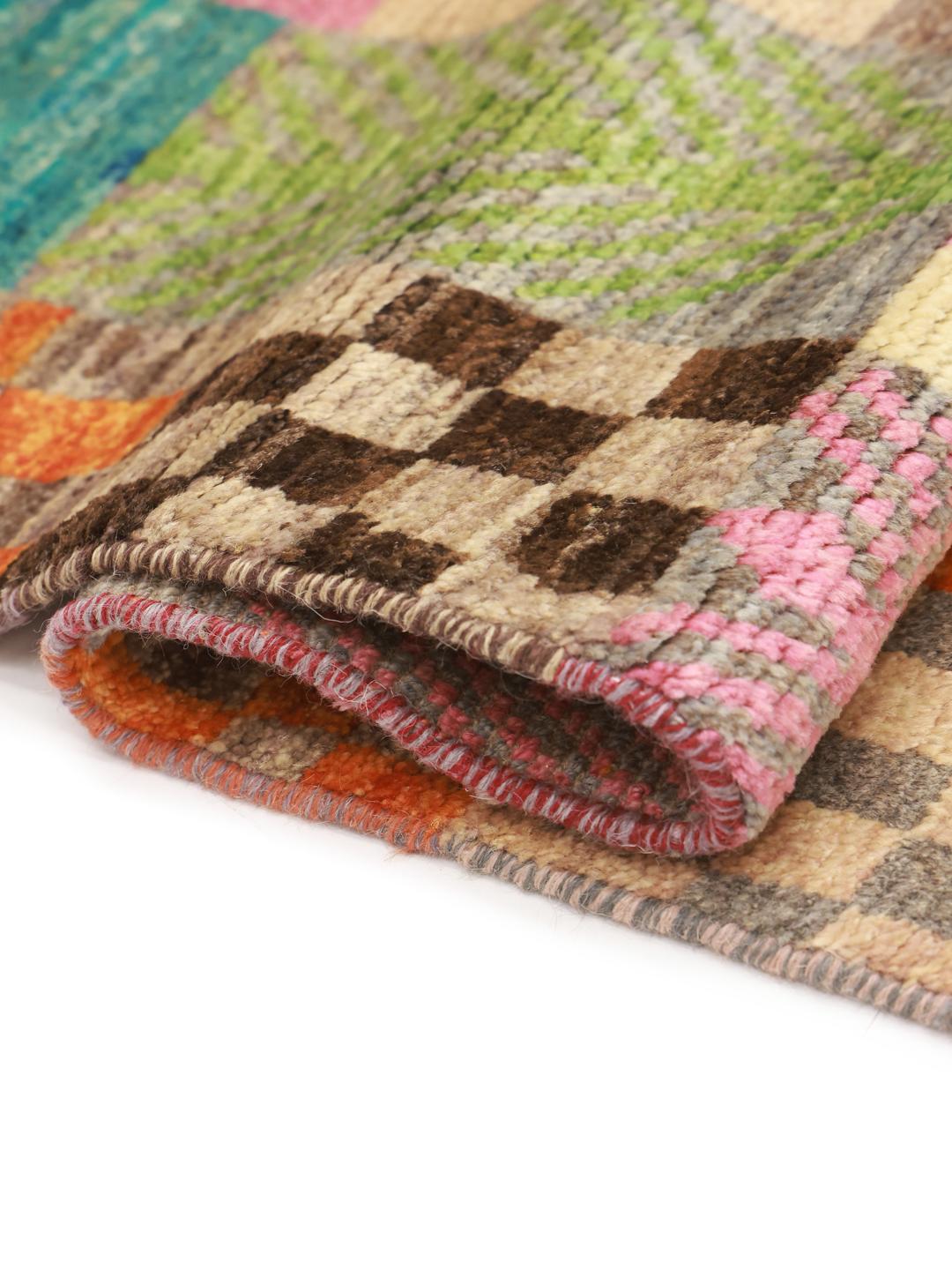
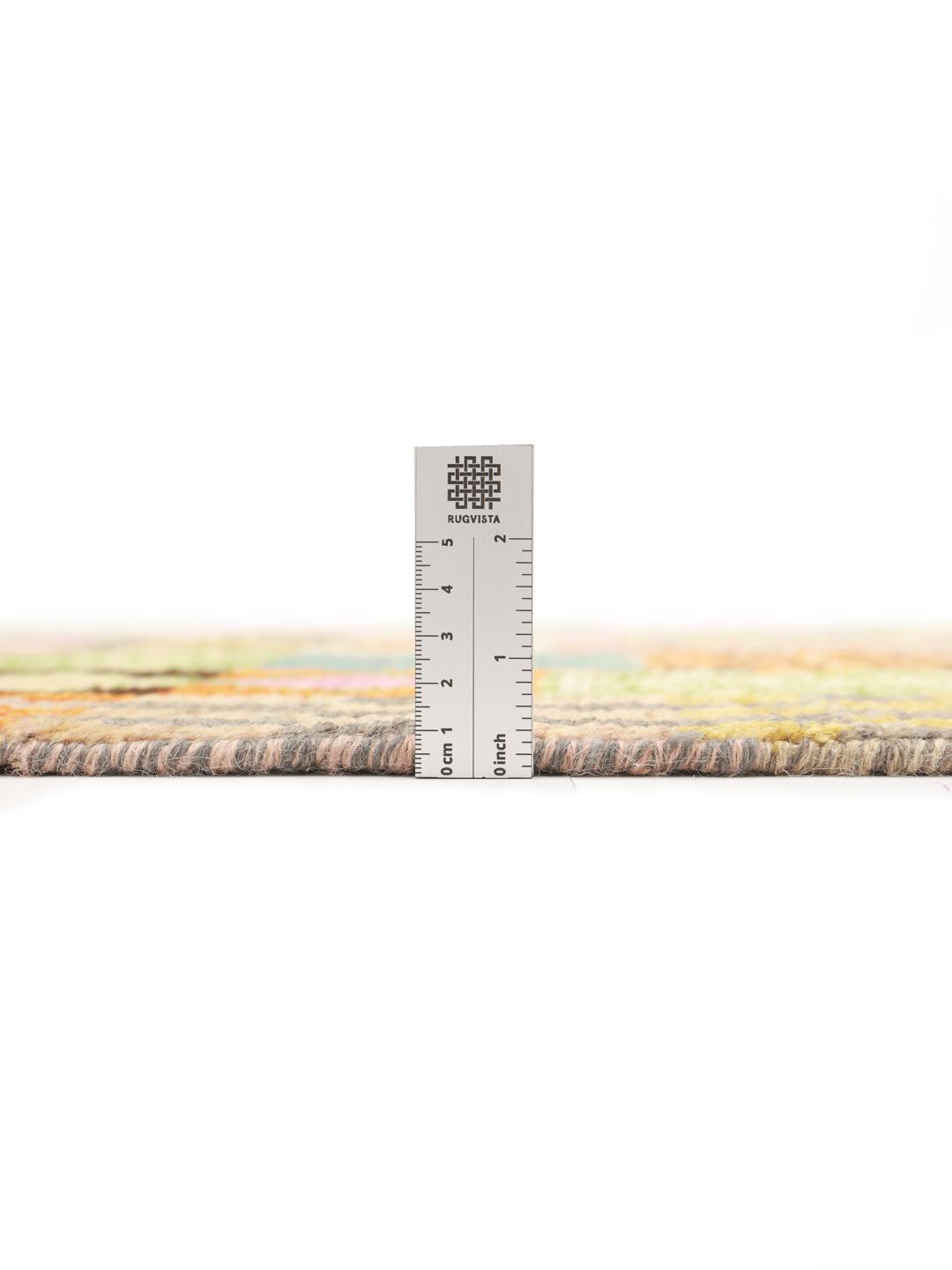
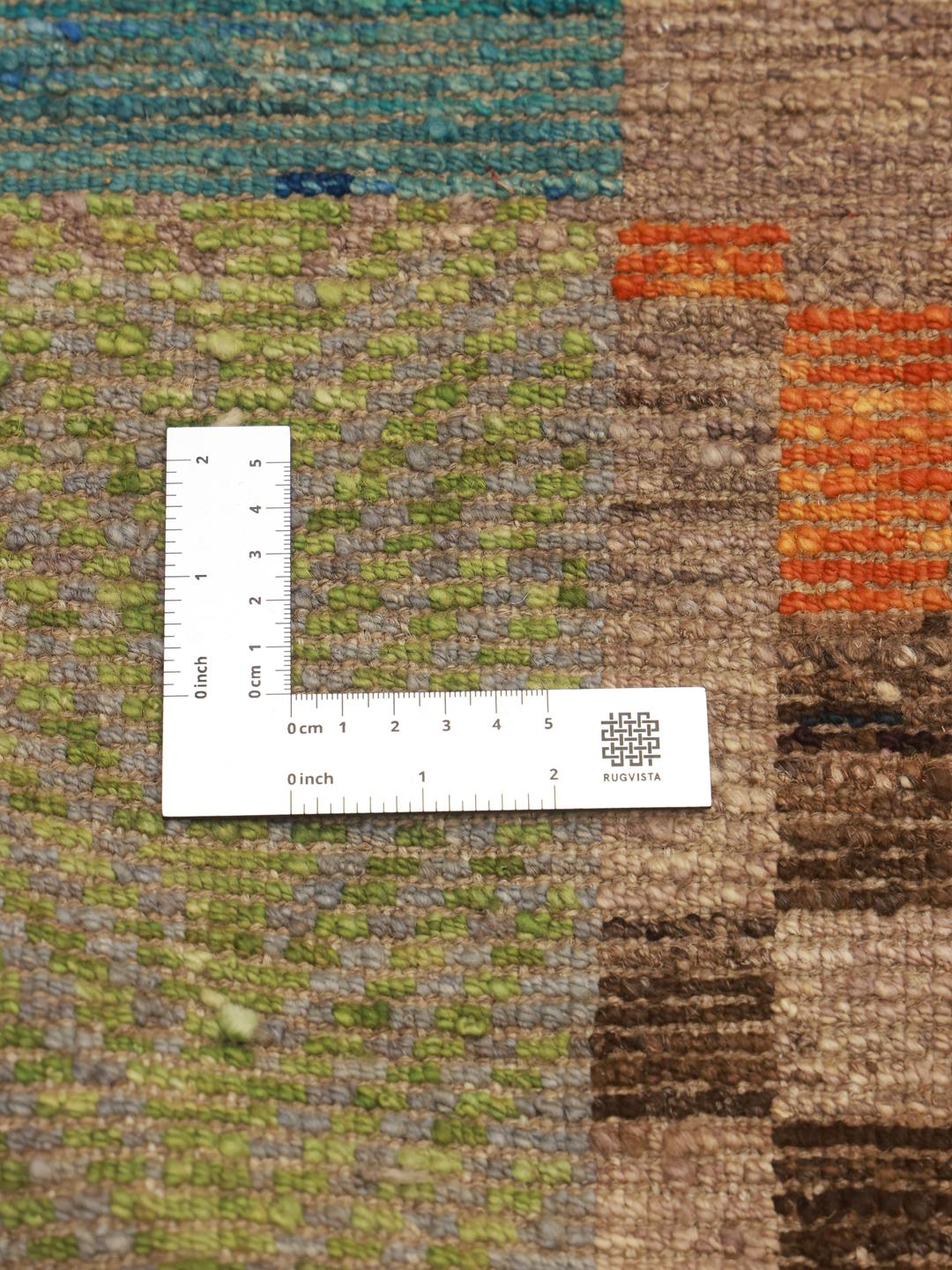
The term 'hand-knotted' signifies that every individual strand of wool is tied by hand onto the warp threads. This traditional technique is far superior to modern alternatives, as it creates a dense, robust foundation that is built to last. The use of high-quality wool ensures that the rug possesses a natural, lanolin-rich softness, providing a lustrous sheen and a high level of resistance to wear, which is why these pieces are so highly regarded for their longevity.
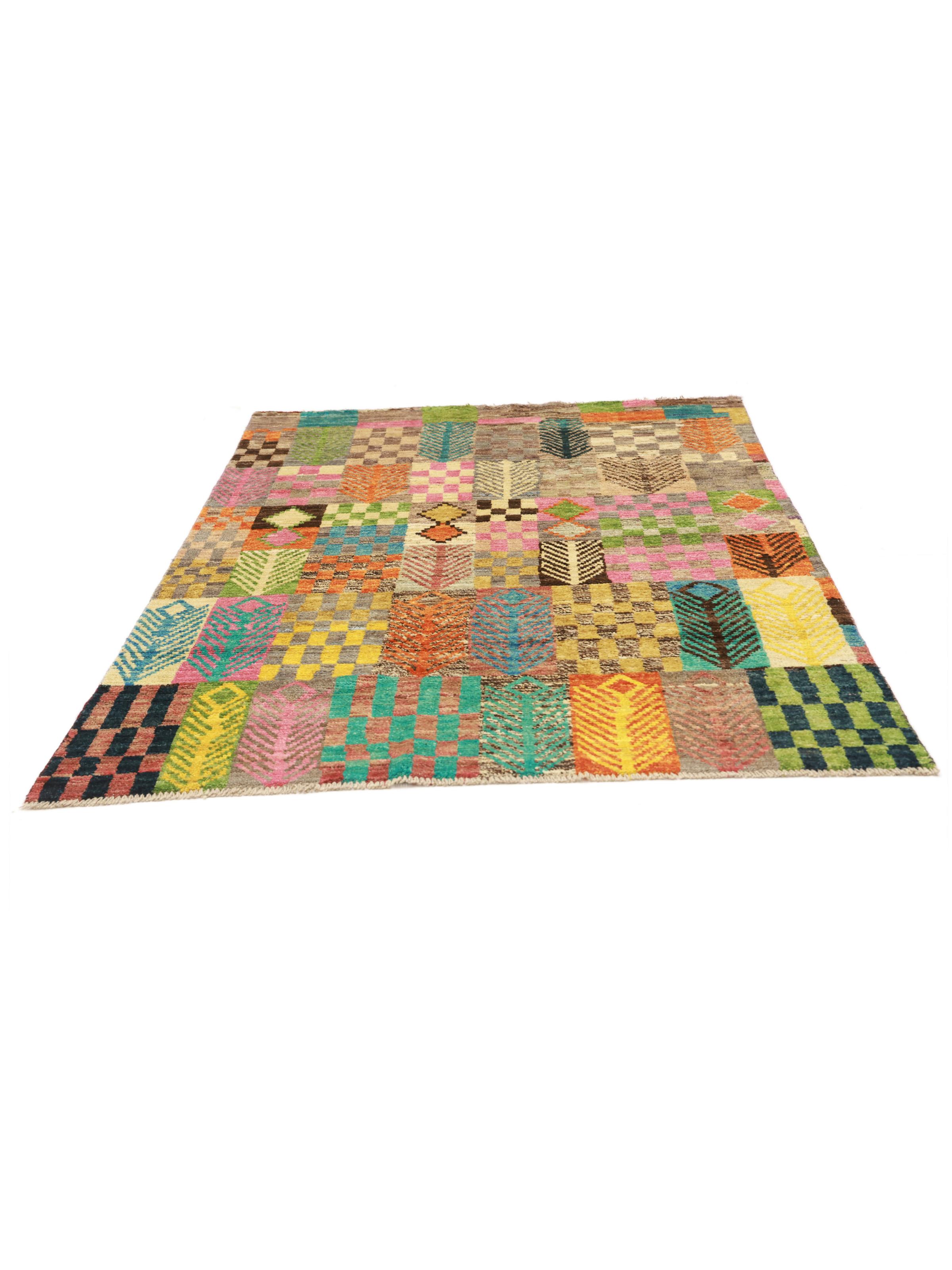
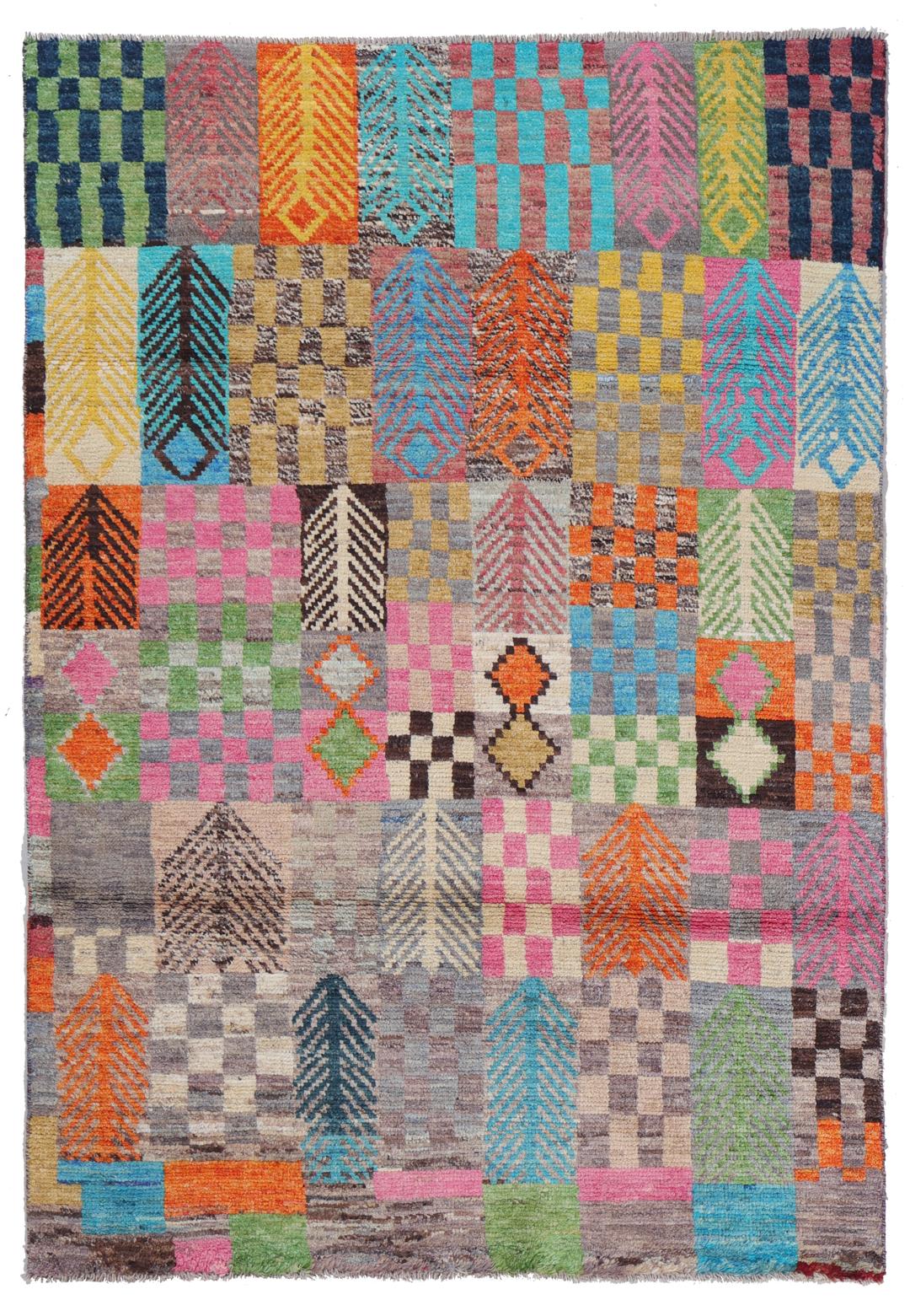
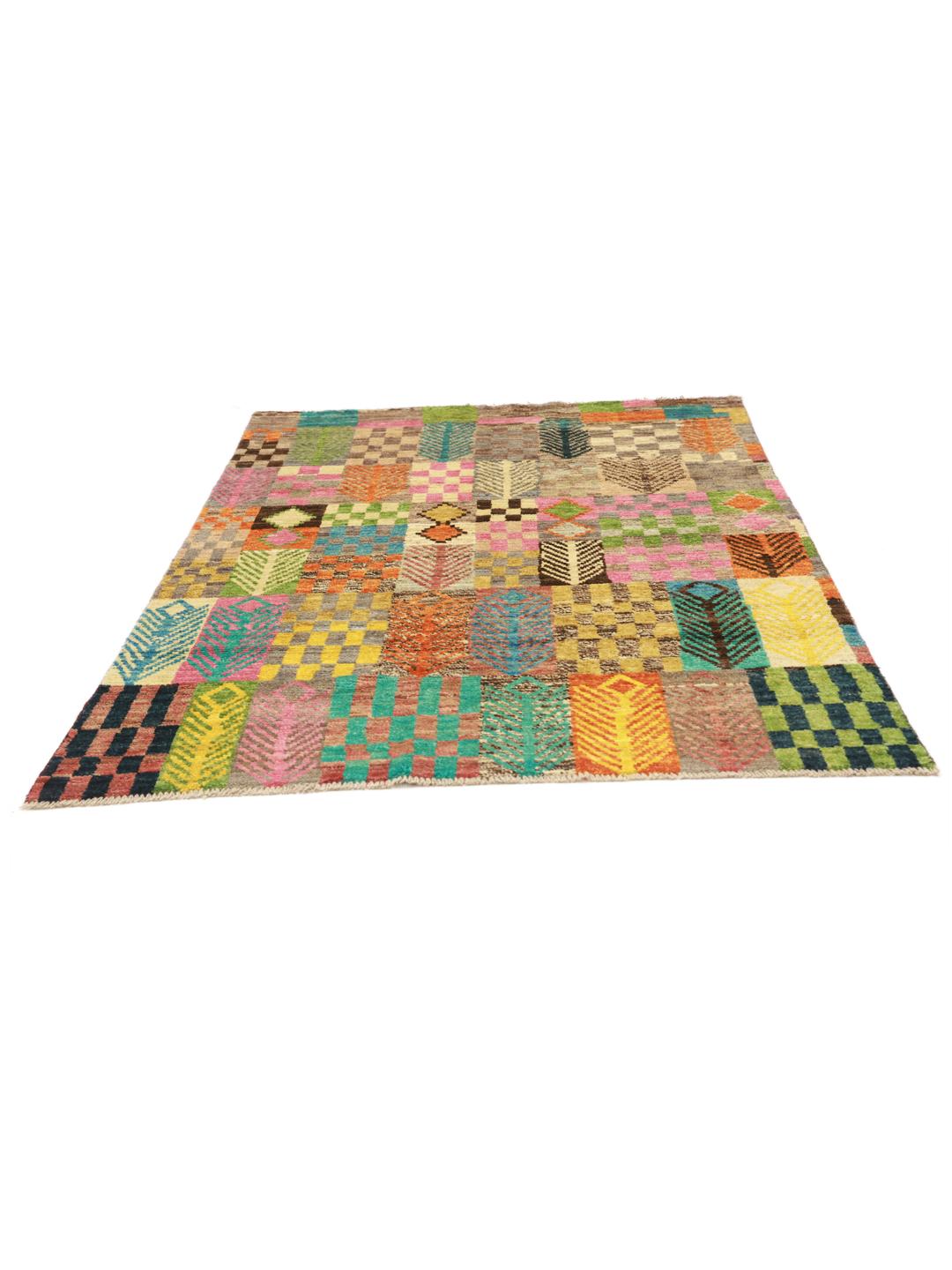
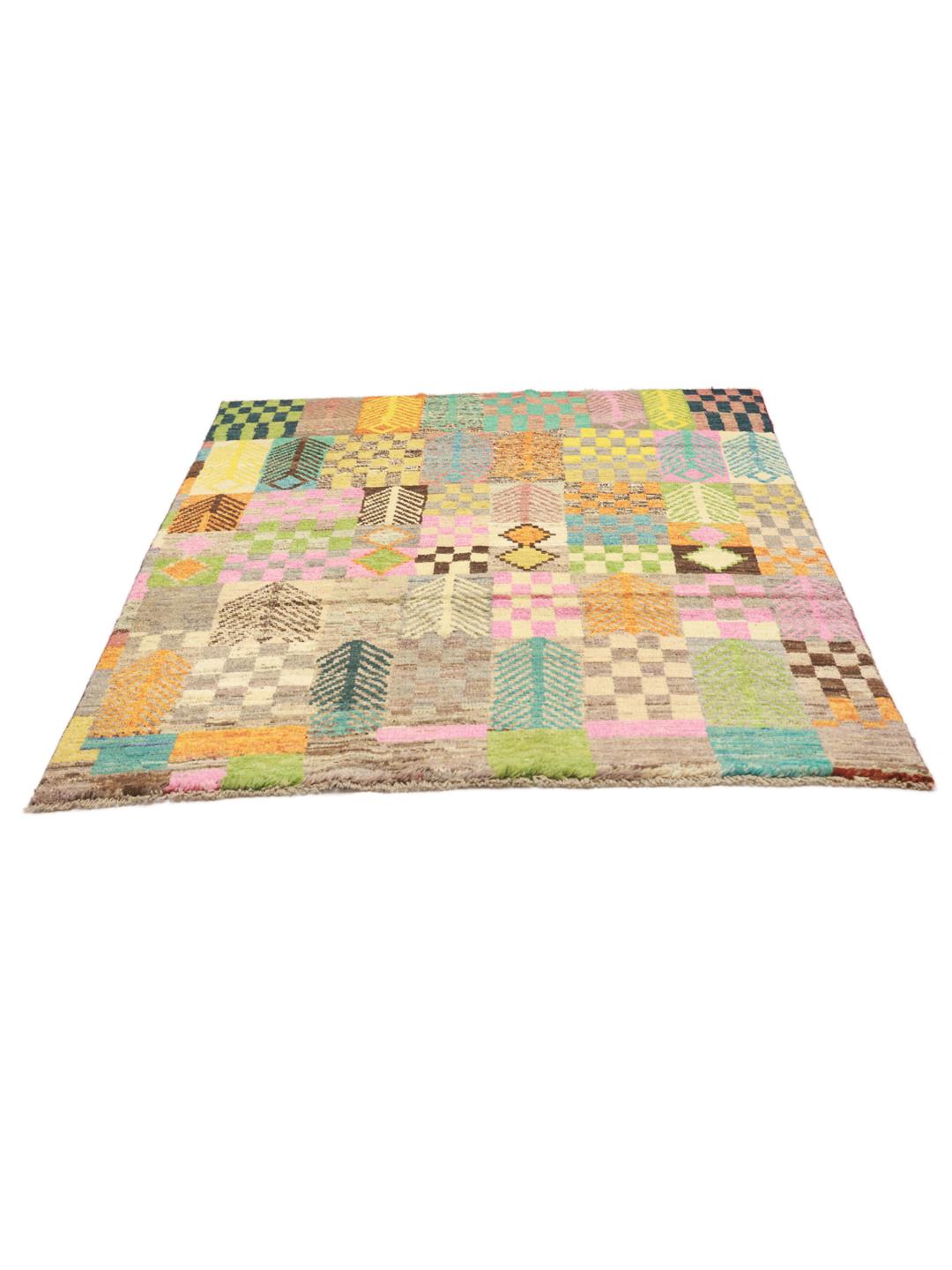
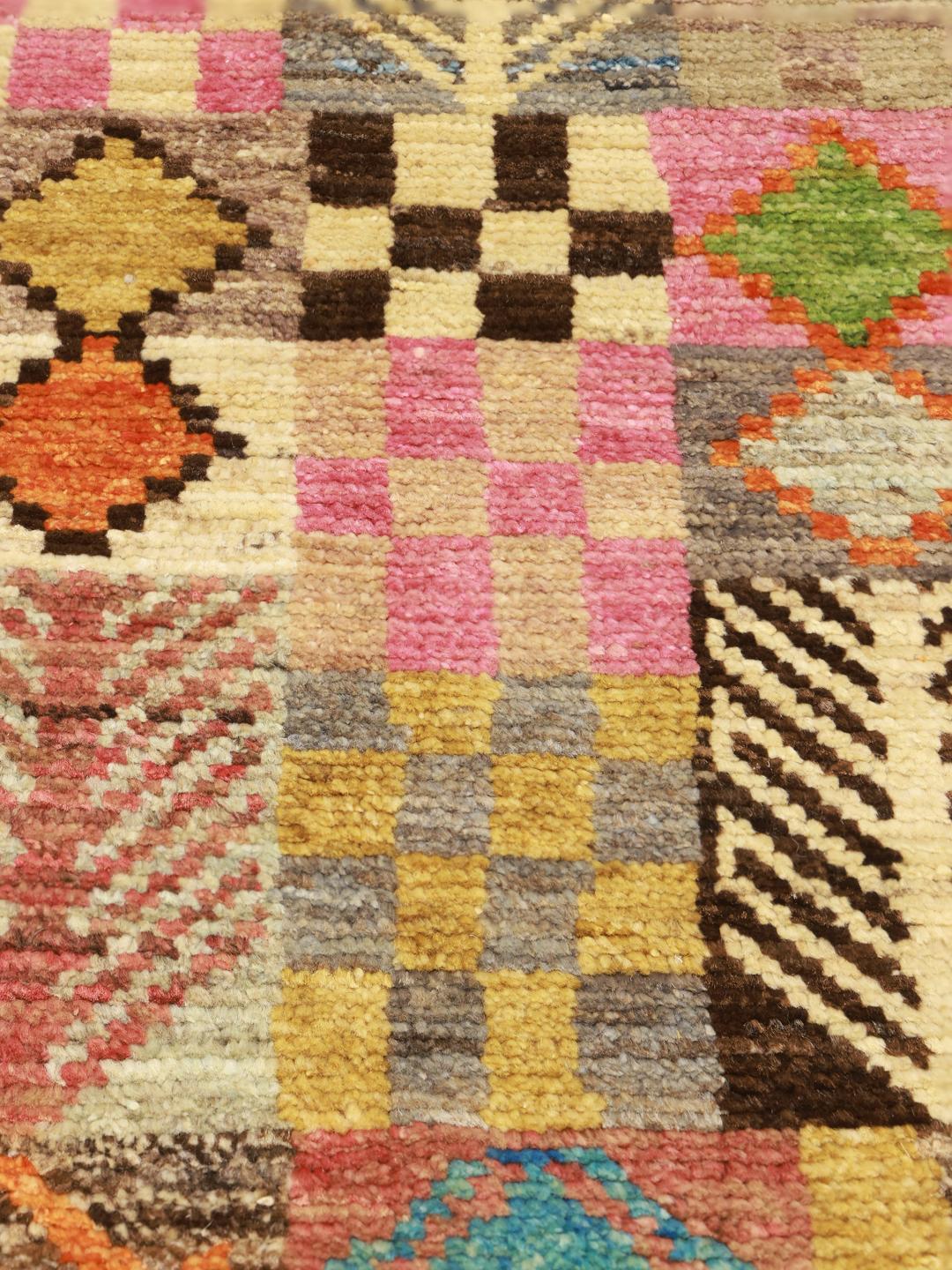
The visual language of this rug is defined by its bold, modular composition. While traditional Berber rugs often feature monochromatic or earthy tones, this version embraces a vibrant, multicolor palette that highlights the geometric shapes—such as diamonds and repeating checkered patterns—that are central to this design tradition. These motifs are not just decorative; they often carry symbolic meanings rooted in the weaver's environment and personal history, making each rug a narrative of its own.
Collecting a hand-knotted rug of this calibre is an investment in human skill and cultural heritage. Because these rugs are crafted without the use of automated machinery, they possess a character and soul that mass-produced items lack. Owning a piece like this means preserving a craft that has been passed down through generations, ensuring that these artistic traditions continue to thrive in the contemporary world.