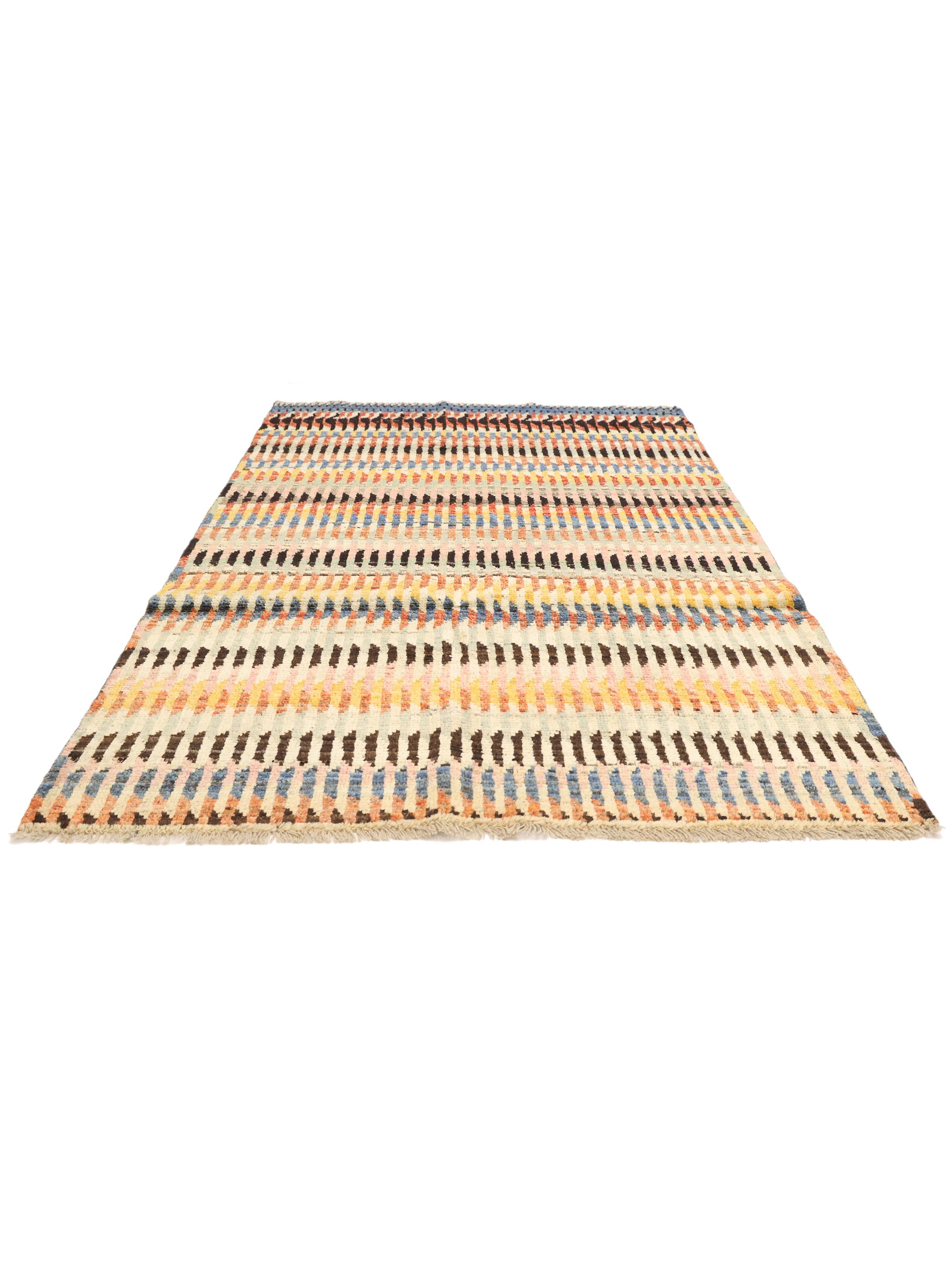
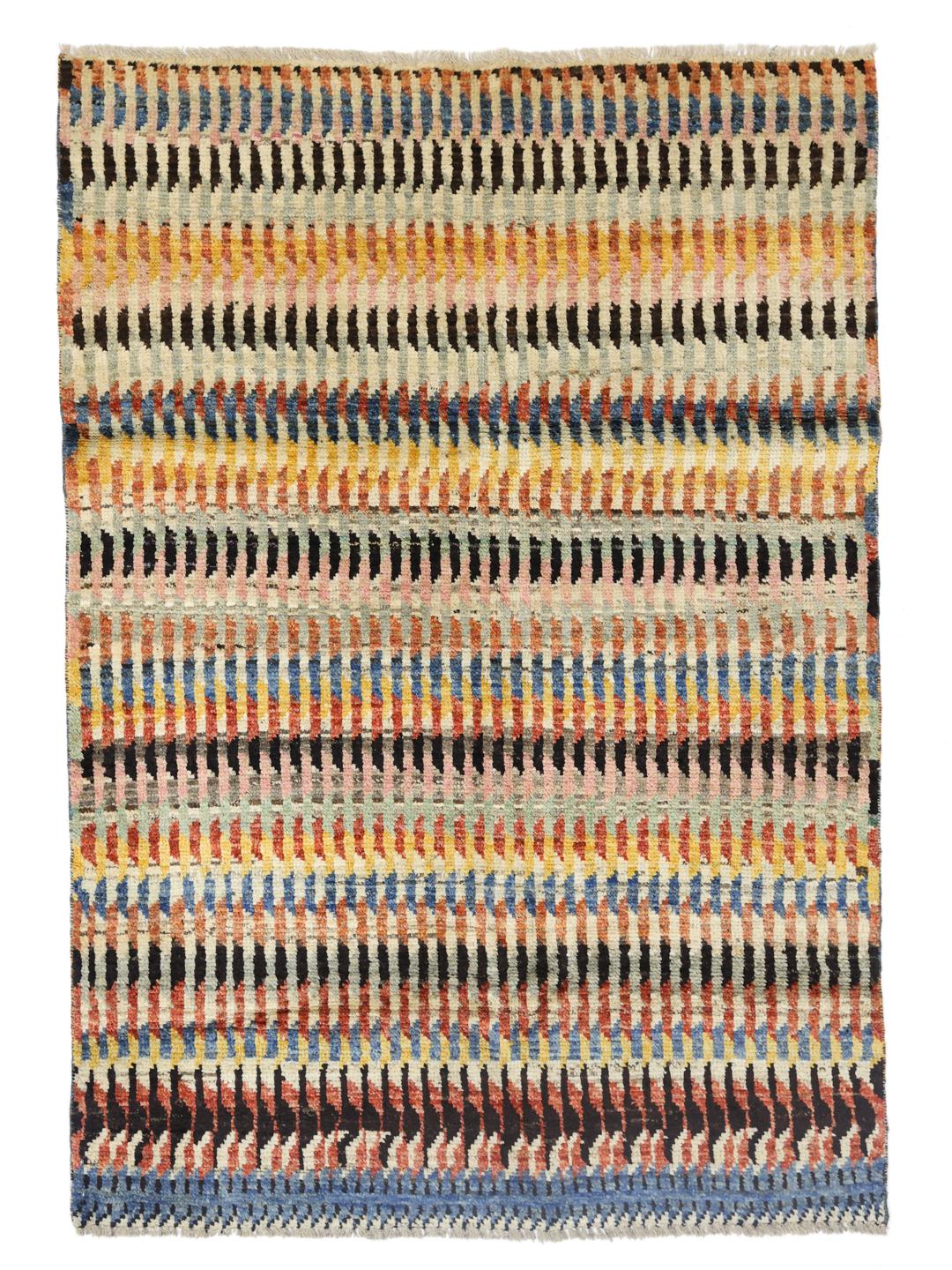
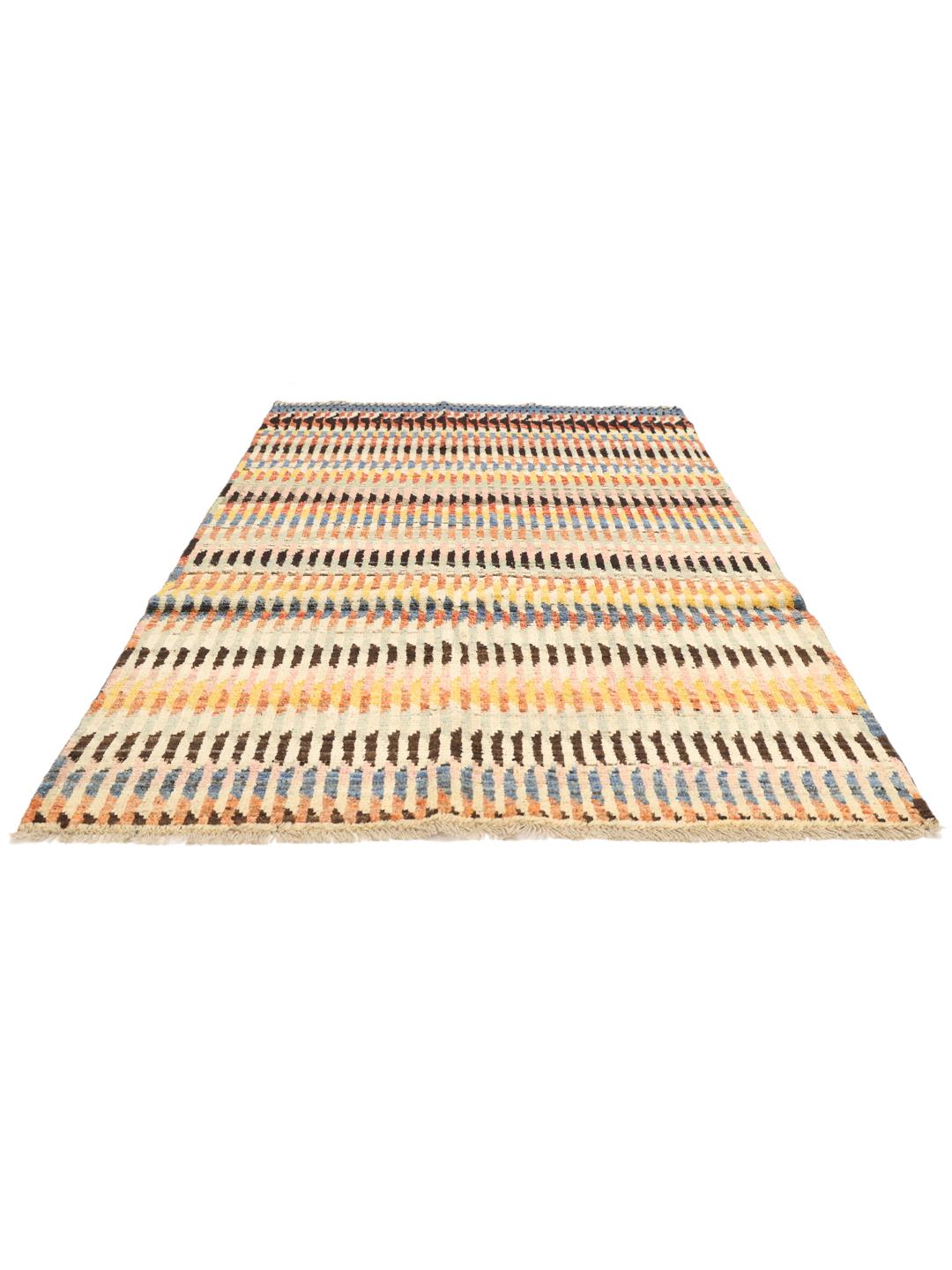
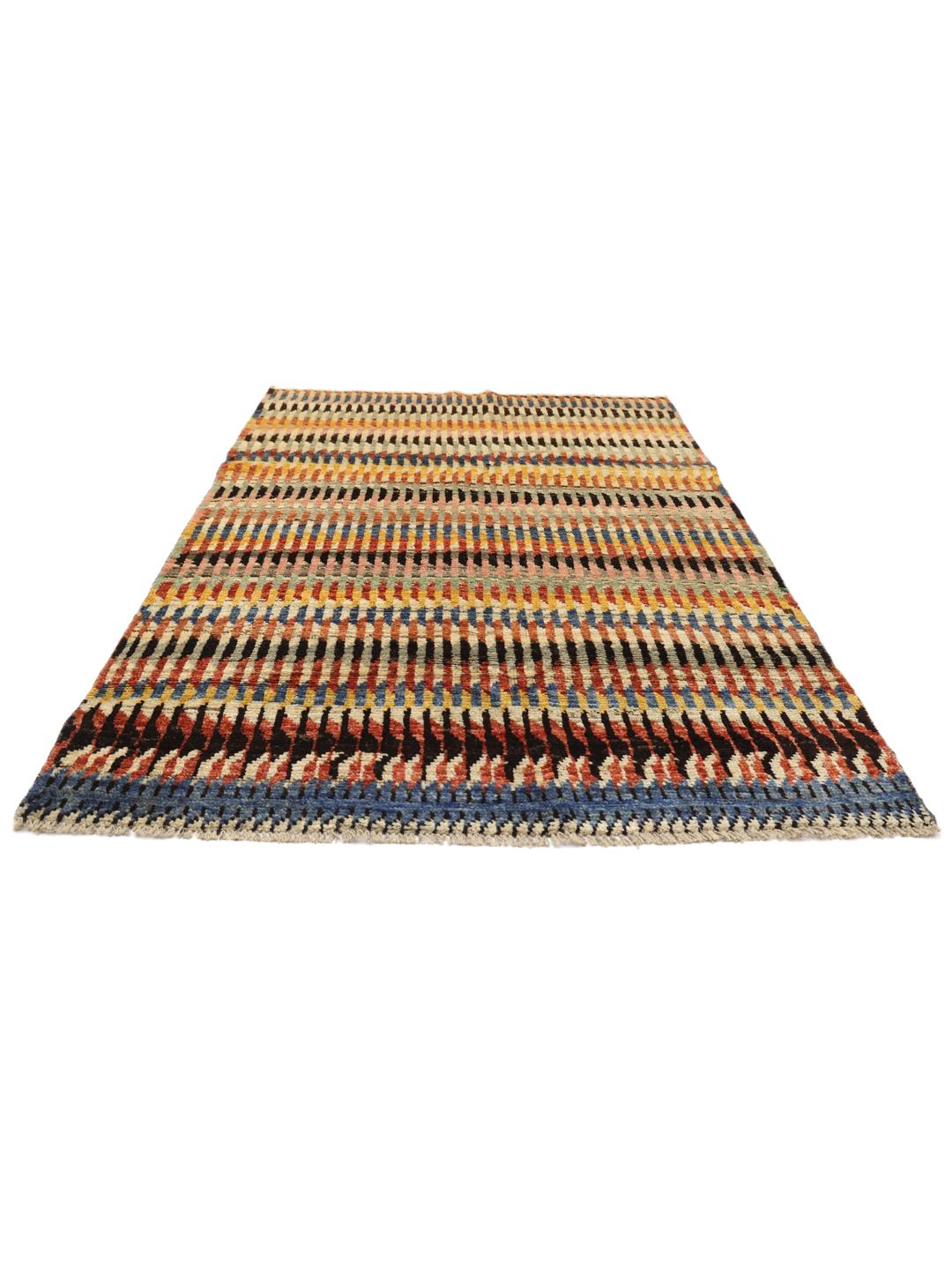
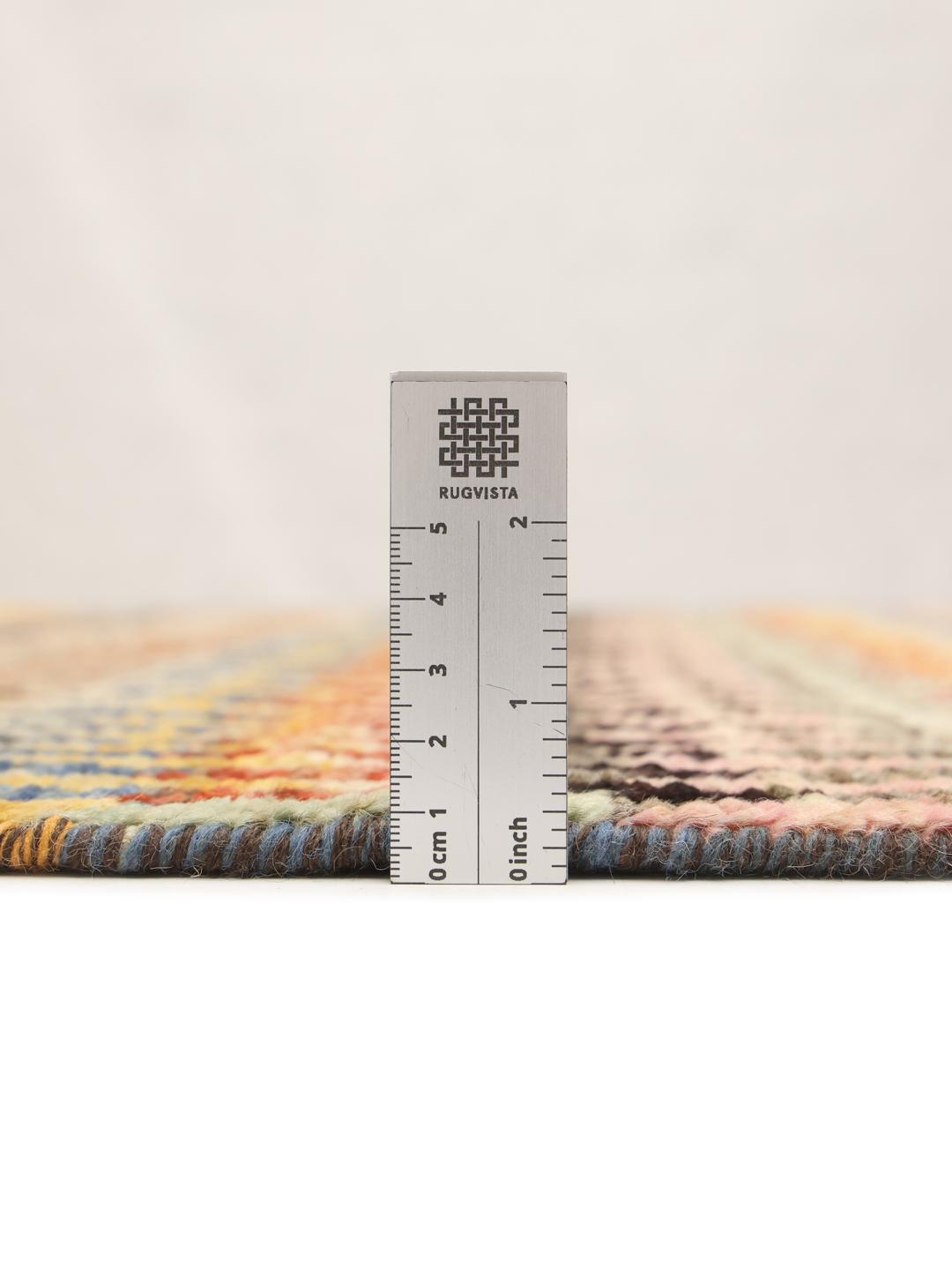
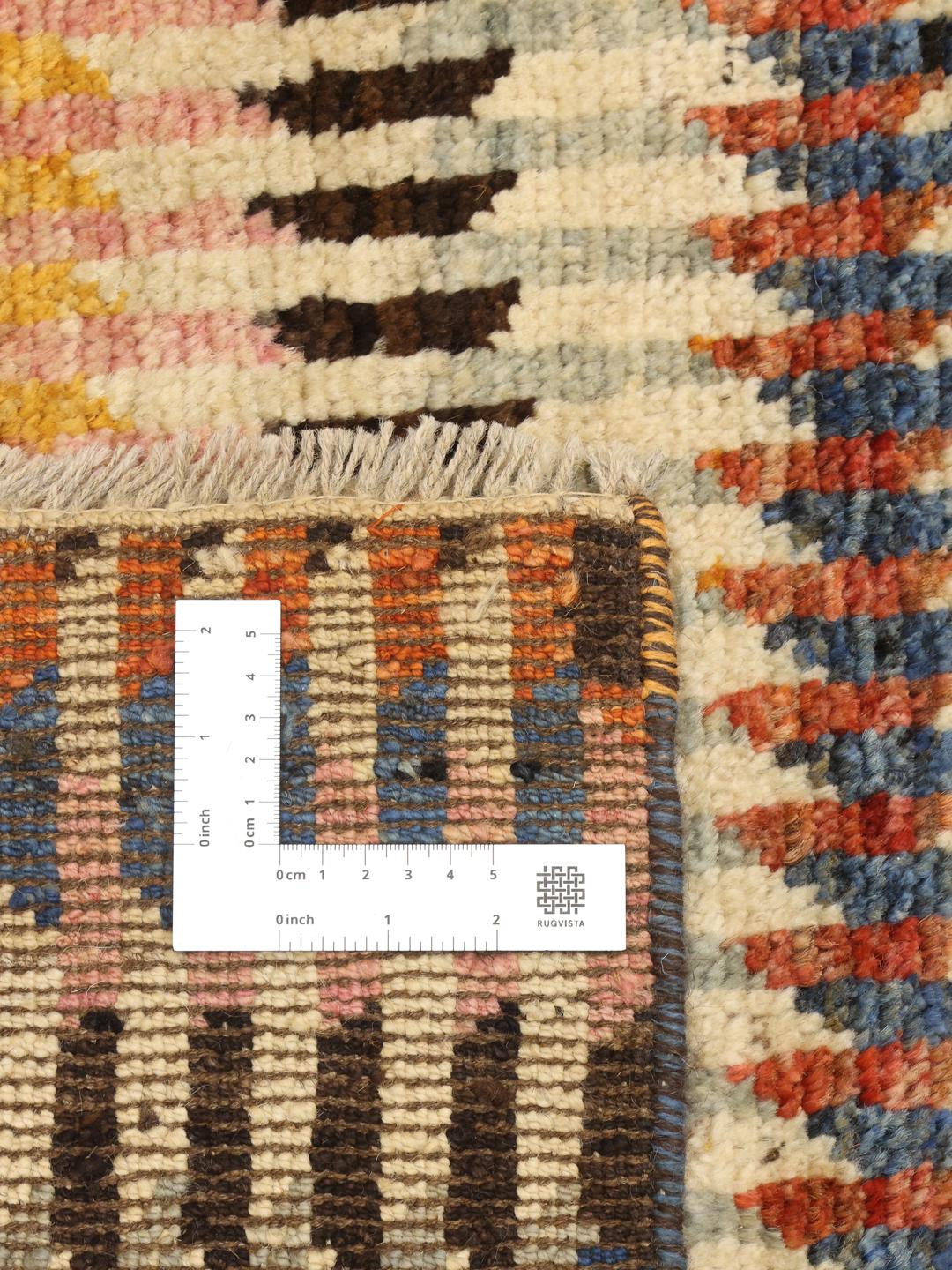
Berber rugs trace their cultural heritage to the nomadic tribes of North Africa, where they were traditionally woven for utility and warmth. Over time, the influence of these designs migrated through trade routes and cultural exchange, finding new expressions in regions like Afghanistan. Today, Afghan weavers have embraced these traditional styles, blending them with local weaving expertise to create rugs that honour the spirit of the original craft while establishing a distinct regional identity.
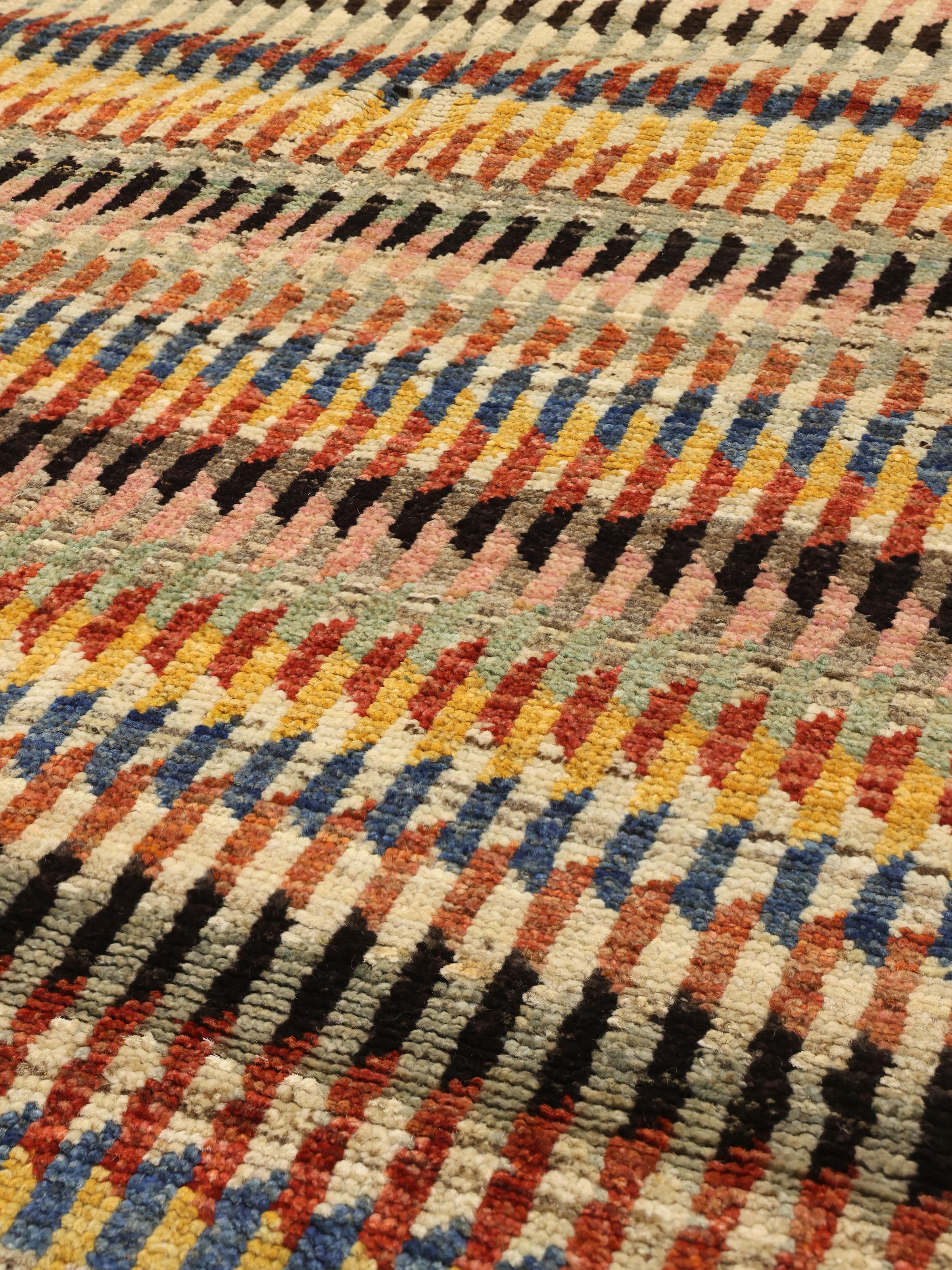
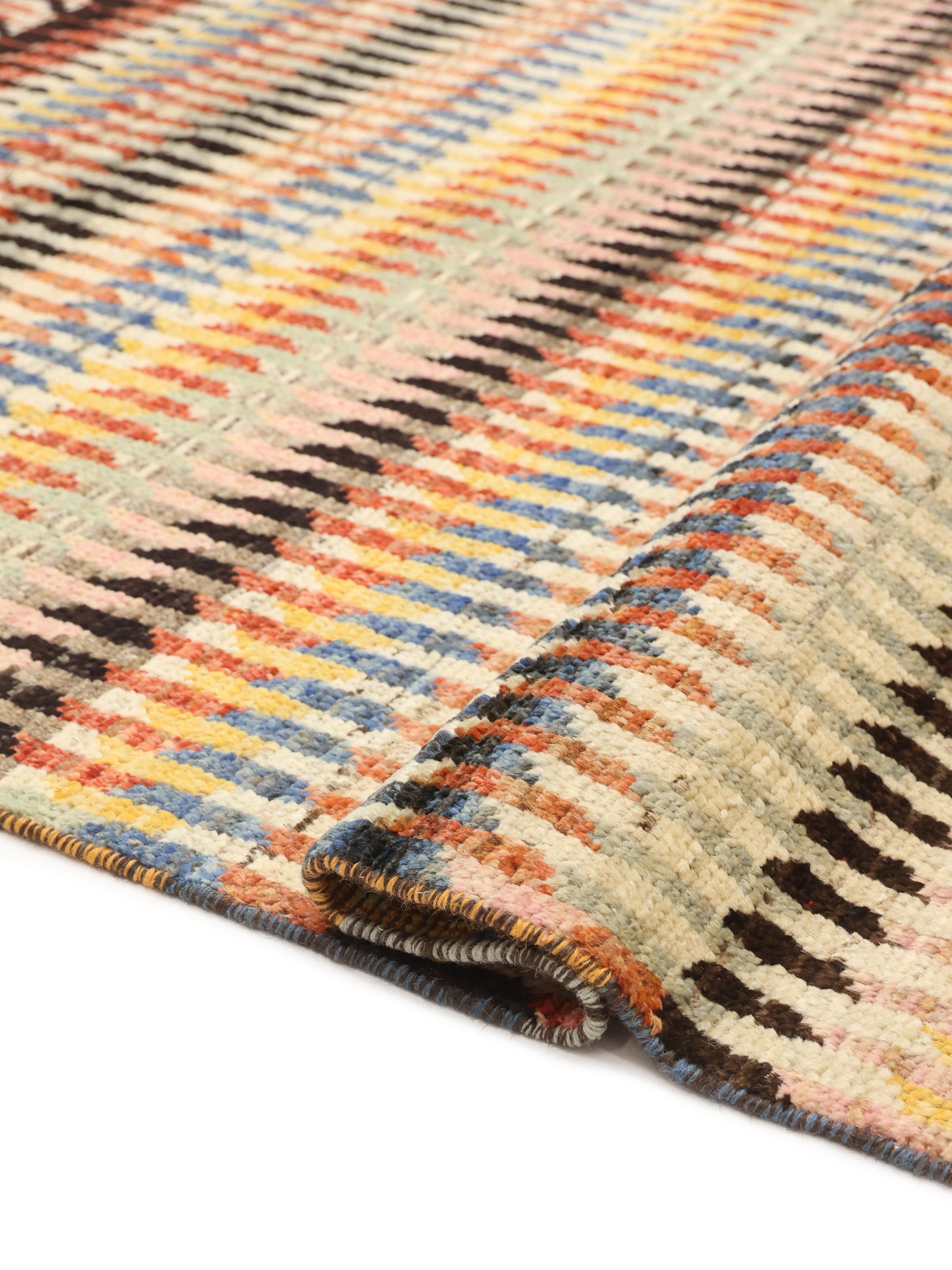
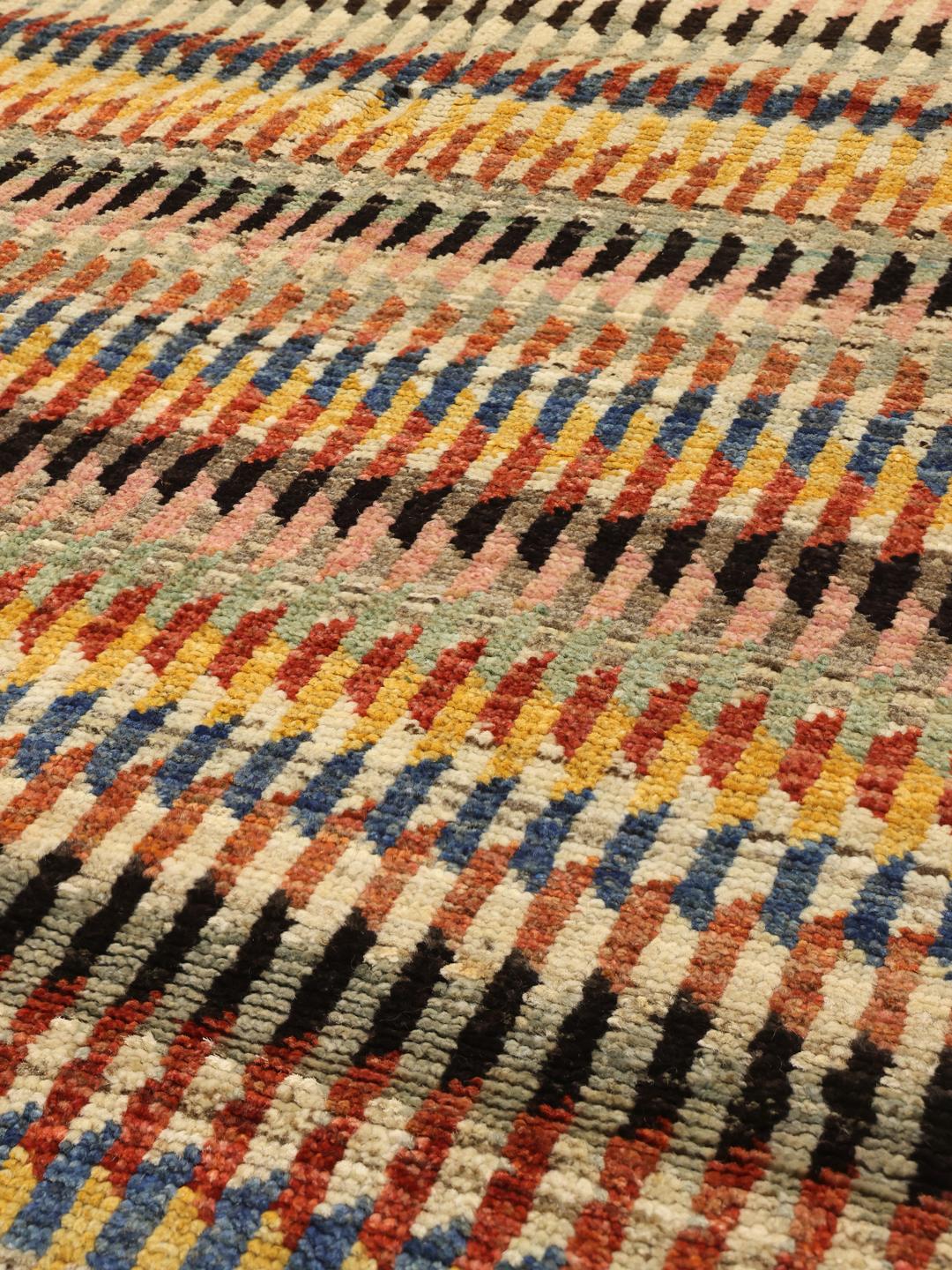
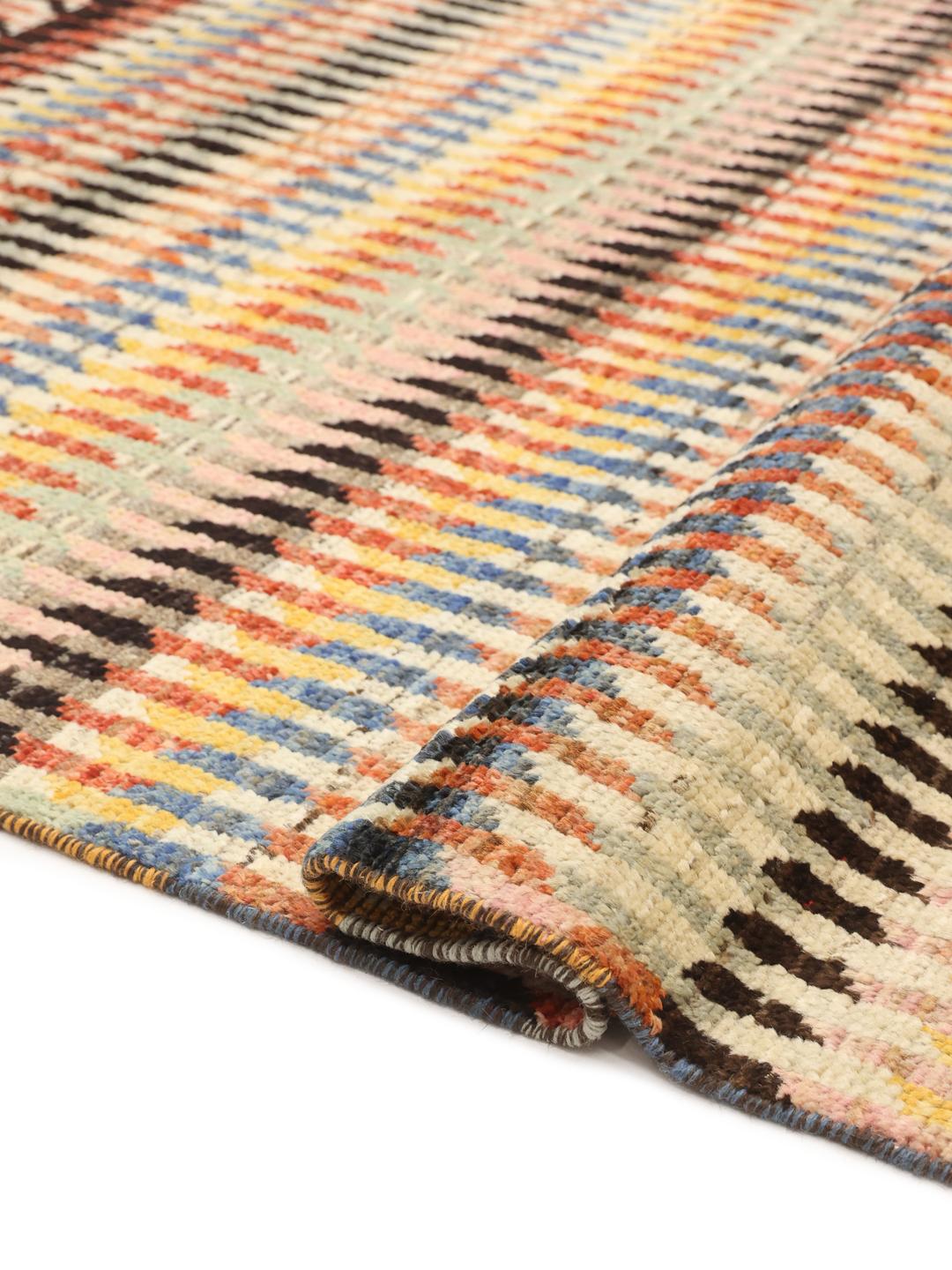
The term 'hand-knotted' refers to the most traditional method of rug making, where individual strands of Wool are tied around the foundation threads. This technique is the hallmark of quality, as it allows for the creation of intricate patterns and a dense, long-lasting pile. Unlike mass-produced alternatives, this method creates a structure that can last for generations, with the Wool pile naturally resisting wear and maintaining its lustre.
Signature design elements of these rugs often include bold, geometric motifs and vibrant, earthy colour palettes that reflect the natural dyes and landscapes of the region. The striped layout seen here is a classic interpretation of tribal aesthetics, where repeating lines create a sense of order and balance. Such patterns are deeply rooted in the history of the weavers, often serving as a visual language to tell stories or denote tribal identity.
Owning a hand-knotted rug from this tradition is an investment in cultural heritage. Collectors value these pieces not just for their visual beauty, but for the human effort and historical continuity they represent. Every rug is a testament to a craft that has survived for centuries, providing you with a connection to a global tradition of artistry that is increasingly rare in the modern world.