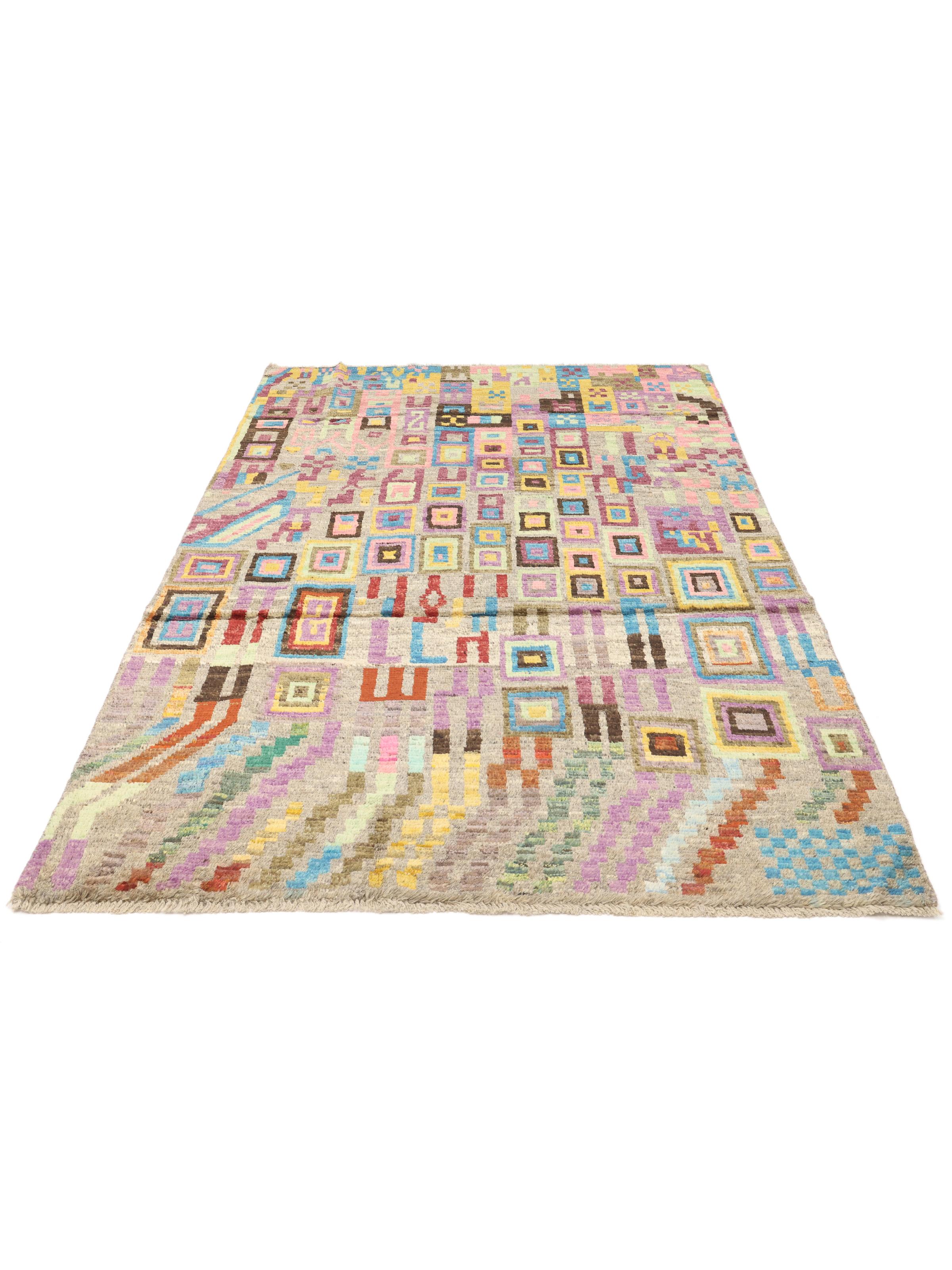
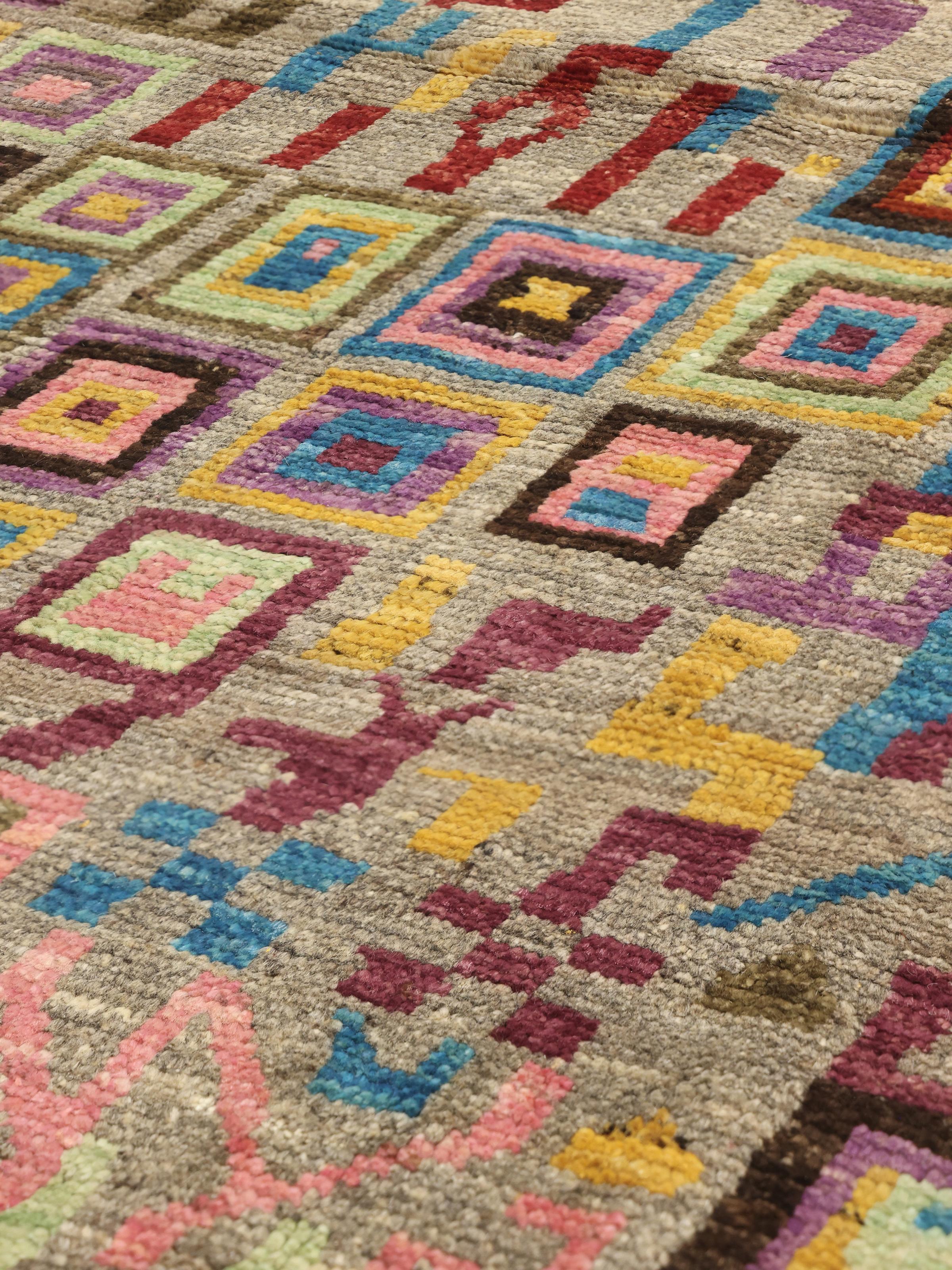
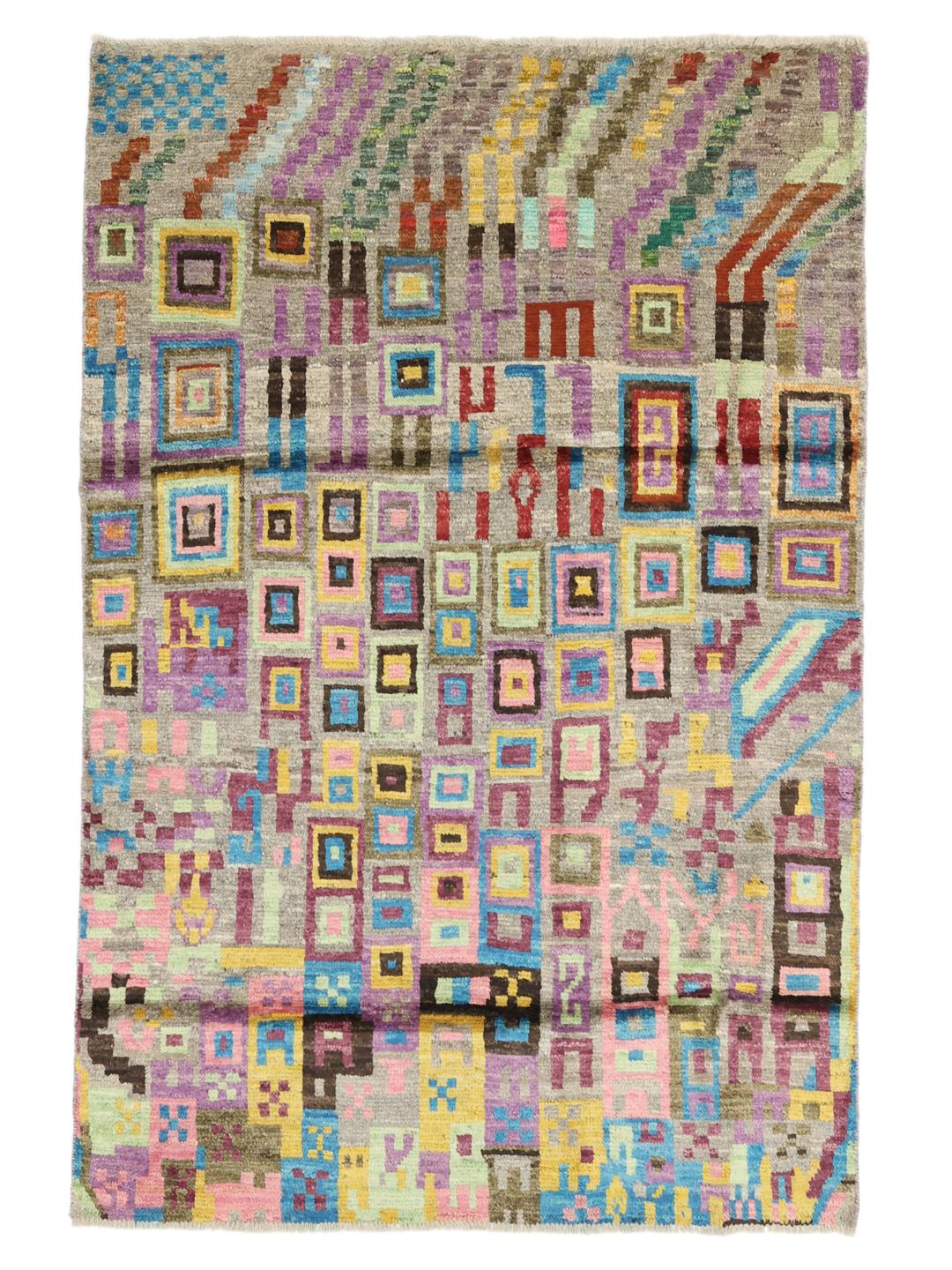
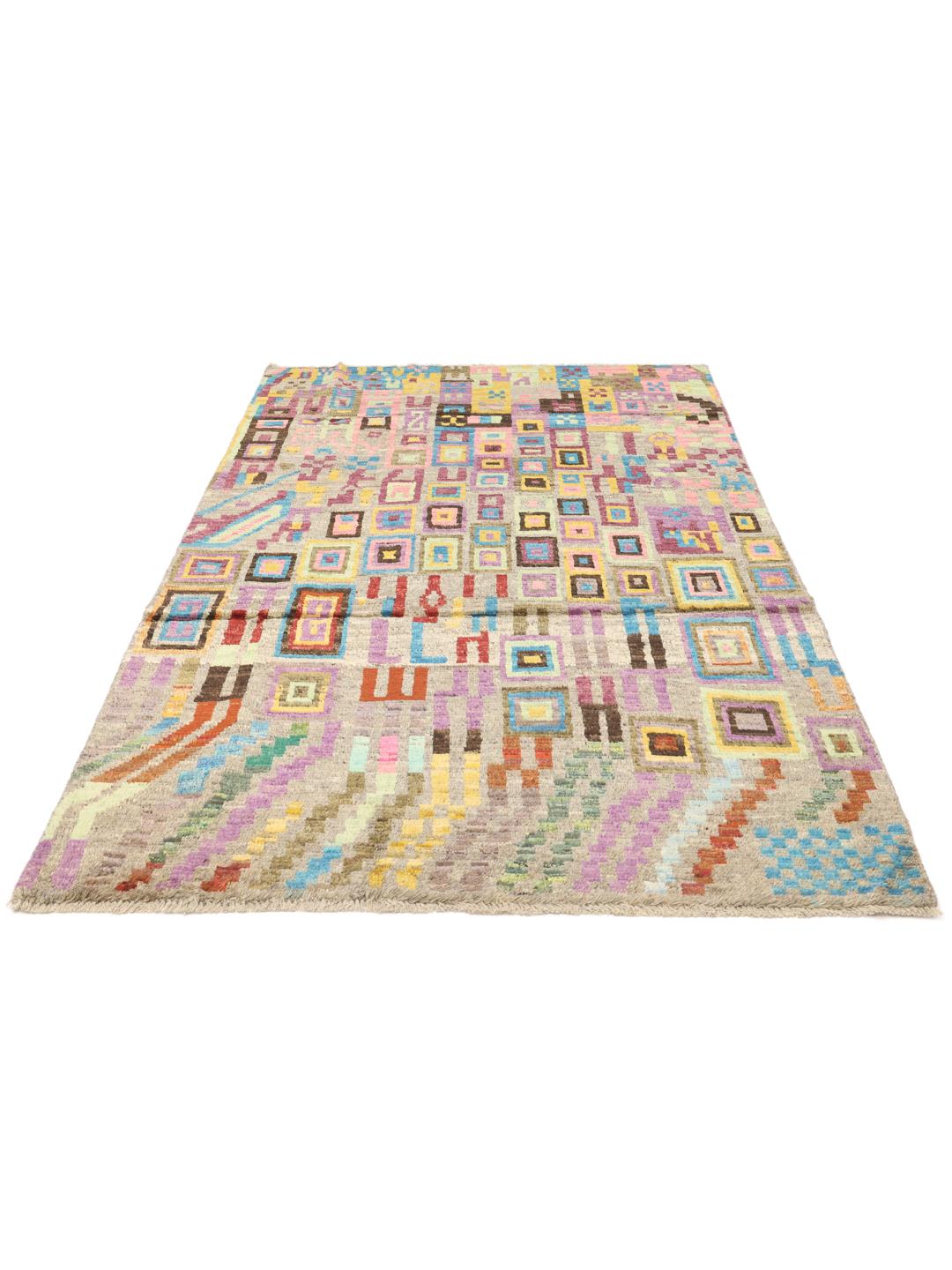
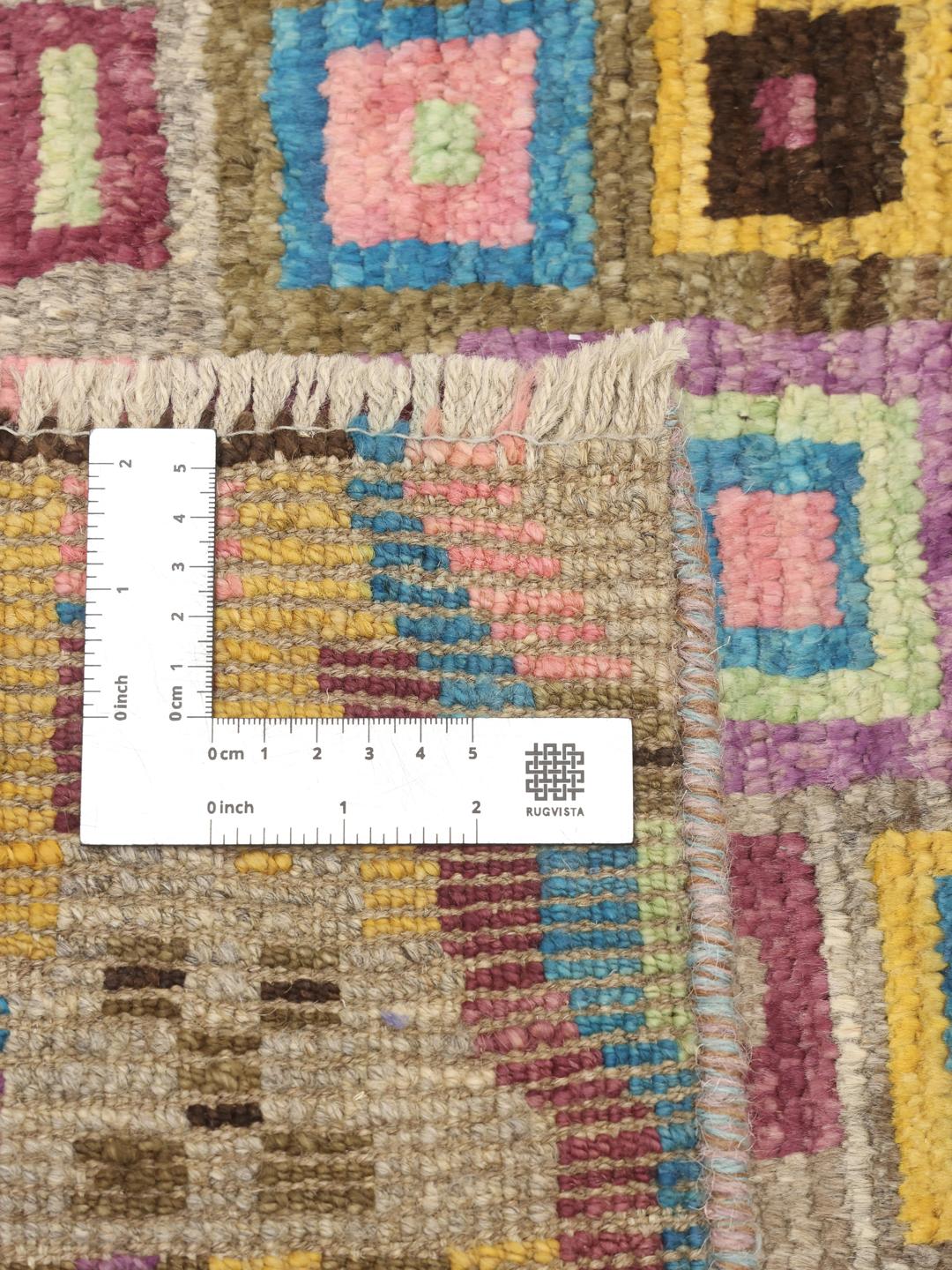
The tradition of rug weaving in Afghanistan is deeply rooted in a rich history of tribal artistry, where nomadic influences and local heritage have converged for centuries. Afghan weavers are renowned for their ability to blend traditional techniques with contemporary design sensibilities, often drawing inspiration from the rugged landscapes and vibrant culture of the region.
While the term 'Berber' originally referred to the tribal weaving traditions of North Africa, it has evolved in the global market to describe rugs that feature thick, plush piles and bold, often abstract or geometric designs. Today, Afghan artisans have embraced this aesthetic, infusing it with their own unique colour palettes and refined knotting skills to create pieces that feel both ancient and modern.
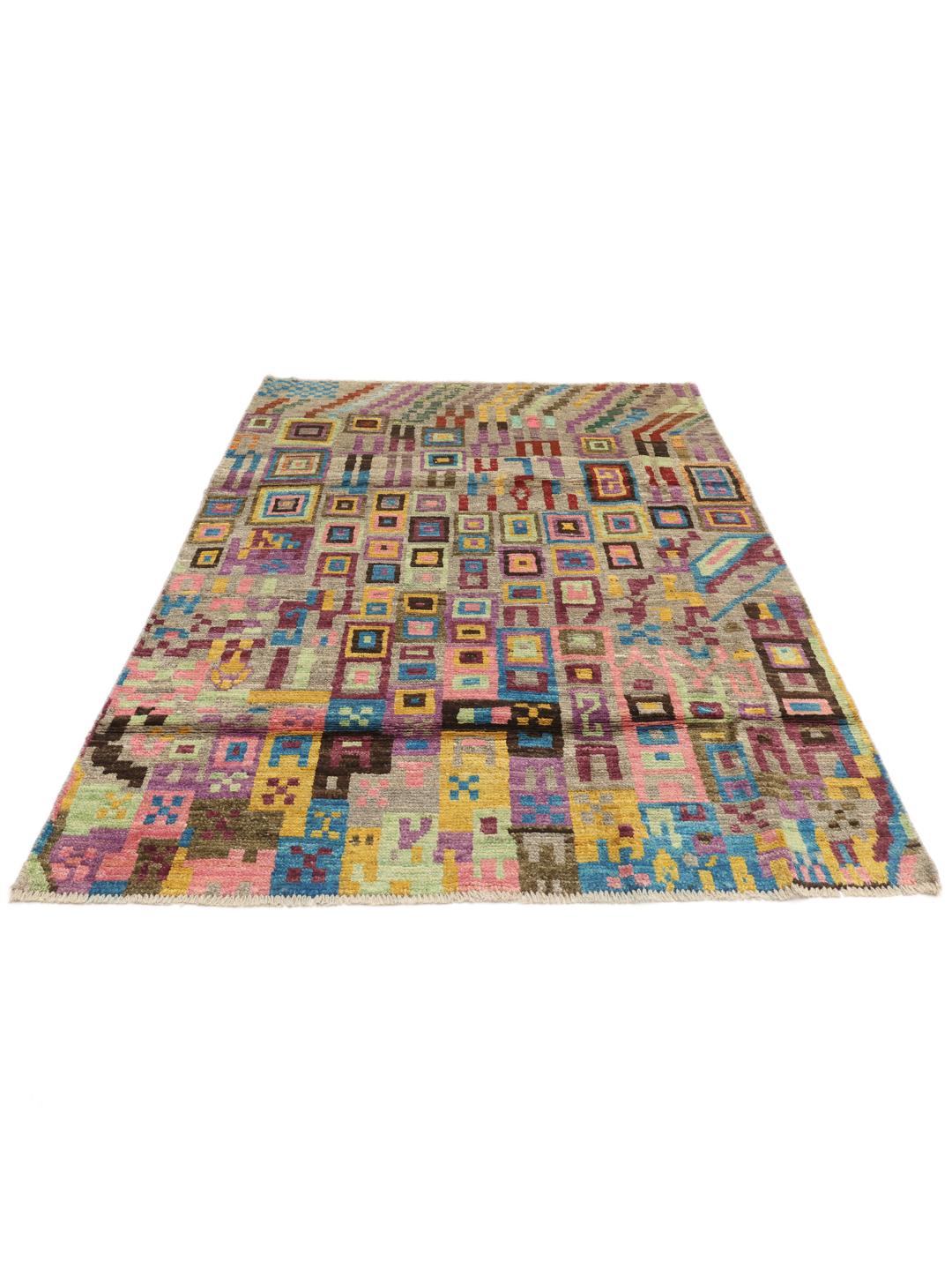
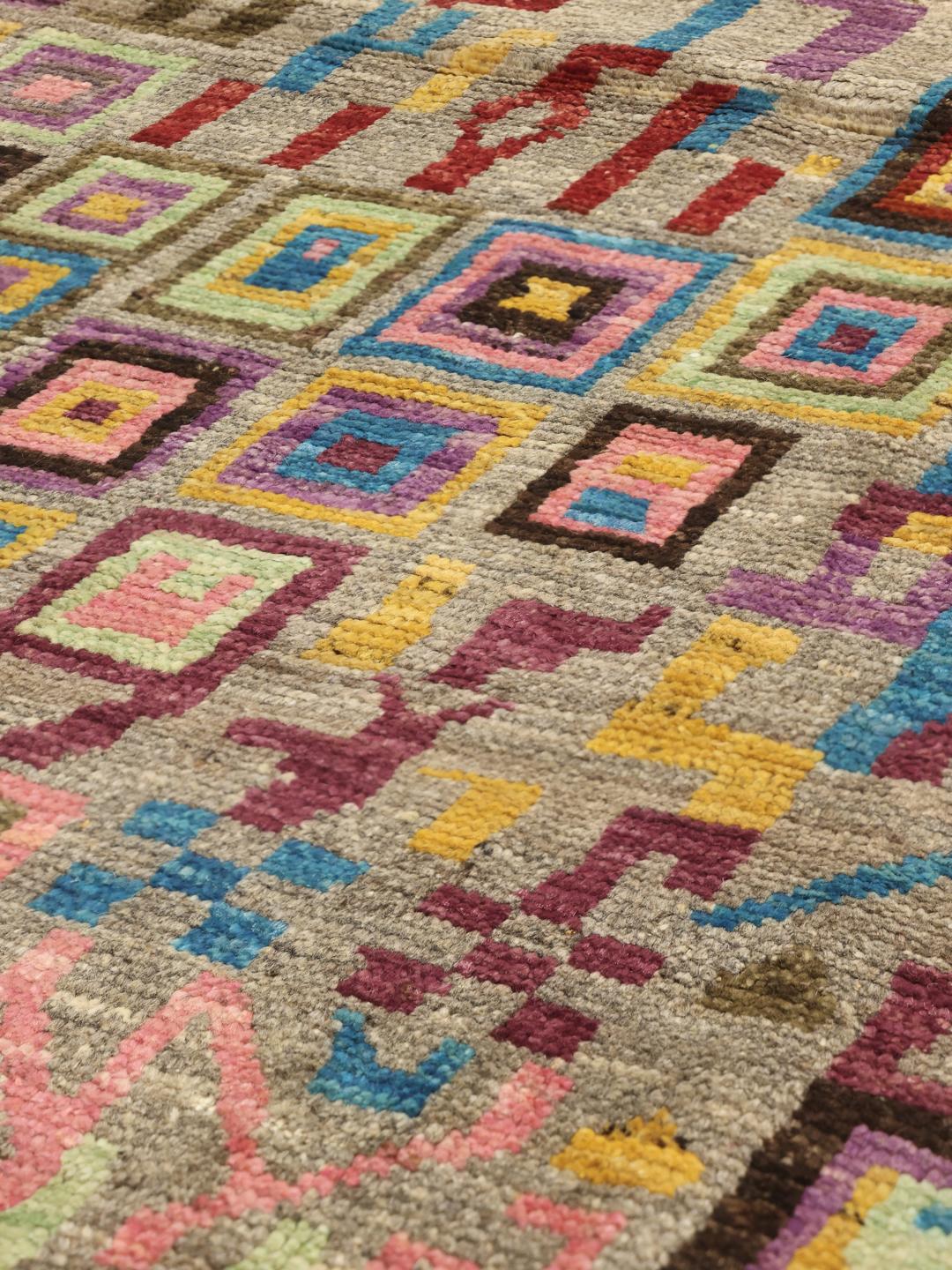
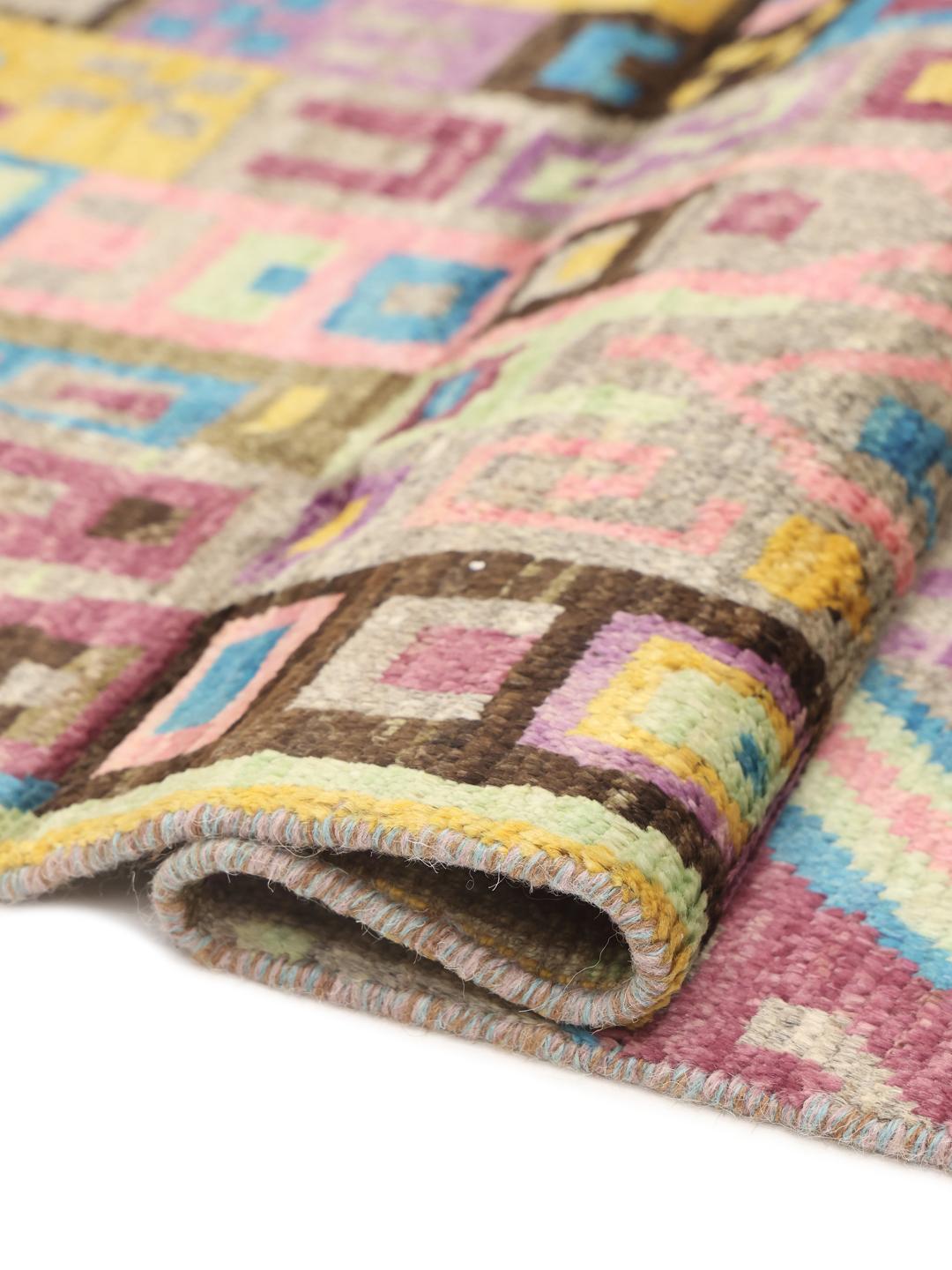
The signature design elements of these rugs often include free-form geometric shapes and expressive, non-traditional compositions. Unlike strictly formal rugs, these pieces lean into artistic spontaneity, utilising a wide spectrum of colours to create movement across the field. The use of natural, high-quality wool ensures that these colours remain rich and deep, providing a visual depth that is hard to achieve with synthetic materials.
Owning an Afghan-made rug is an investment in cultural heritage and skilled labour. These pieces are highly valued by collectors not only for their beauty but for the narrative they carry from the hands of the weaver to your floor. Each rug serves as a testament to a living craft that continues to adapt and thrive, offering a sense of authenticity that mass-produced floor coverings simply cannot provide.