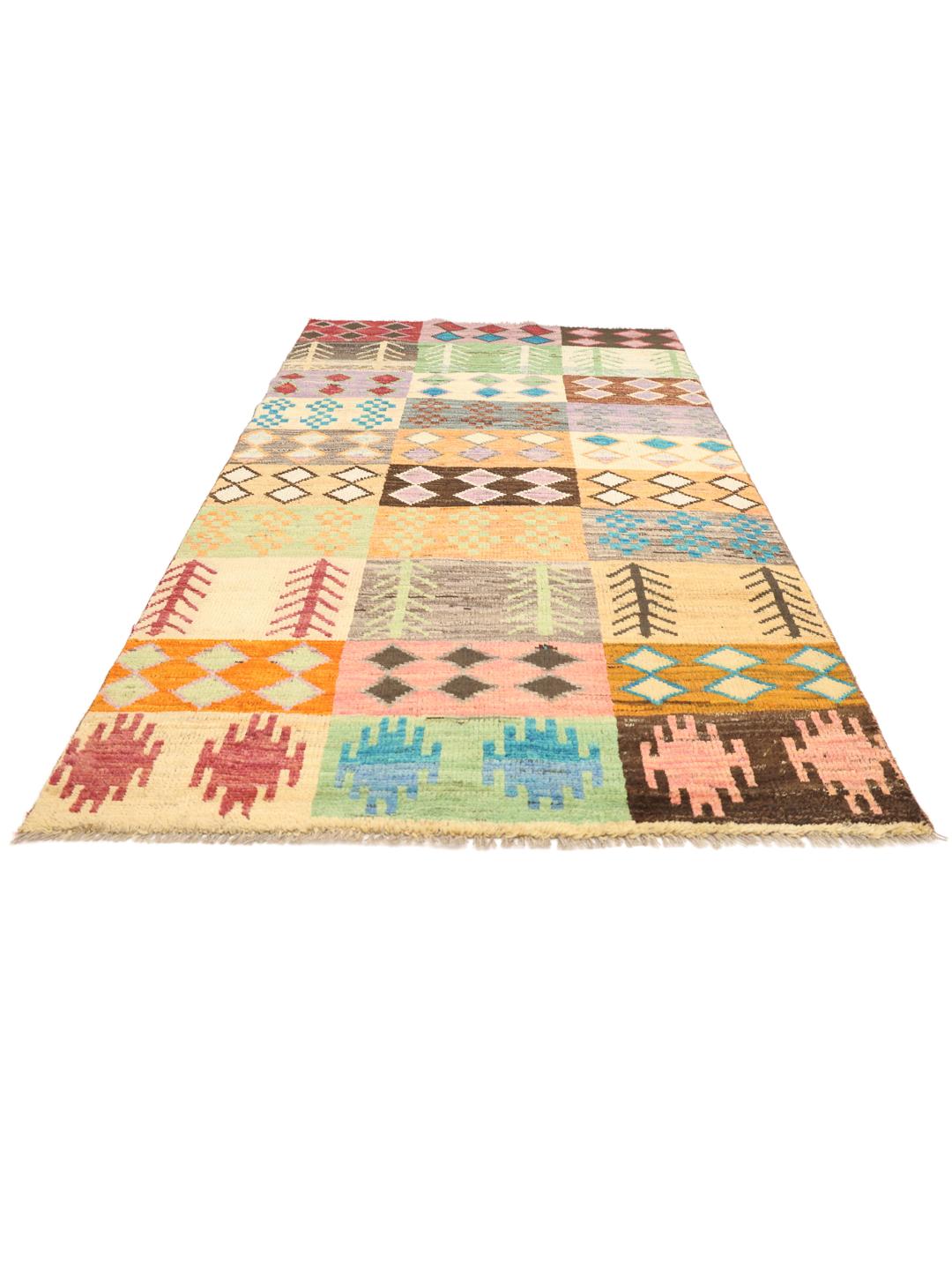
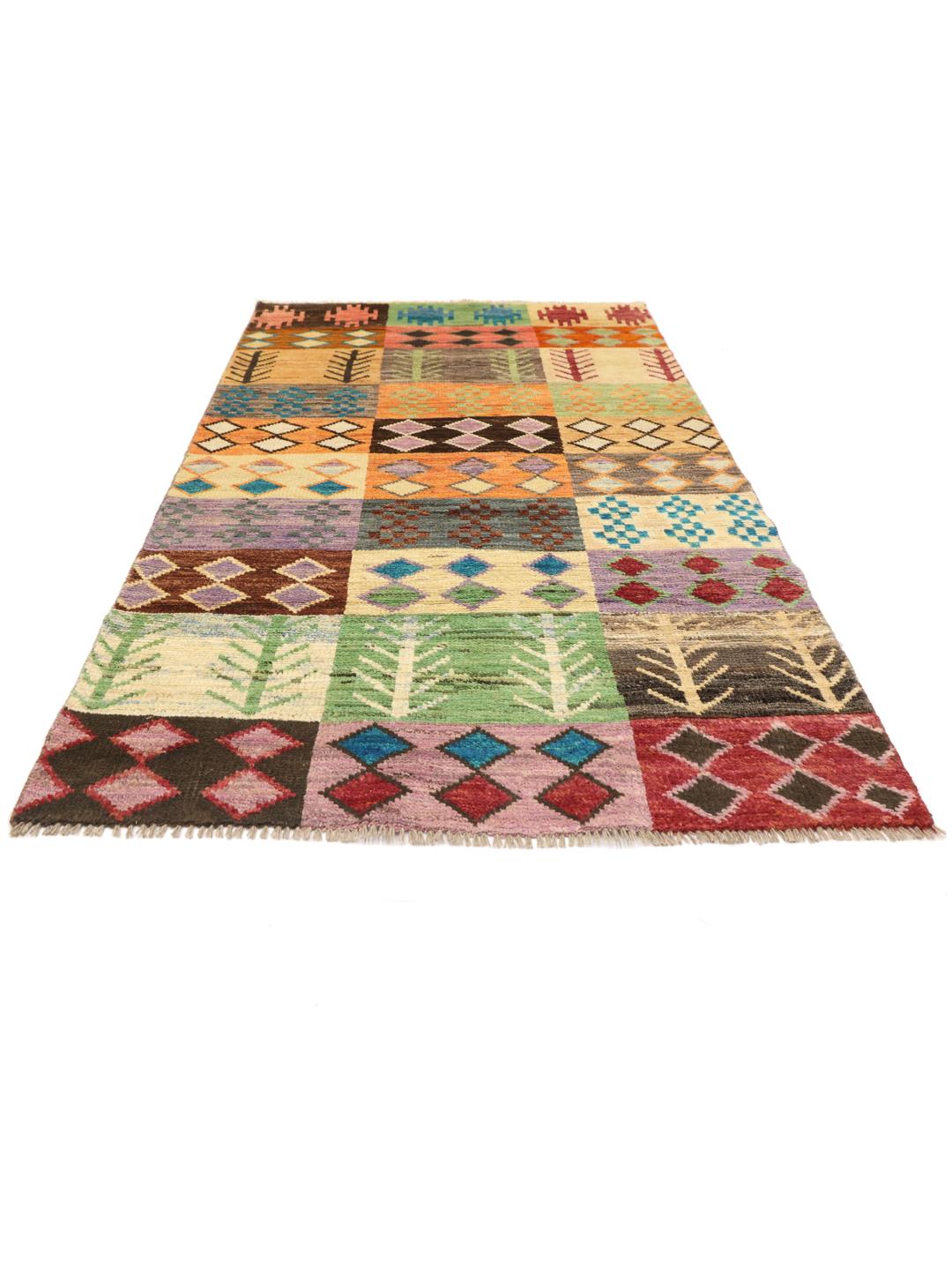
The tradition of weaving rugs in Afghanistan is deeply rooted in the history of the Central Asian region, where craftsmanship has been passed down through generations of nomadic and settled communities. These rugs often reflect the landscape and the cultural identity of the people, drawing inspiration from ancient symbols and the natural world to create designs that are both meaningful and visually captivating.
Berber-style rugs, while historically associated with North Africa, have seen their design principles travel across cultures, inspiring weavers in Afghanistan to adopt similar geometric, tribal aesthetics. This cross-pollination of styles has led to the development of unique, contemporary interpretations that blend traditional knotting techniques with bold, expressive patterns that feel both ancient and modern.
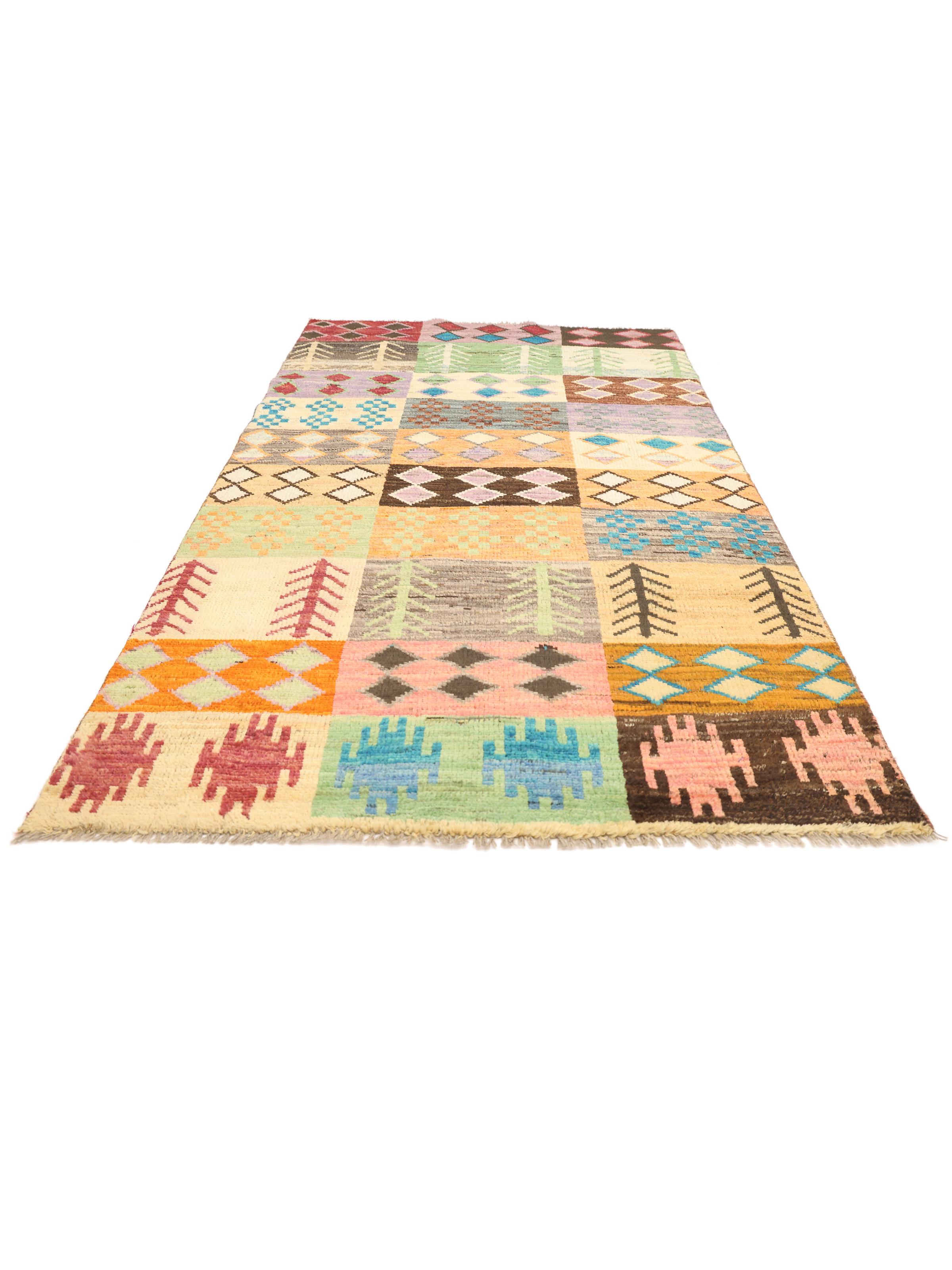
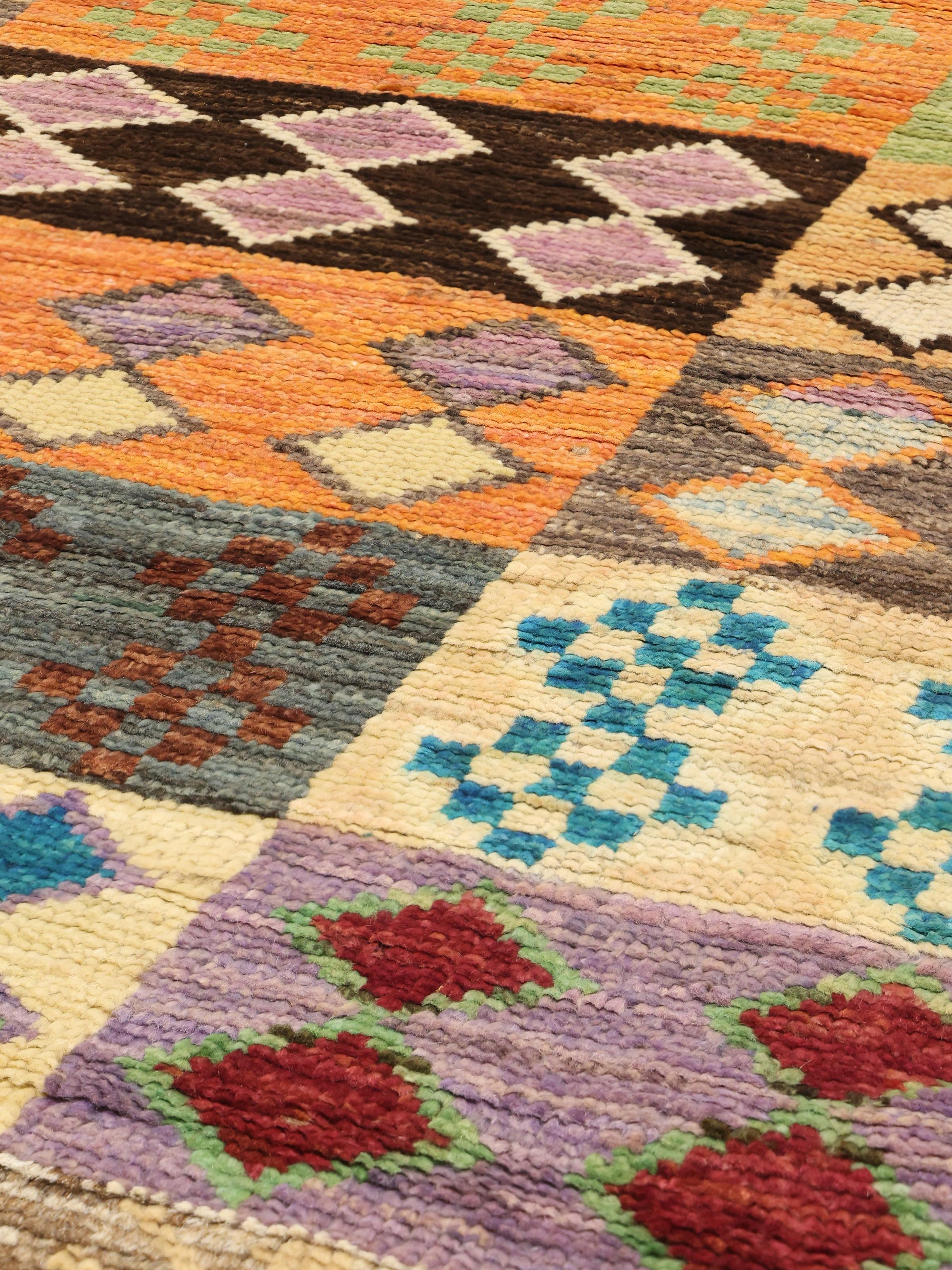
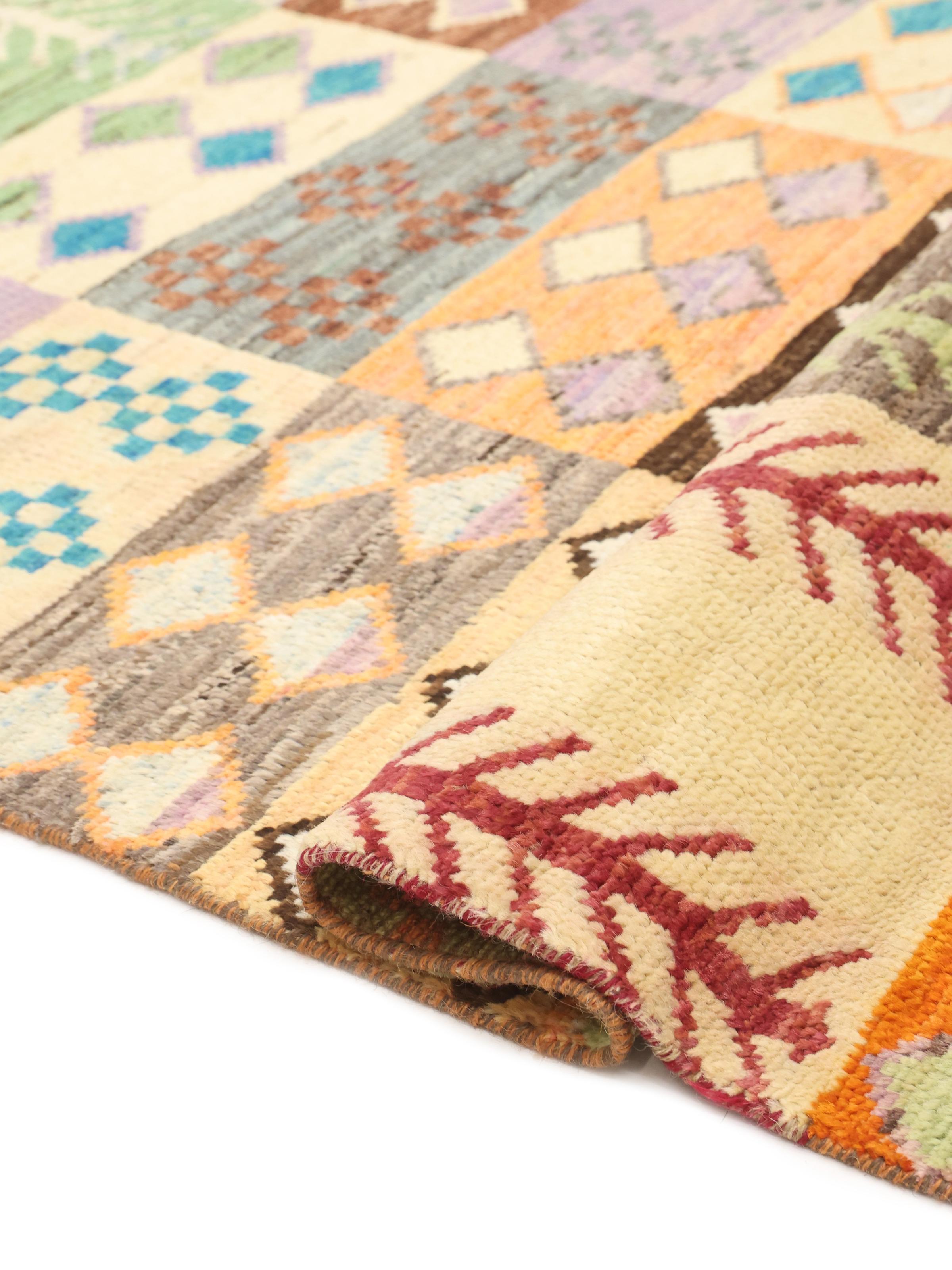
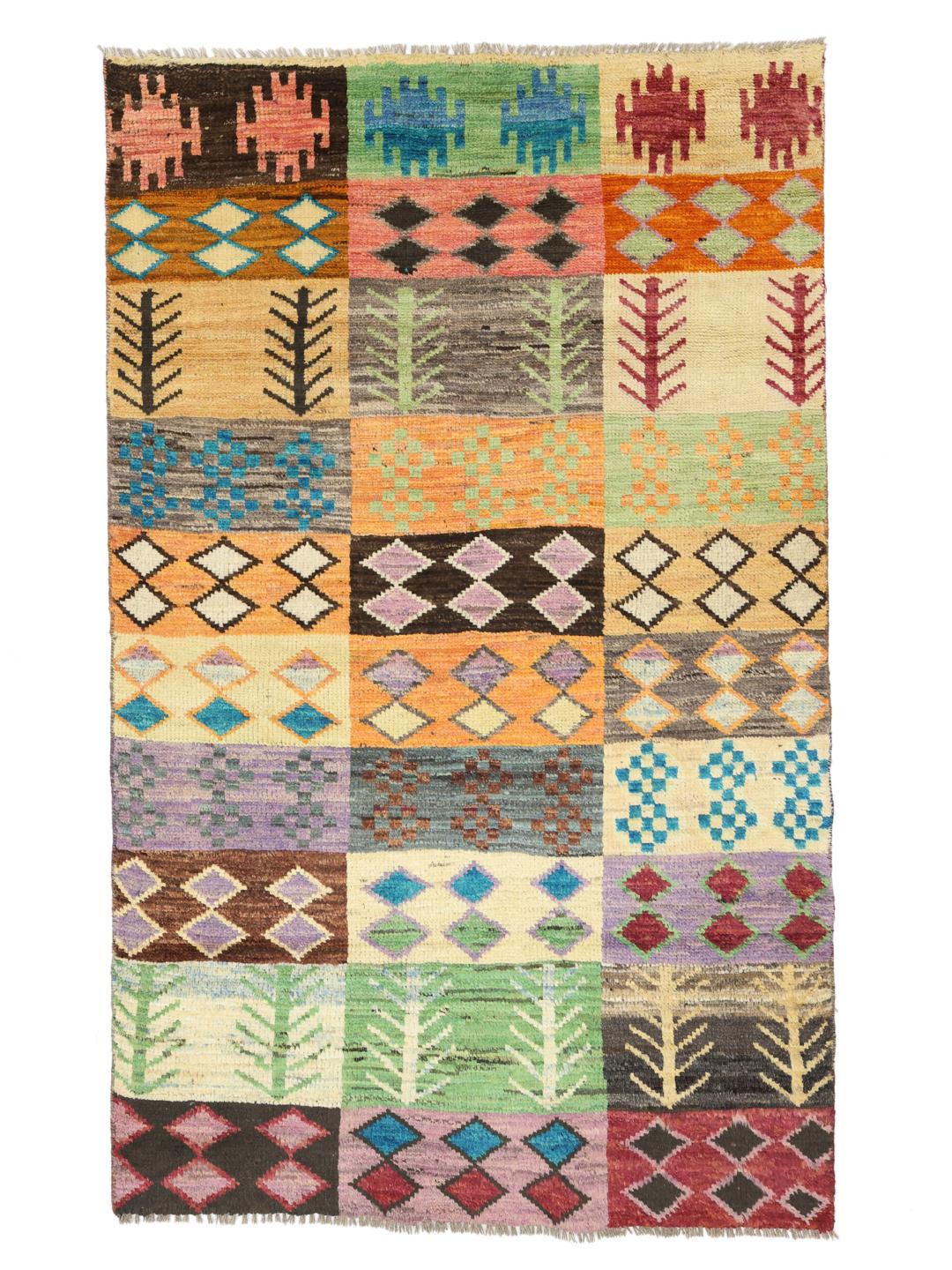
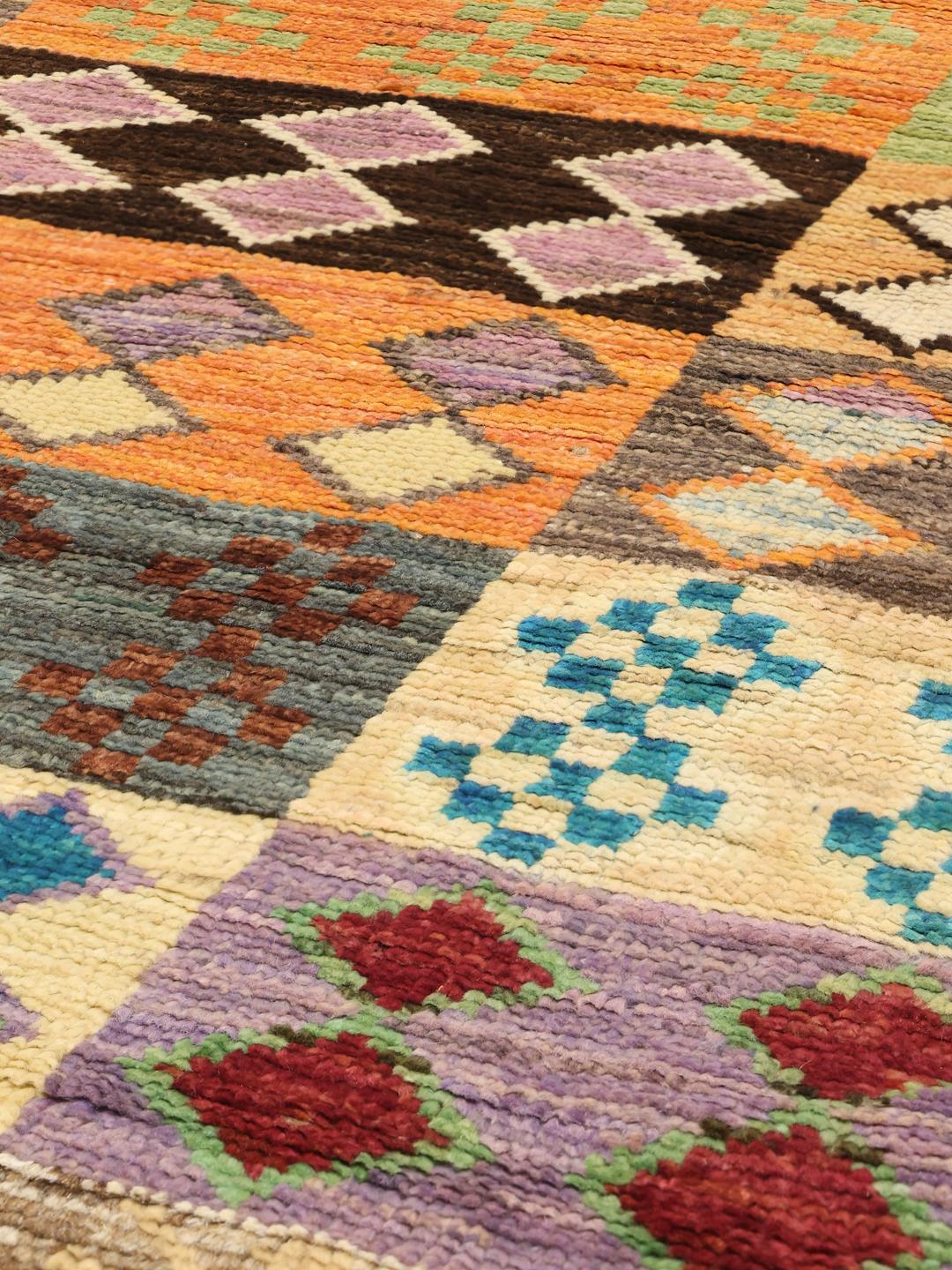
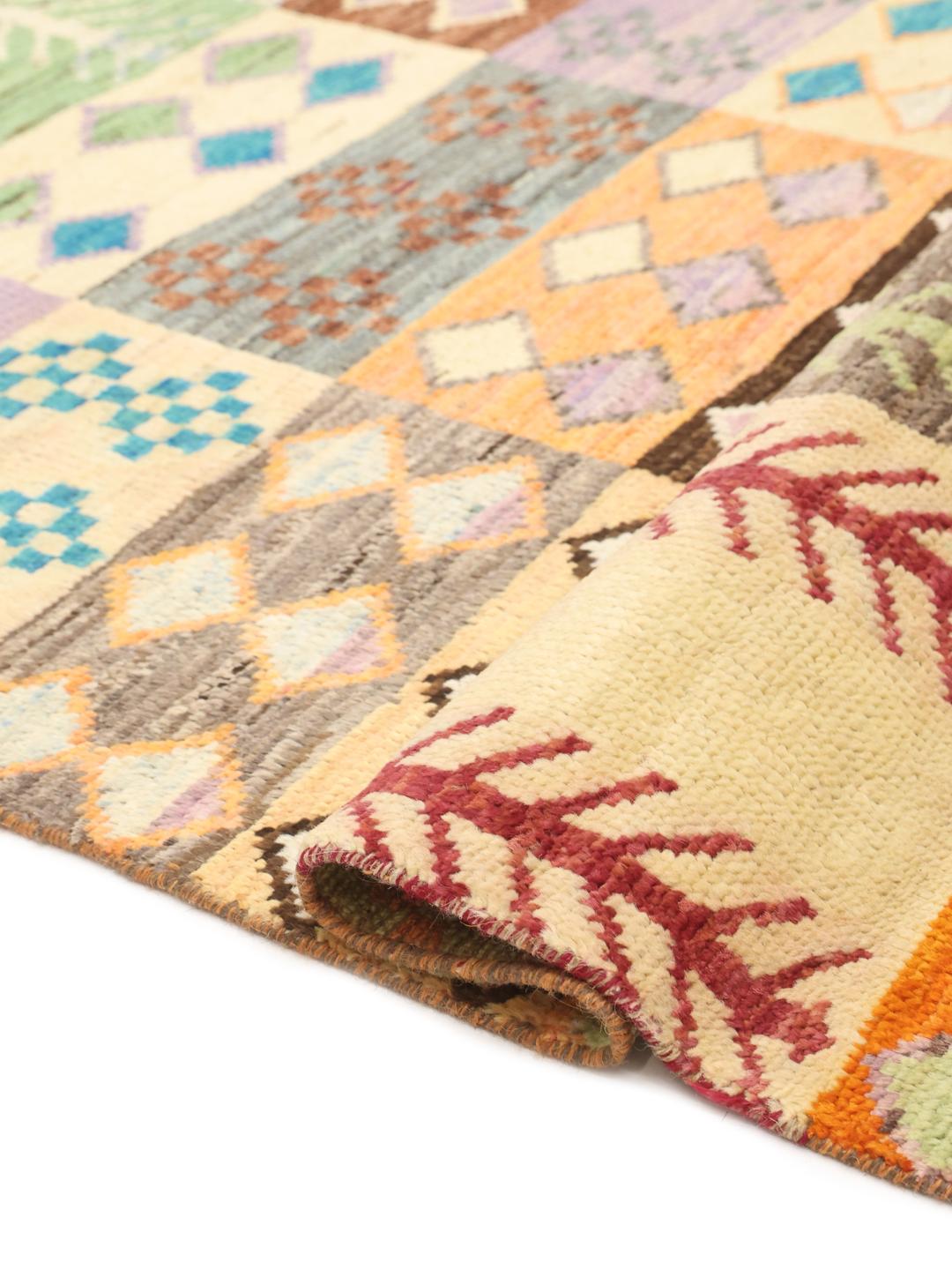
The visual language of this rug is defined by its patchwork grid, a hallmark of tribal design that allows weavers to showcase a variety of motifs within a single frame. From stylized trees to repeating diamonds and crosses, these symbols often carry historical significance related to protection, fertility, or the natural environment, turning each rug into a narrative tapestry.
Collectors value these pieces for their authenticity and the human element present in every fibre. Owning a hand-knotted rug from this tradition is an act of supporting a legacy of skill and patience. These items are cherished not just for their utility, but for the cultural depth they add to a home, serving as a reminder of the enduring power of manual craft in our fast-paced world.