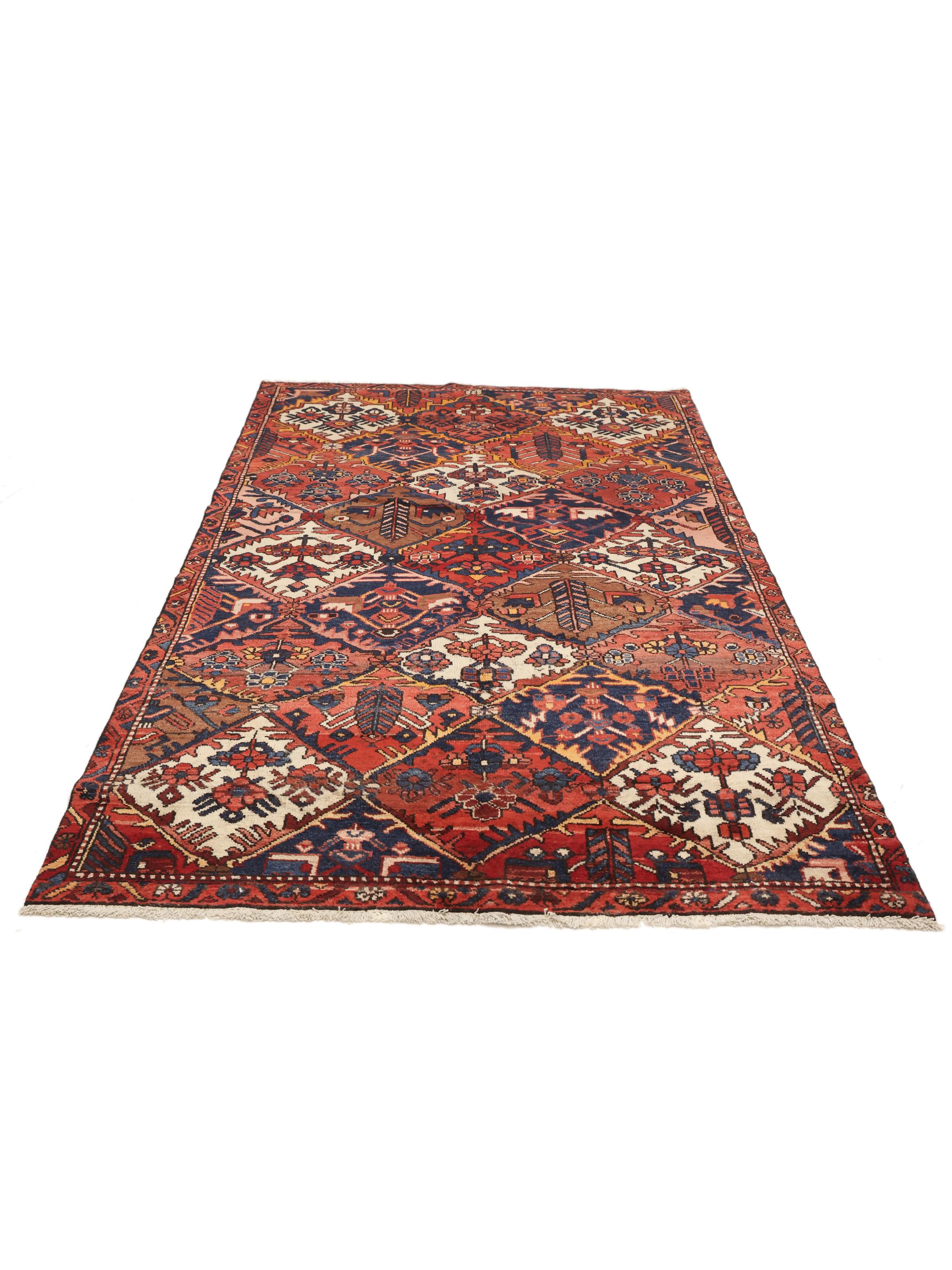
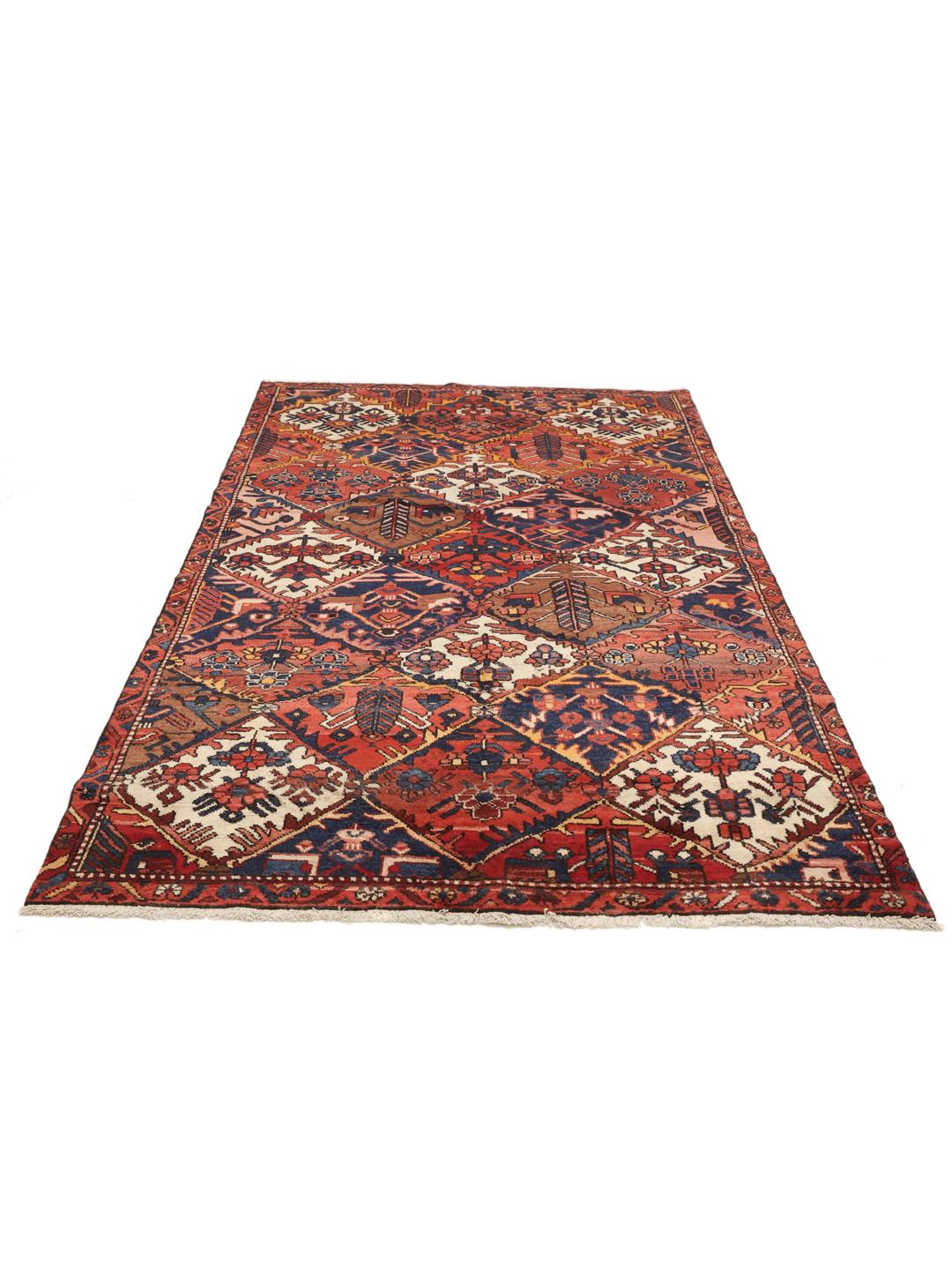
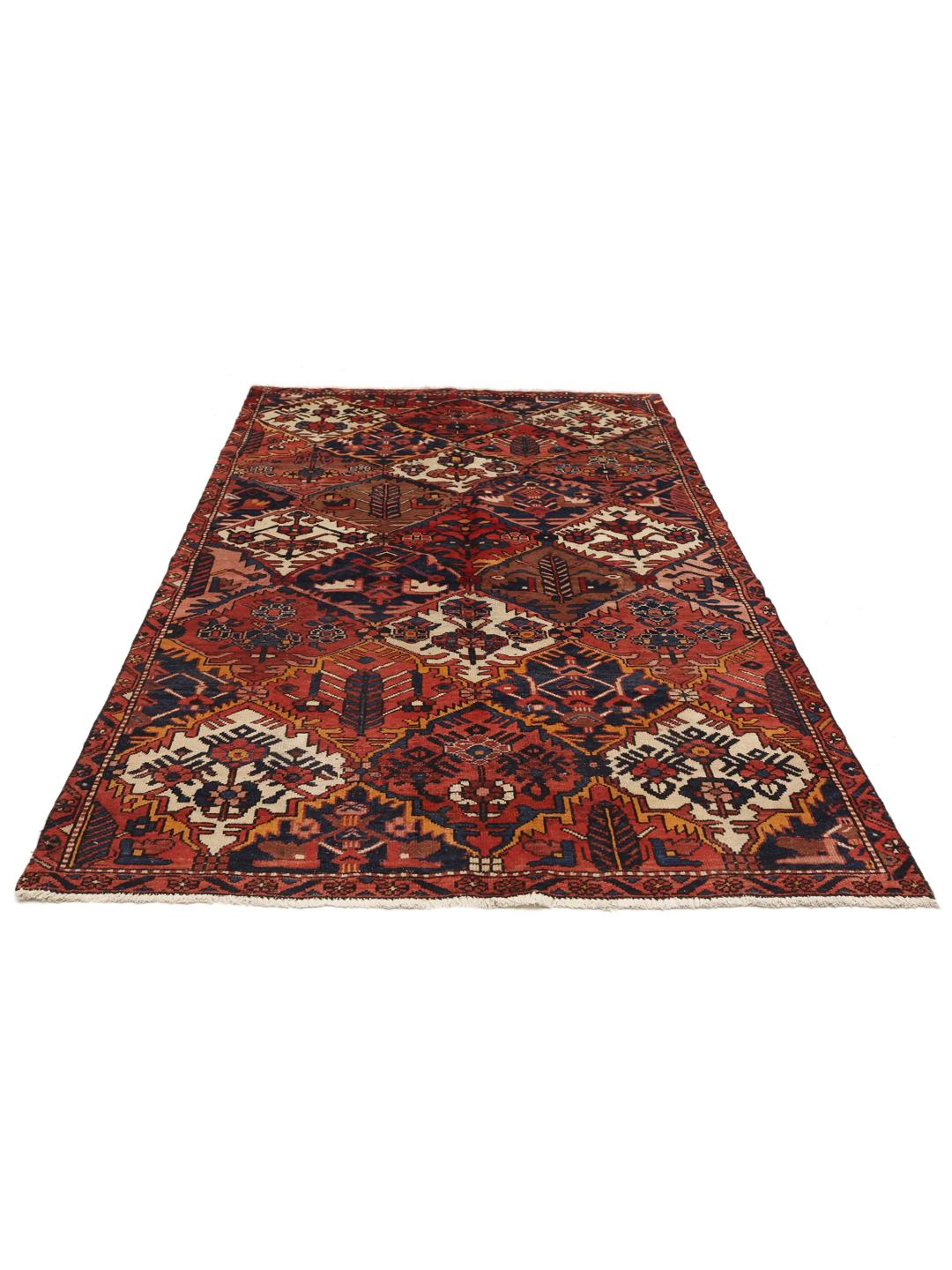
The Bakhtiari people, after whom this rug tradition is named, are a nomadic and semi-nomadic group from the Zagros Mountains in the Middle East. Their weaving traditions are deeply intertwined with their environment, often drawing inspiration from the rugged landscapes and the lush, formal gardens that have been a central part of the region's cultural identity for centuries.
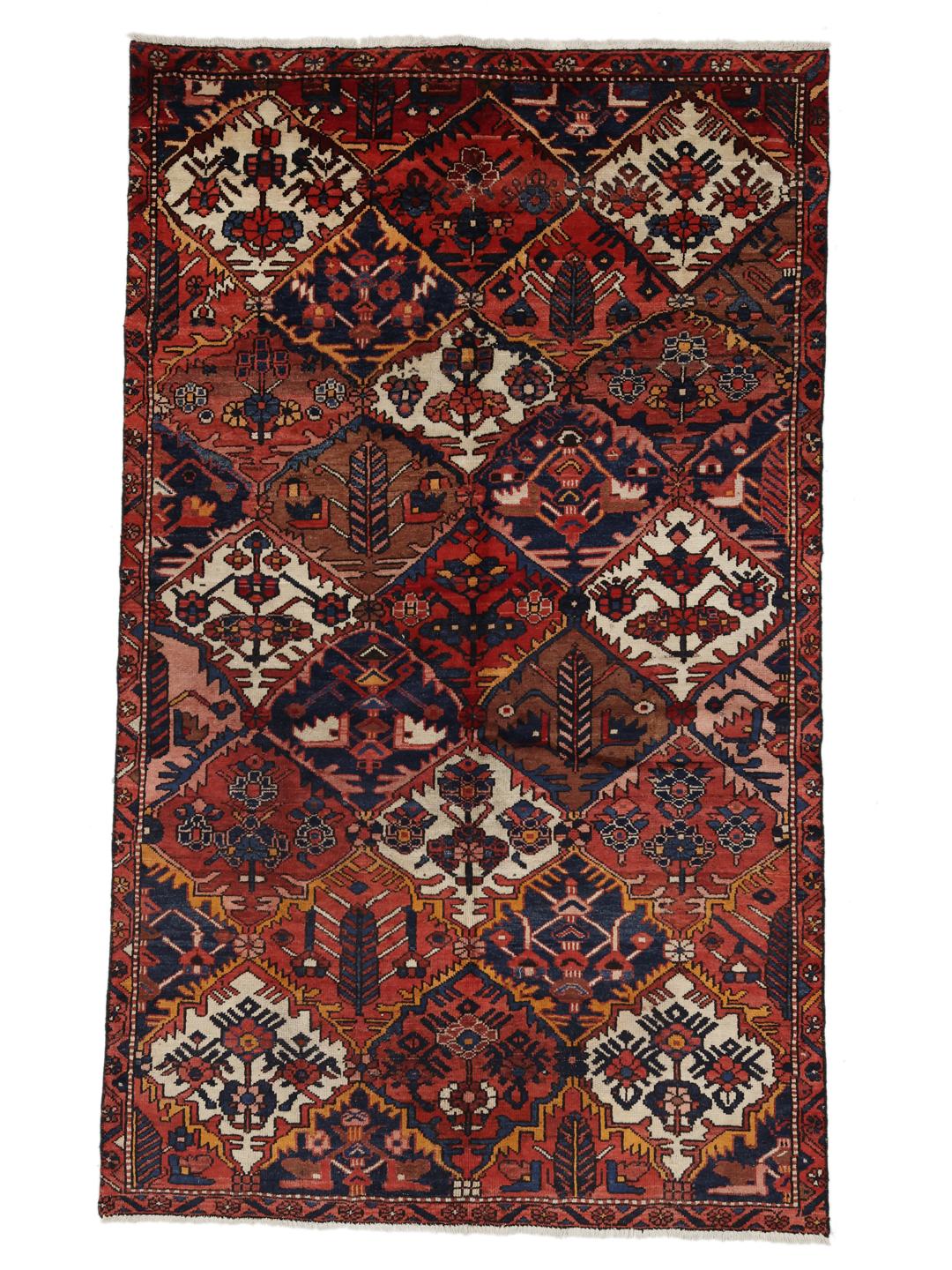
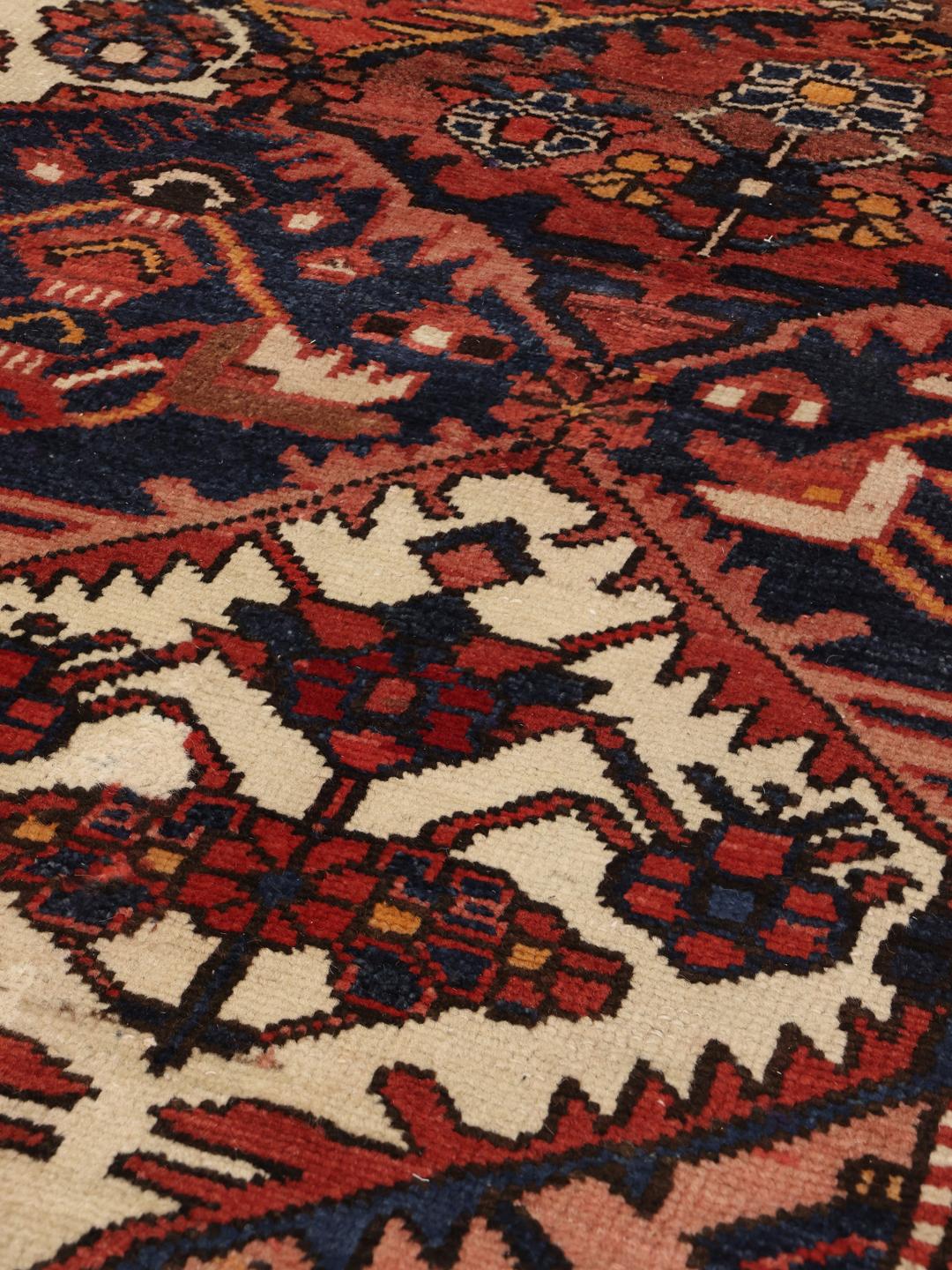
Bakhtiari rugs are famous for their 'khesti' or garden design, which divides the field into a series of repeating compartments. Each compartment often contains a different floral or geometric motif, representing elements of a garden such as trees, flowers, or birds. This style is not just decorative; it is a symbolic representation of the paradise garden, a concept that has permeated Middle Eastern art for millennia.
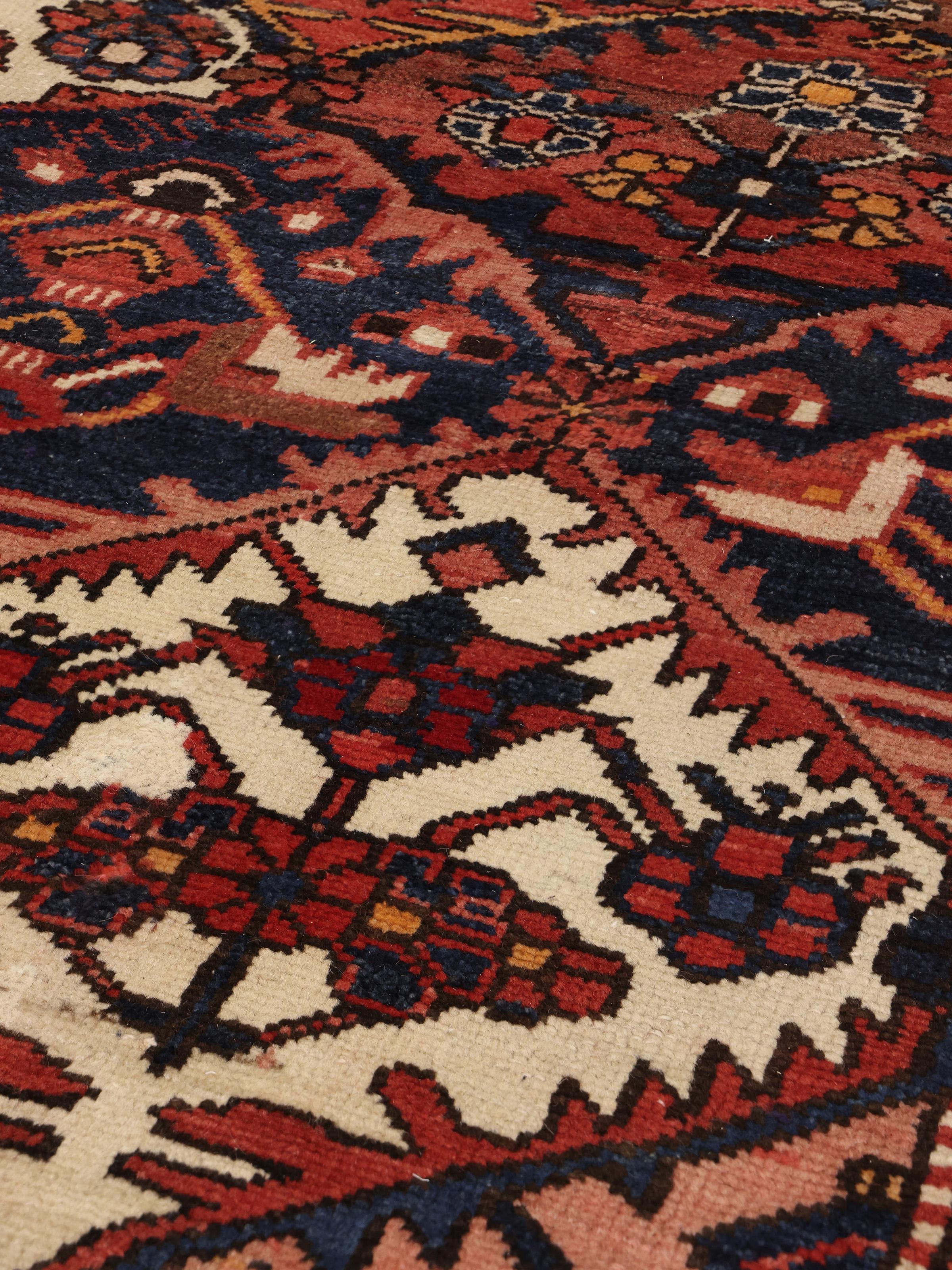
The signature design elements of these rugs are defined by their bold, geometric interpretations of natural forms. While many traditional rugs favour flowing, curvilinear patterns, the Bakhtiari tradition often embraces a more structured, compartmentalised approach. This gives the rug a distinctive, architectural quality that makes it stand out from other regional styles, offering a balance between the organic beauty of the motifs and the rigid geometry of the layout.
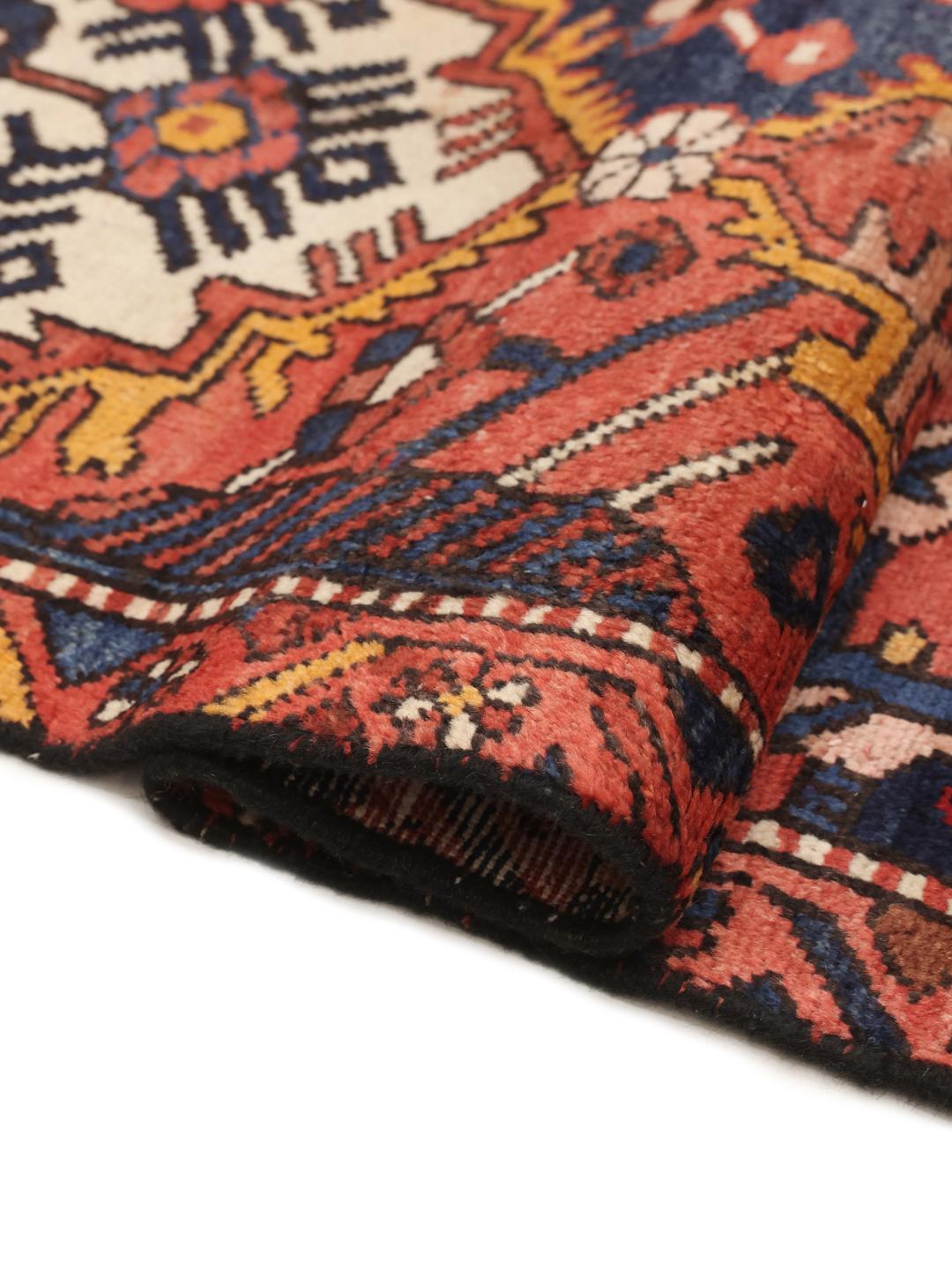
Collectors value Bakhtiari rugs for their robust construction and the authentic, tribal spirit they bring to a space. They are seen as a bridge between the nomadic roots of their creators and the sophisticated demands of interior design. Owning one is an investment in a living tradition, a piece of heritage that carries the stories and skills of the people who have perfected this craft over generations.