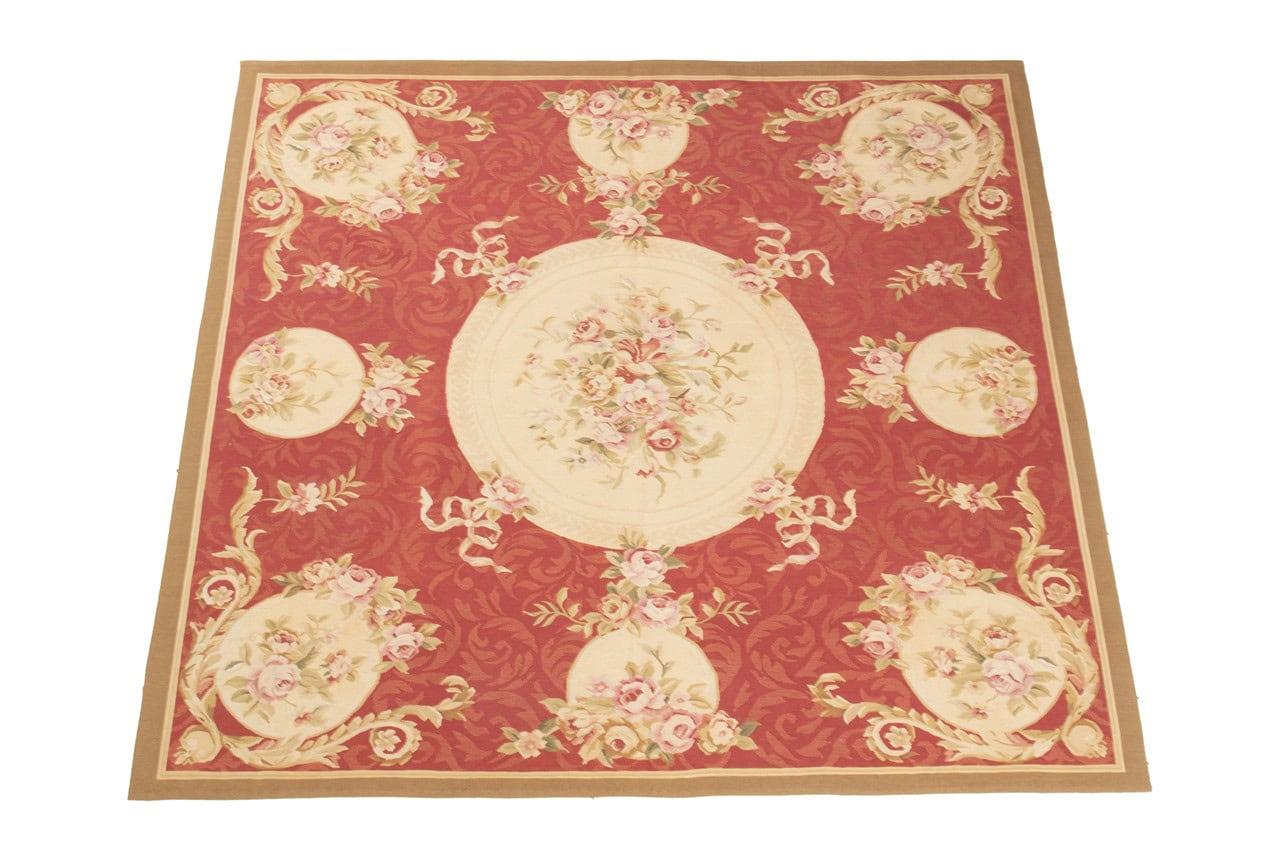
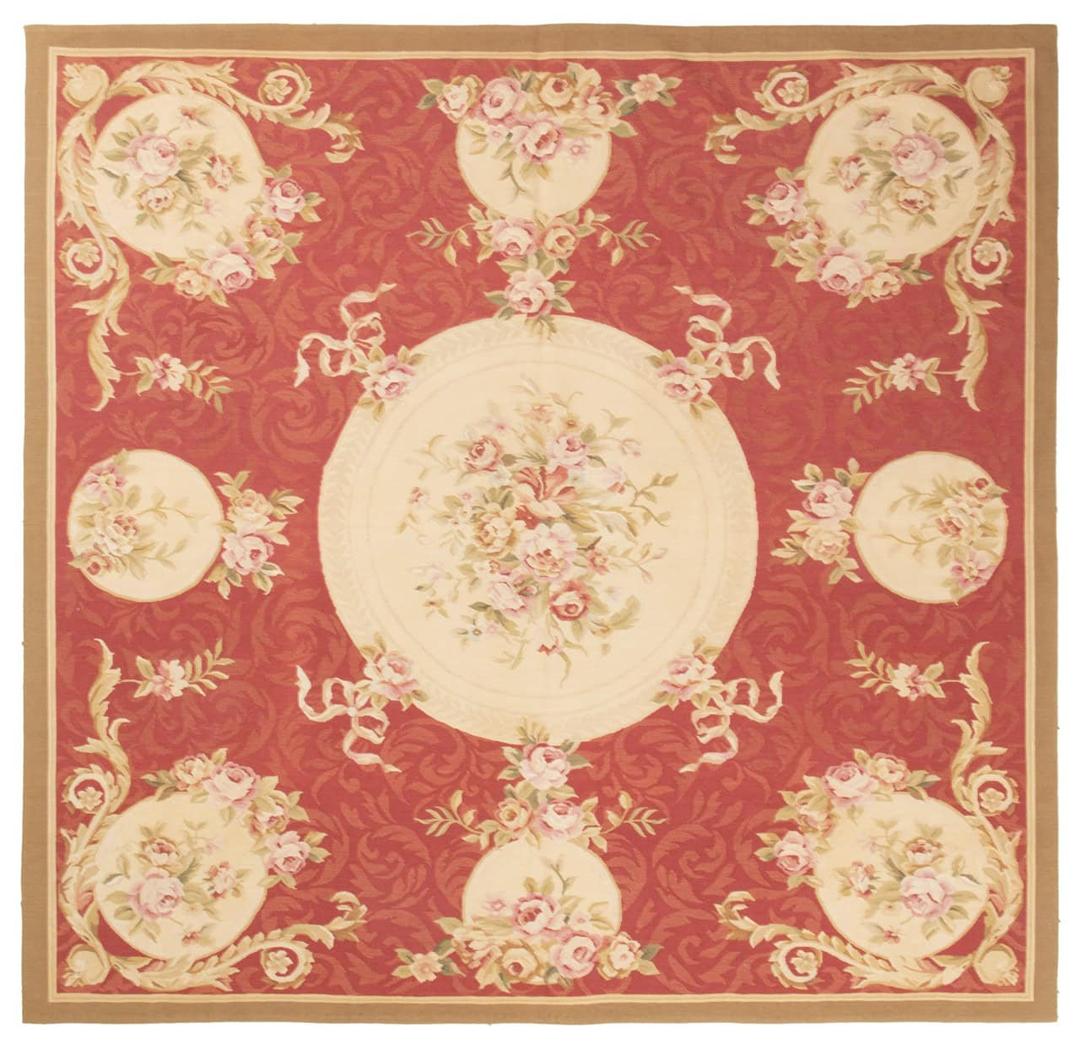
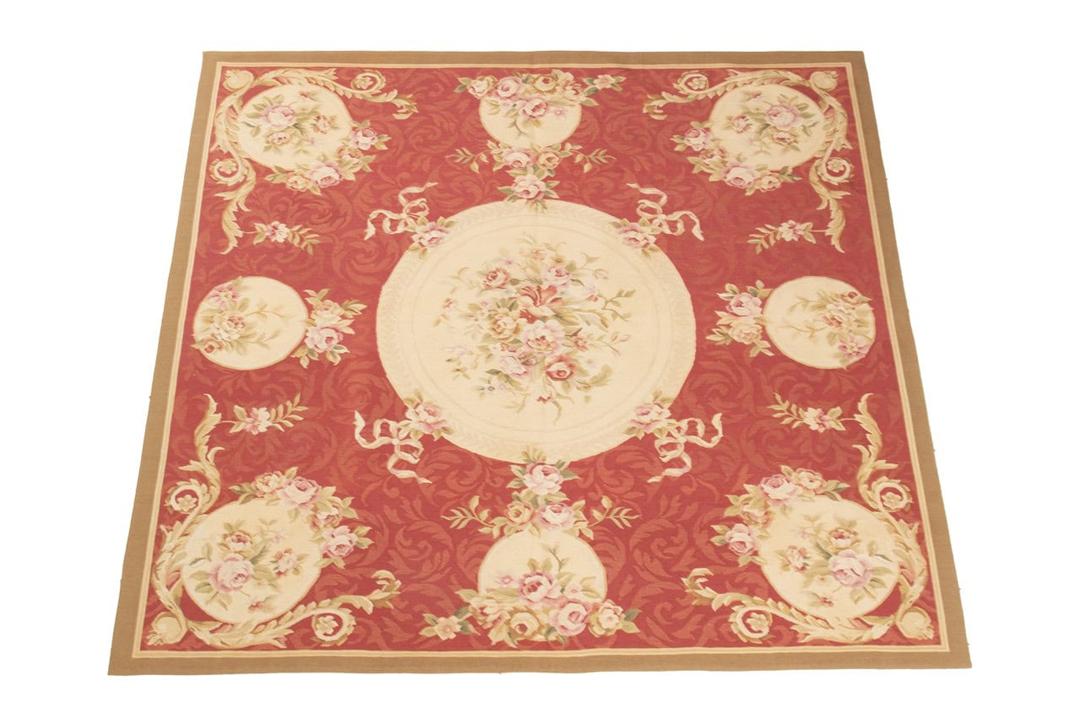
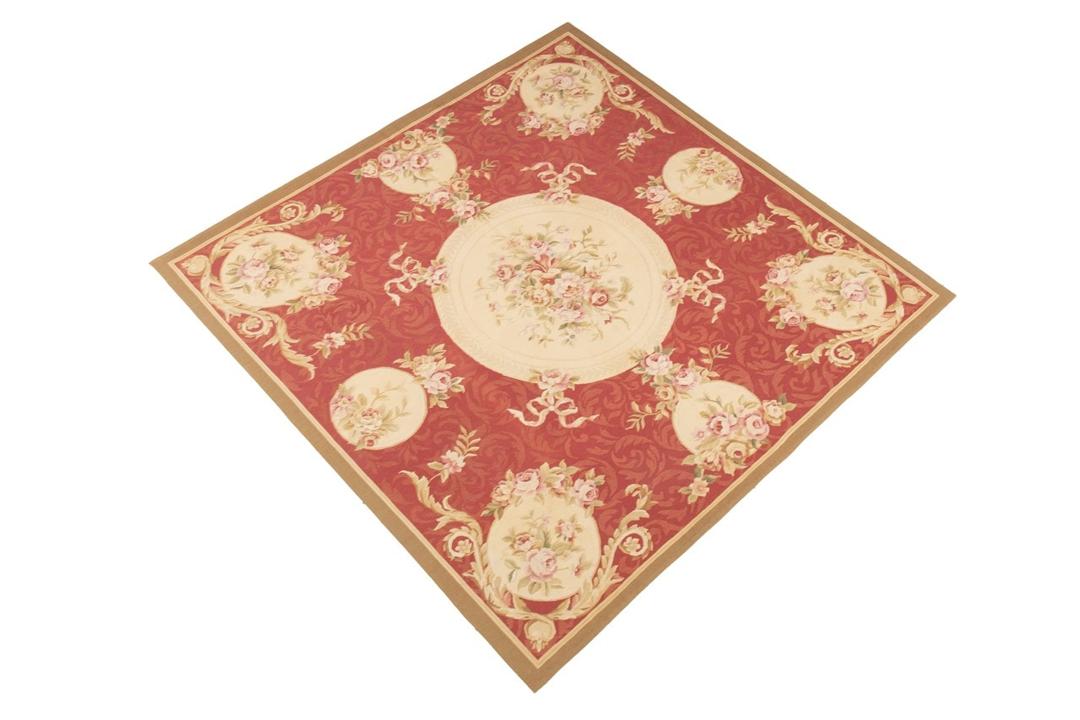
The Aubusson style finds its roots in the historic French town of Aubusson, a centre of tapestry production since the 15th century. Originally commissioned for royal palaces and grand estates across Europe, these designs are famous for their romantic, neoclassical floral motifs and medallions. While the tradition began in France, it has since inspired weavers globally, resulting in beautiful pieces that carry on this storied legacy of decorative artistry.
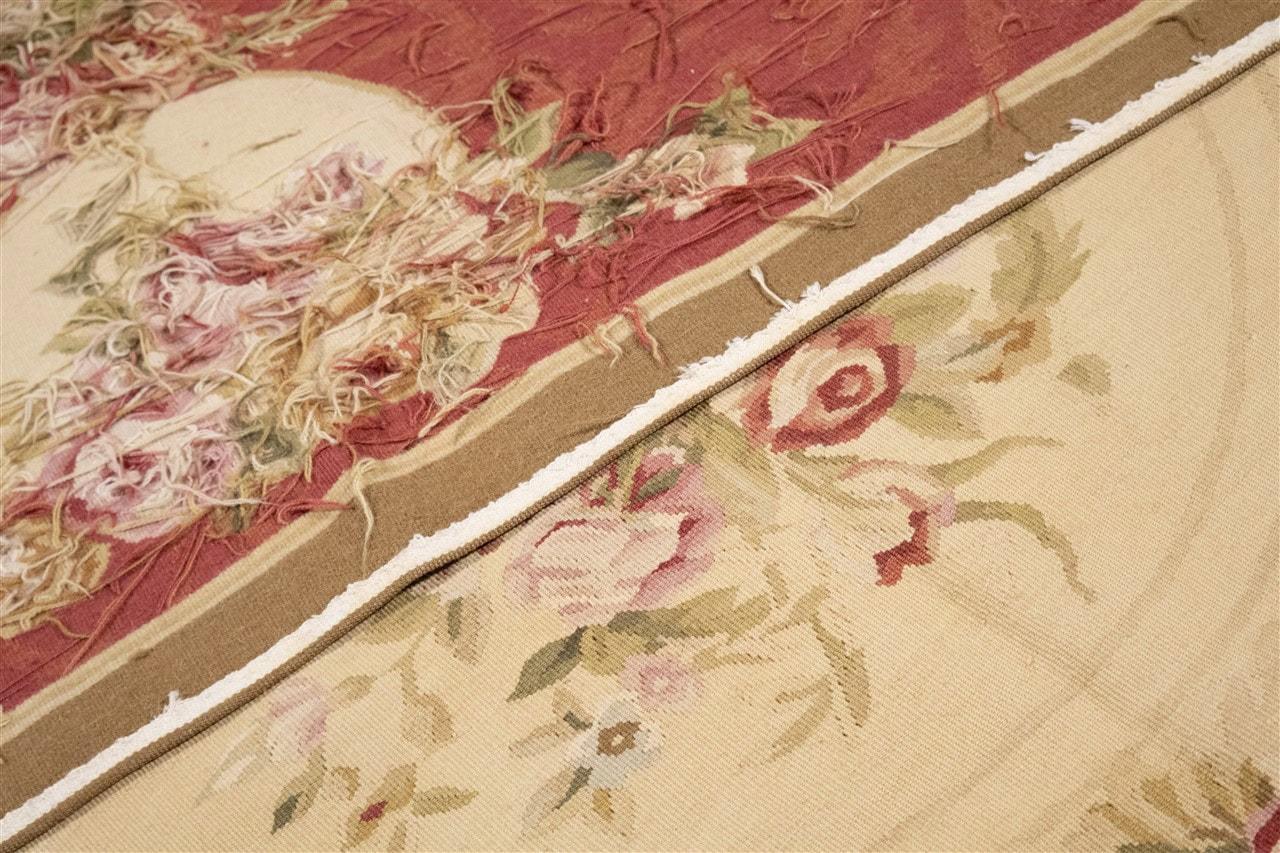
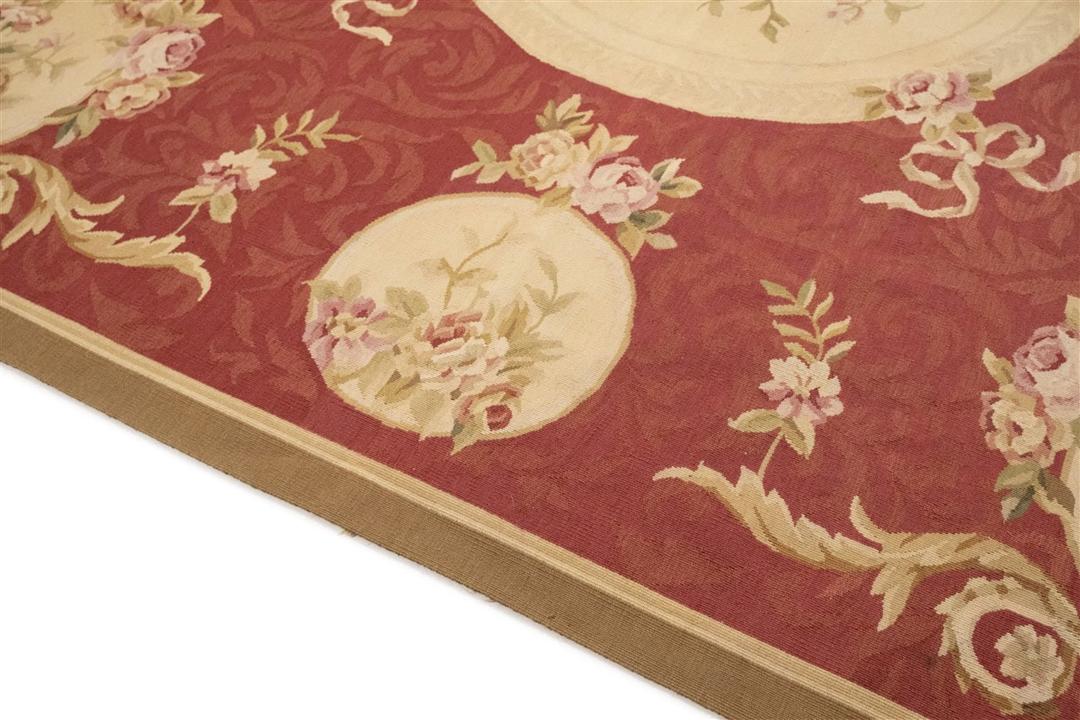
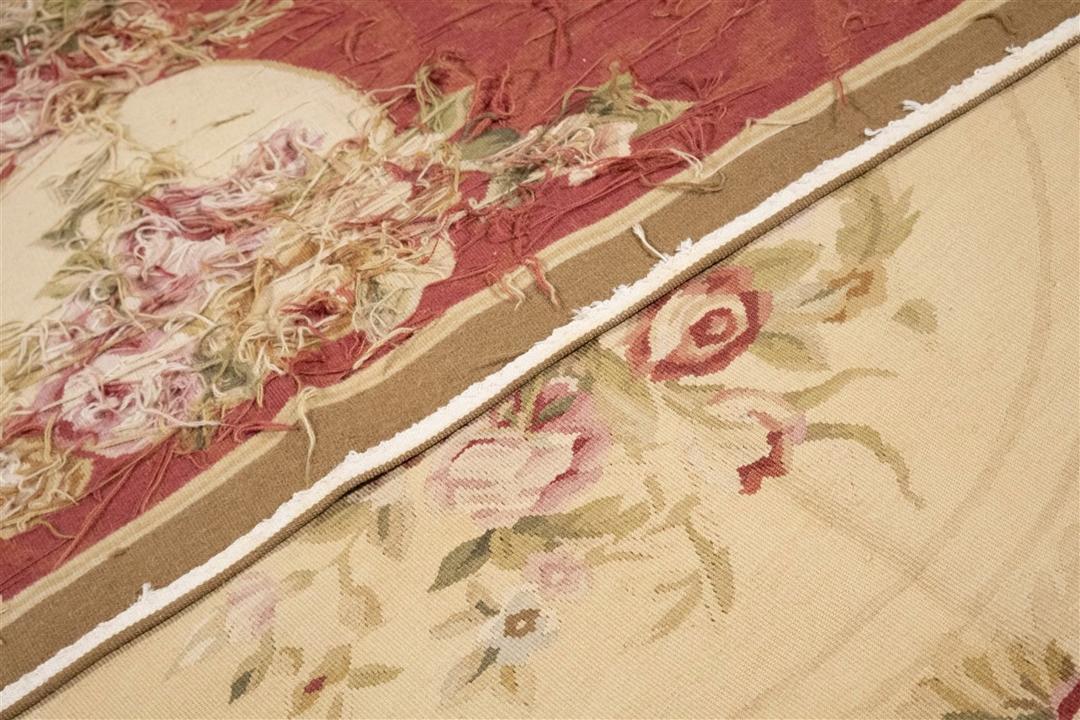
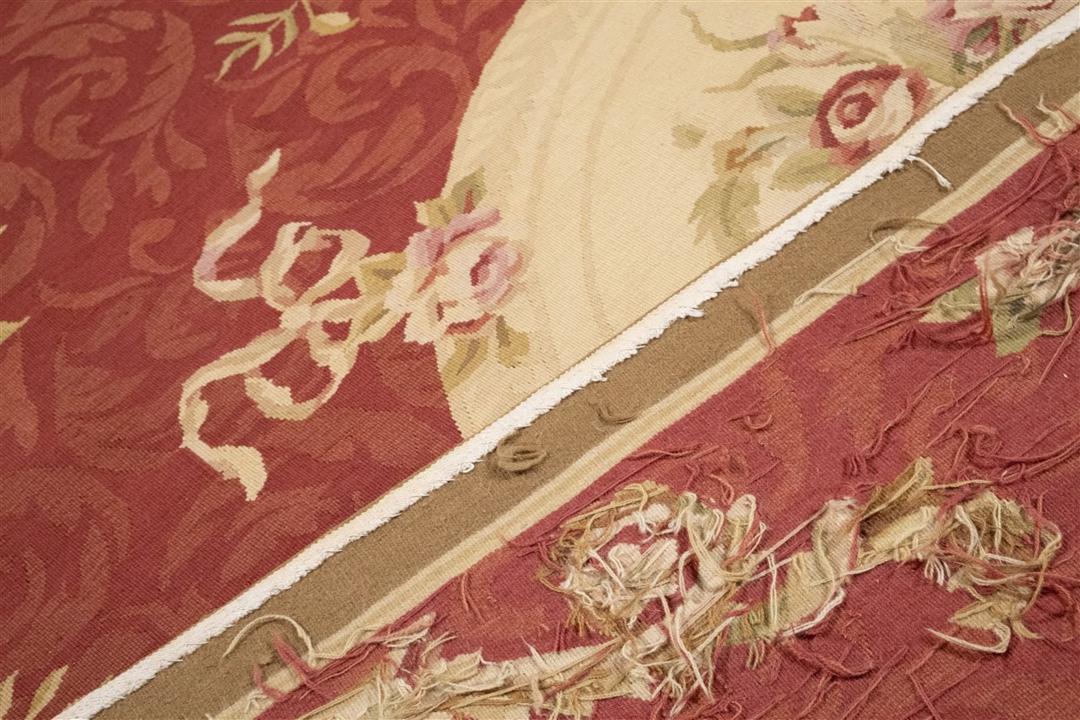
The term 'tapestry' in the context of these rugs refers to a flat-weave construction technique that allows for highly detailed, painterly designs. Unlike rugs with a thick, knotted pile, these flat-woven pieces are crafted to mimic the look of woven wall art, making them exceptionally smooth and refined. This technique requires a high degree of precision, as the weaver must manage each colour transition carefully to maintain the integrity of the ornate floral borders and central medallions.
Signature elements of this tradition include the use of pastel-toned floral bouquets, scrolling foliage, and framed medallions. These motifs are often arranged with a sense of classical symmetry, drawing inspiration from garden landscapes and 18th-century decorative arts. The use of a bold, deep red as a background colour provides a dramatic and contemporary update to the classic palette, making the creamy floral arrangements stand out with vibrant clarity.
Collecting a piece in the Aubusson tradition is an investment in cultural heritage and skilled hand-craft. These rugs are valued not just for their aesthetic appeal, but for the history they represent—a bridge between centuries of European courtly style and modern home design. Owning one offers a sense of connection to a long-standing tradition of beauty, skill, and creative excellence.