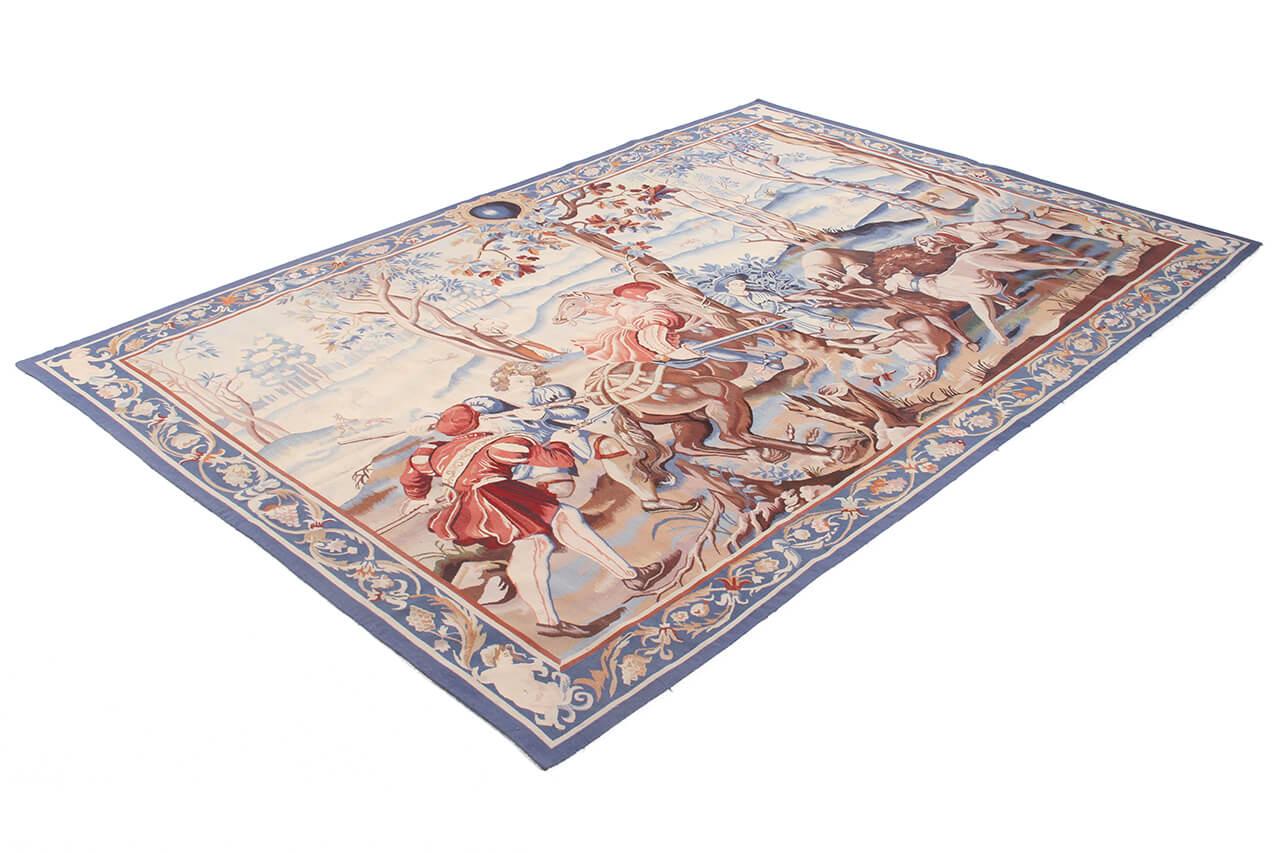
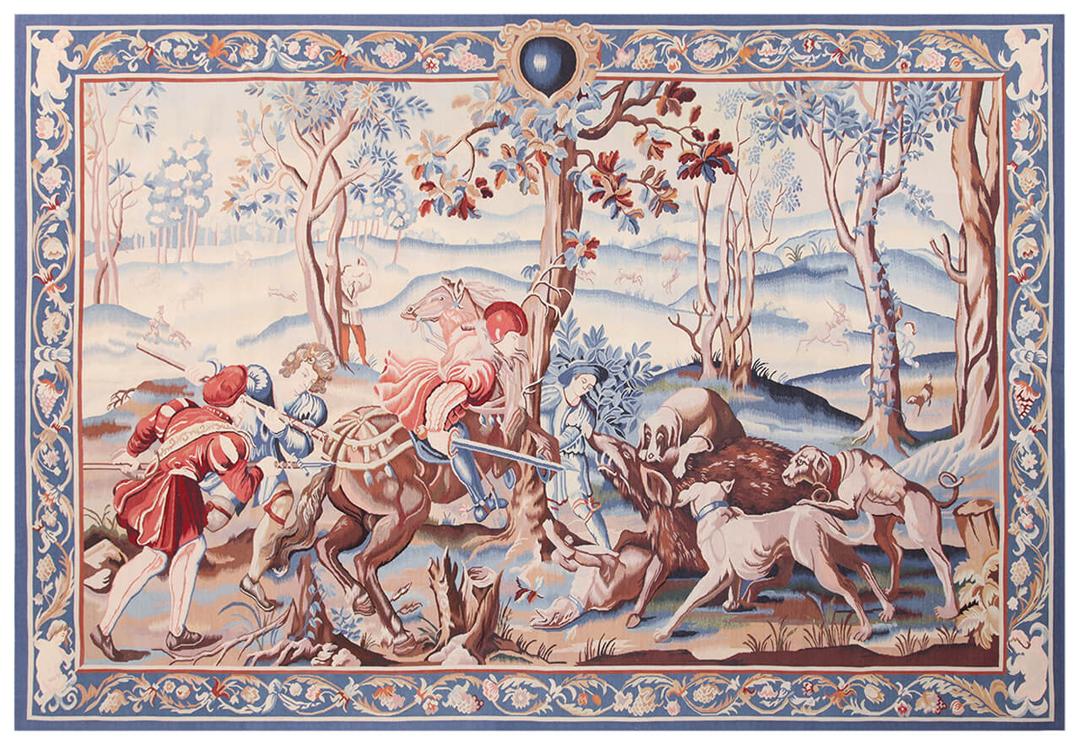
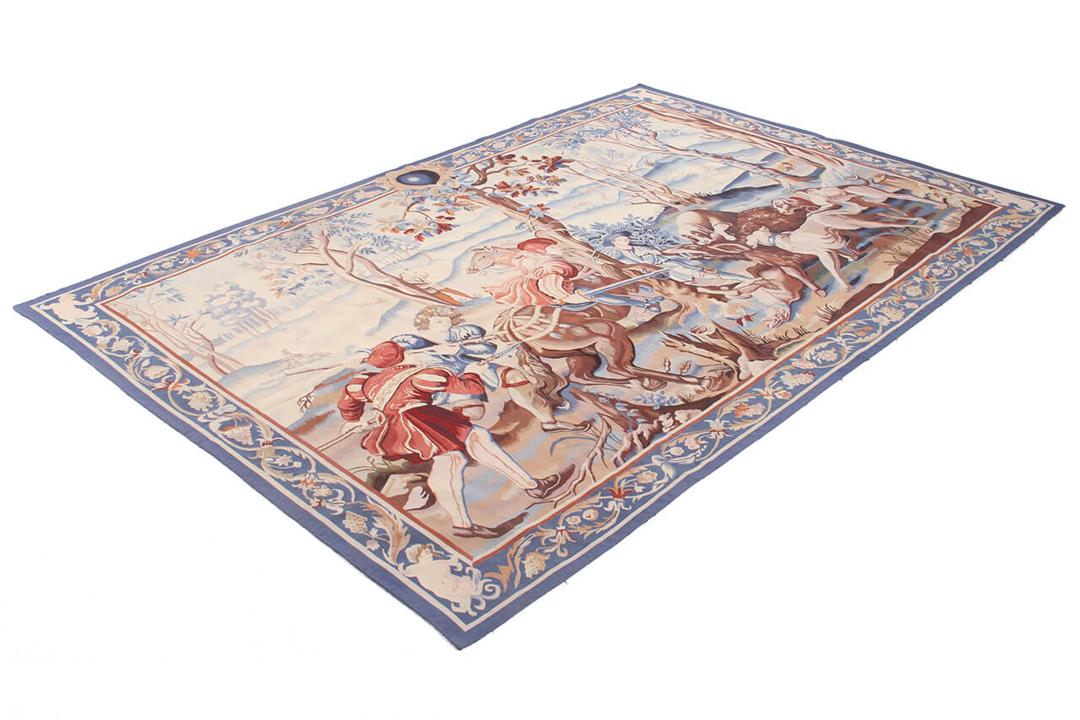
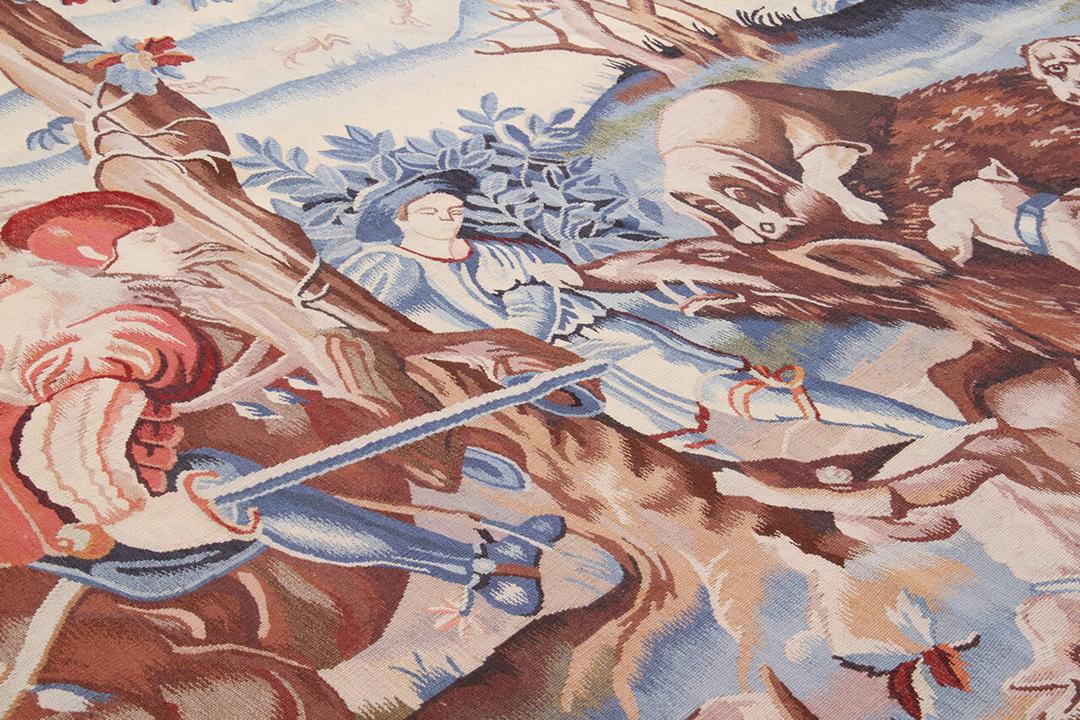
The Aubusson style finds its roots in the town of Aubusson, France, where tapestry weaving became a celebrated art form as early as the 15th century. Originally designed to hang on castle walls to provide insulation and decoration, these tapestries often depicted grand hunting scenes, lush landscapes, and pastoral life. Today, this tradition has travelled across the globe, with skilled weavers in China interpreting these classic European motifs with remarkable accuracy and artistic flair.
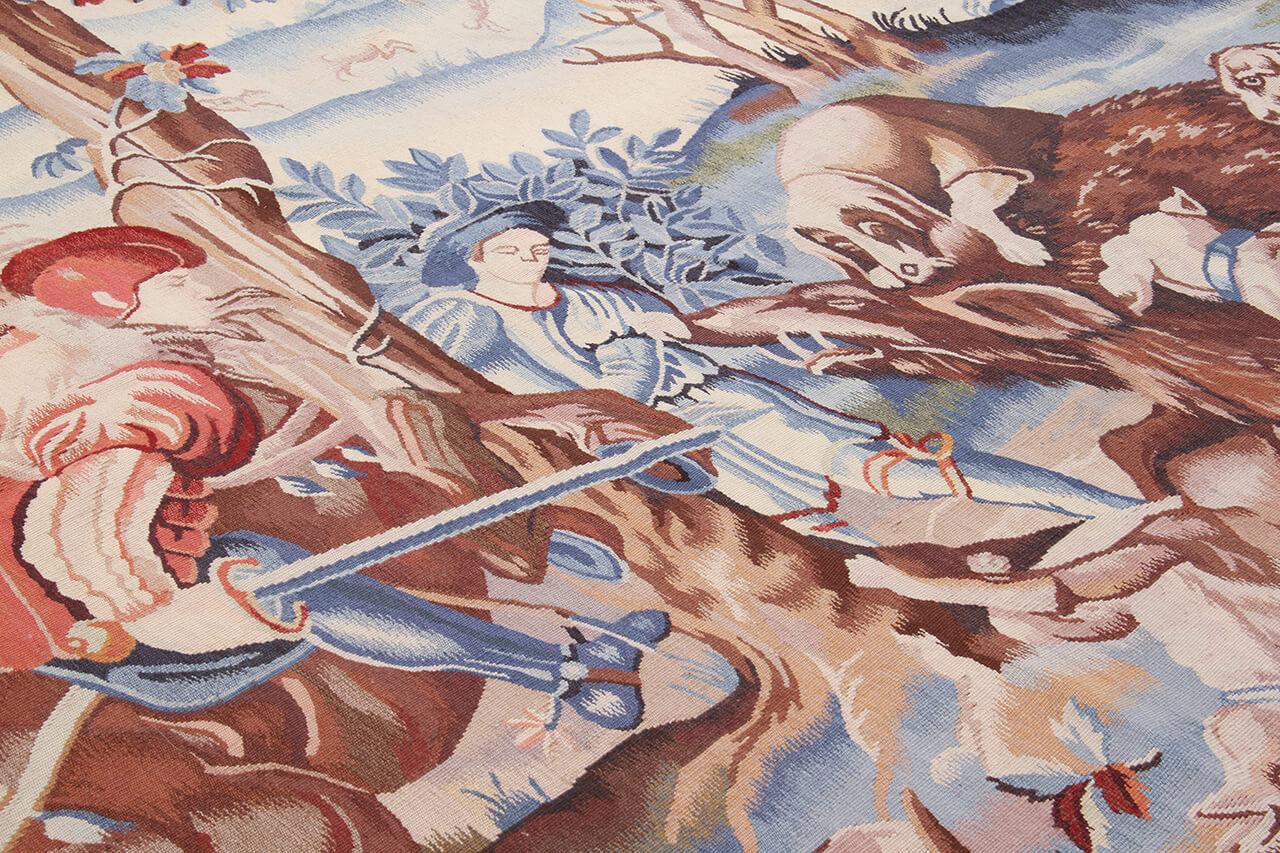
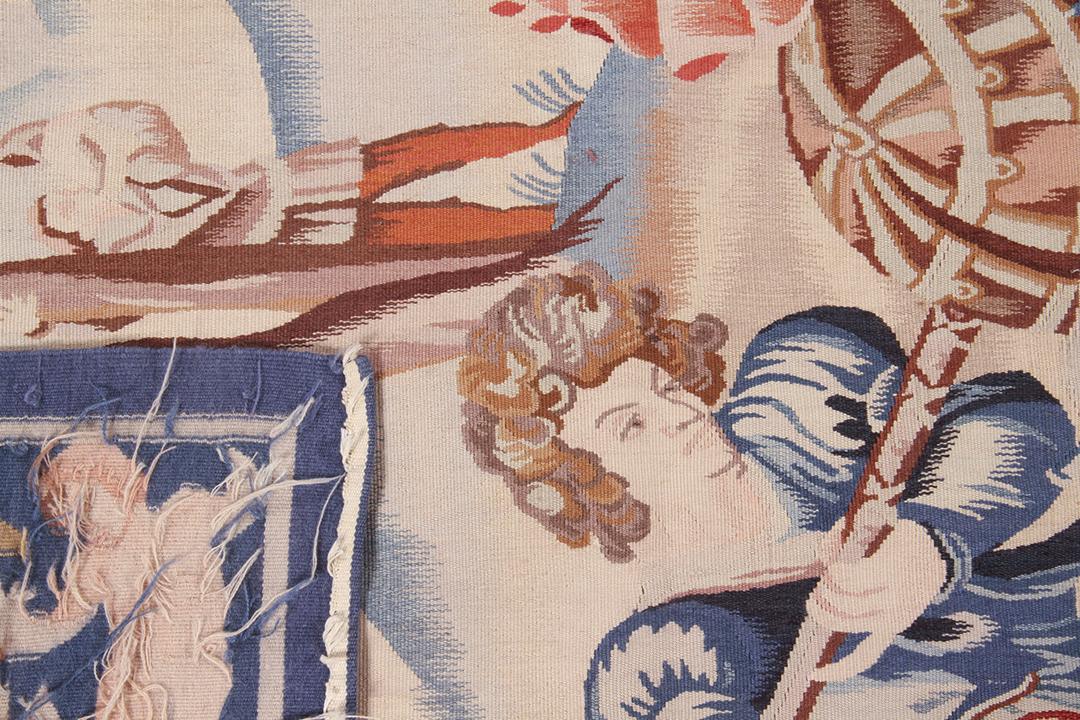
The term 'tapestry-style' or 'Tappissere' refers to the flat-weave technique that lacks a raised pile. This construction method allows for the creation of intricate, painterly designs that would be difficult to achieve with a traditional knotted pile. The quality of these rugs is defined by the precision of the weave and the clarity of the design, ensuring that the narrative elements of the scene remain sharp and vibrant for years of enjoyment.
The signature design elements of these pieces are their pictorial focus, often framed by decorative, ornate borders that resemble gilded picture frames. The hunting scene depicted here is a classic motif, symbolising the connection between humanity and the natural world. These rugs are highly valued for their ability to bring a sense of history and cultural narrative into a modern home, bridging the gap between ancient art and contemporary interior design.
Collecting an Aubusson-style rug is an investment in the preservation of a storied craft tradition. They are sought after by those who appreciate the intersection of fine art and functional decor. Owning such a piece is a mark of a home that values heritage, skill, and the lasting beauty of hand-crafted objects. It serves as a reminder that the most meaningful items in our homes are those that carry a legacy of human effort and creative expression.