The Aubusson style finds its roots in the town of Aubusson in central France, where a long tradition of tapestry weaving flourished from the 15th century onwards. These works were originally commissioned by royalty and the aristocracy to adorn grand halls and provide warmth to stone walls, eventually becoming synonymous with French elegance and artistic prestige.
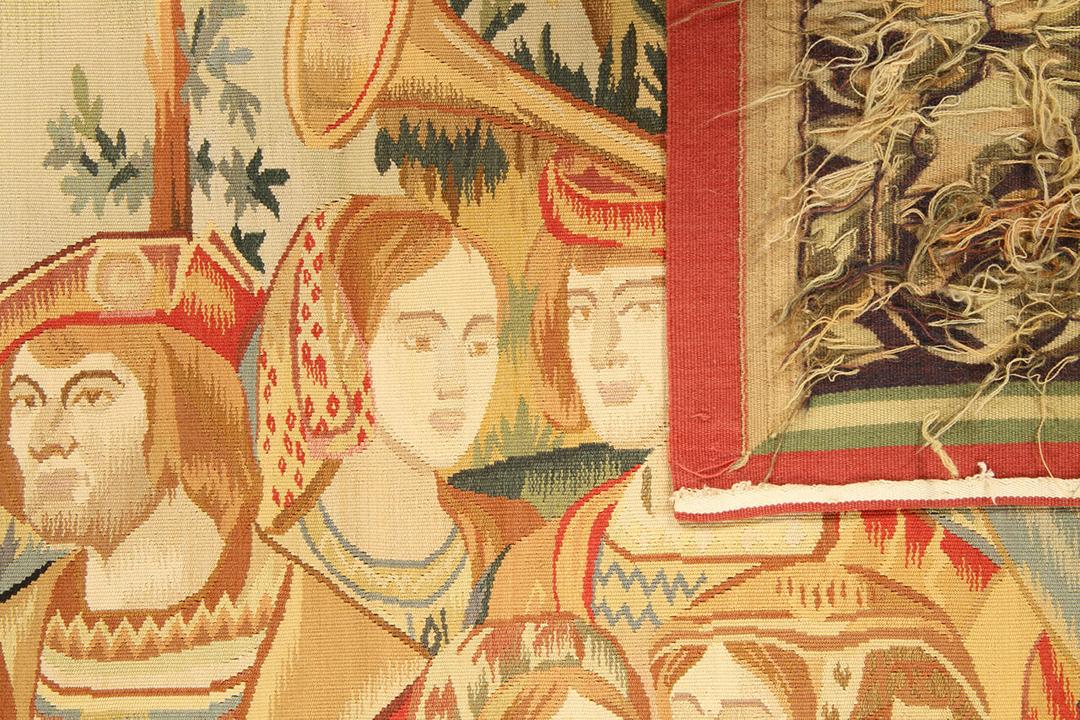
While the tradition began in Europe, the art of weaving these intricate, narrative-driven pieces has been expertly adopted by artisans in other regions, including China. These modern interpretations maintain the spirit of the original French designs, utilising specialised flat-weaving techniques that allow for highly detailed, pictorial representations that traditional knotted rugs might not achieve with the same level of graphic clarity.
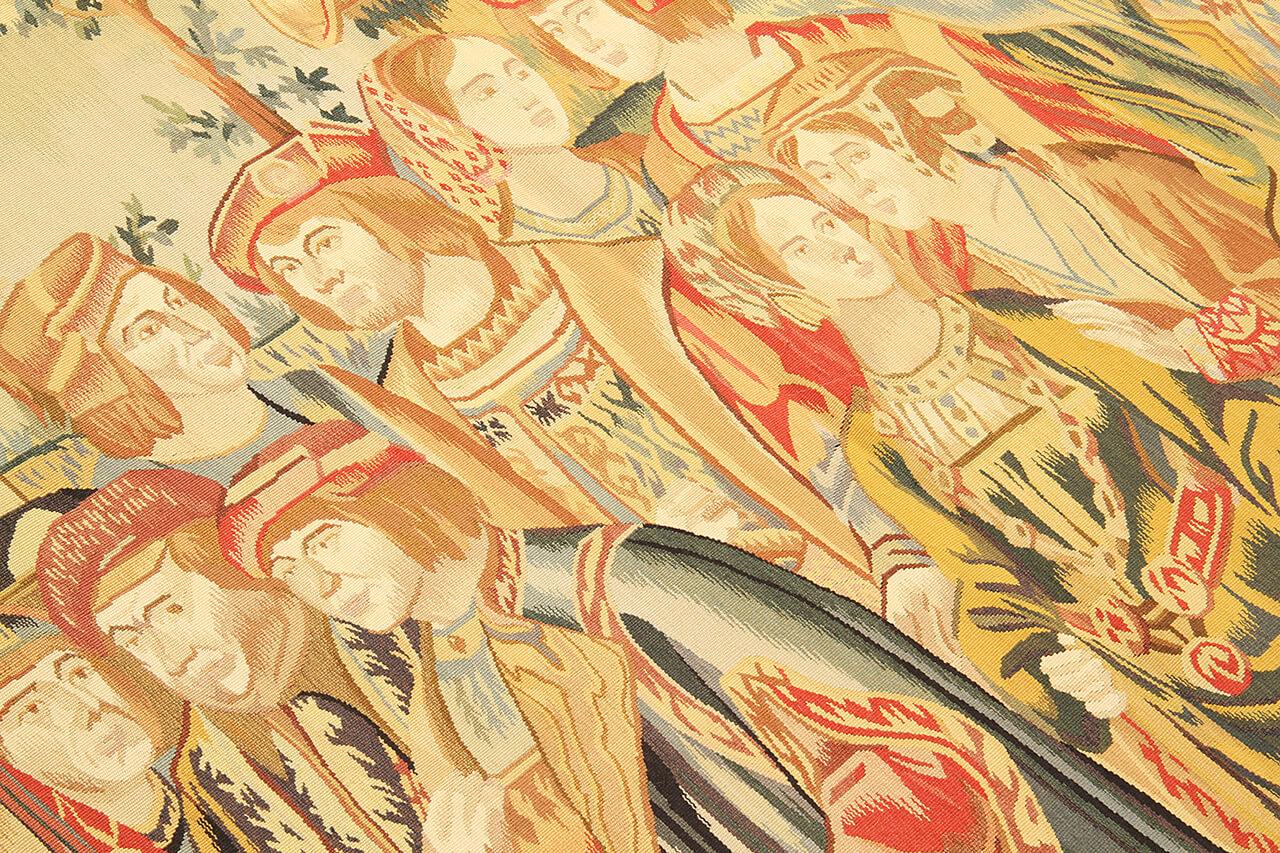
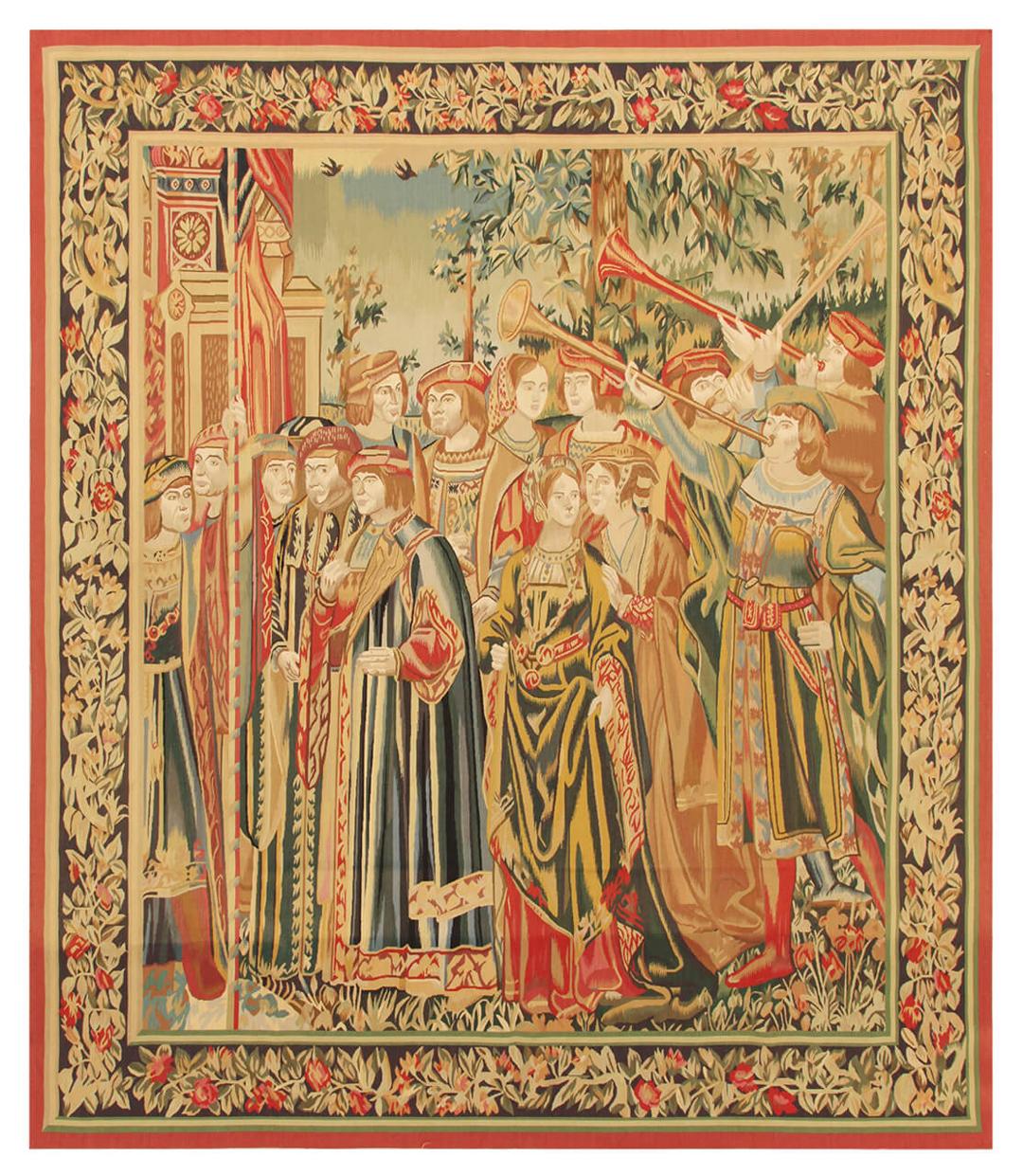
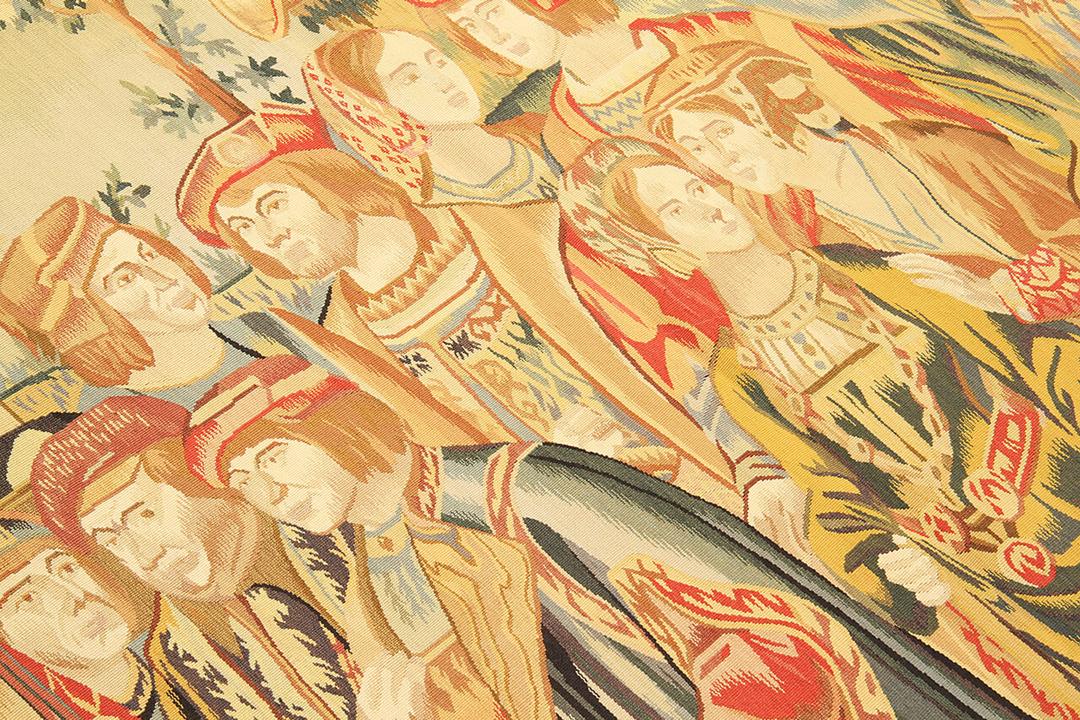
Signature elements of the Aubusson aesthetic include a central field filled with scenes of courtly life, pastoral landscapes, or classical figures, all framed by a lush, floral decorative border. These motifs are carefully balanced to create a sense of harmony and proportion. The use of a wide colour palette allows for subtle shading, which gives the figures a sense of depth and movement despite the flat-woven nature of the rug.
Today, these kilims are highly valued by collectors who appreciate the blend of historical storytelling and textile skill. Owning an Aubusson-inspired piece is a way to connect with a centuries-old tradition of decorative arts. It serves as a testament to the enduring appeal of craftsmanship that tells a story, making it a significant and meaningful addition to any collection.