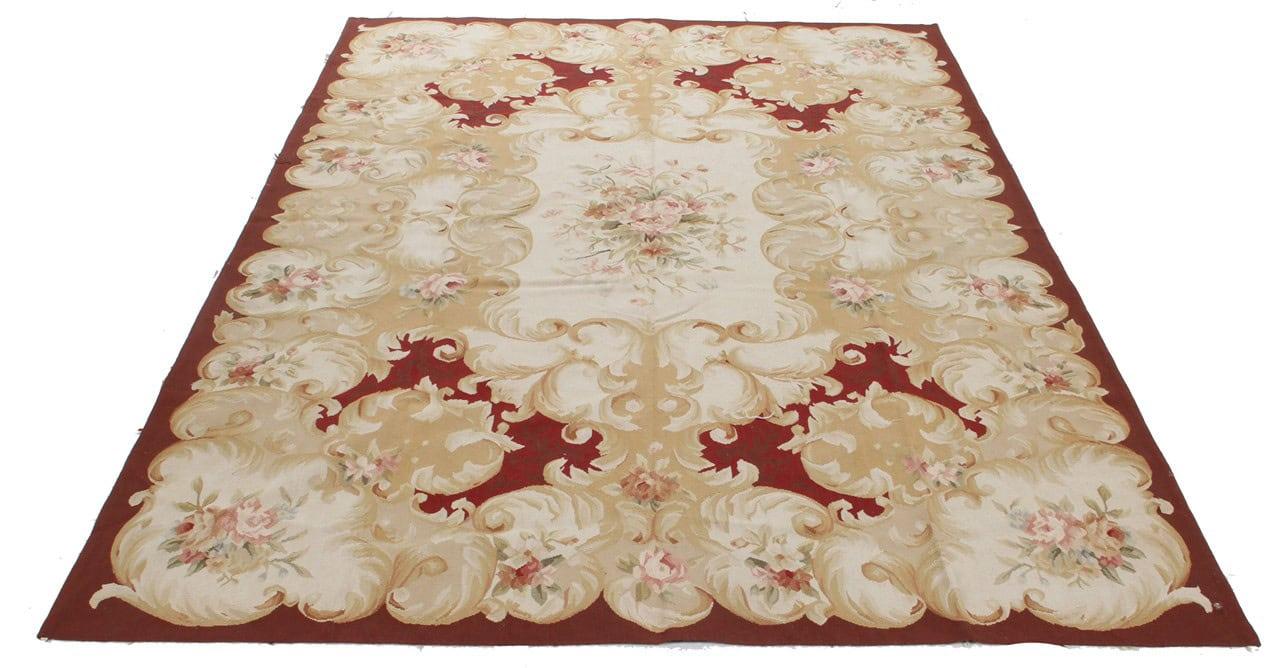
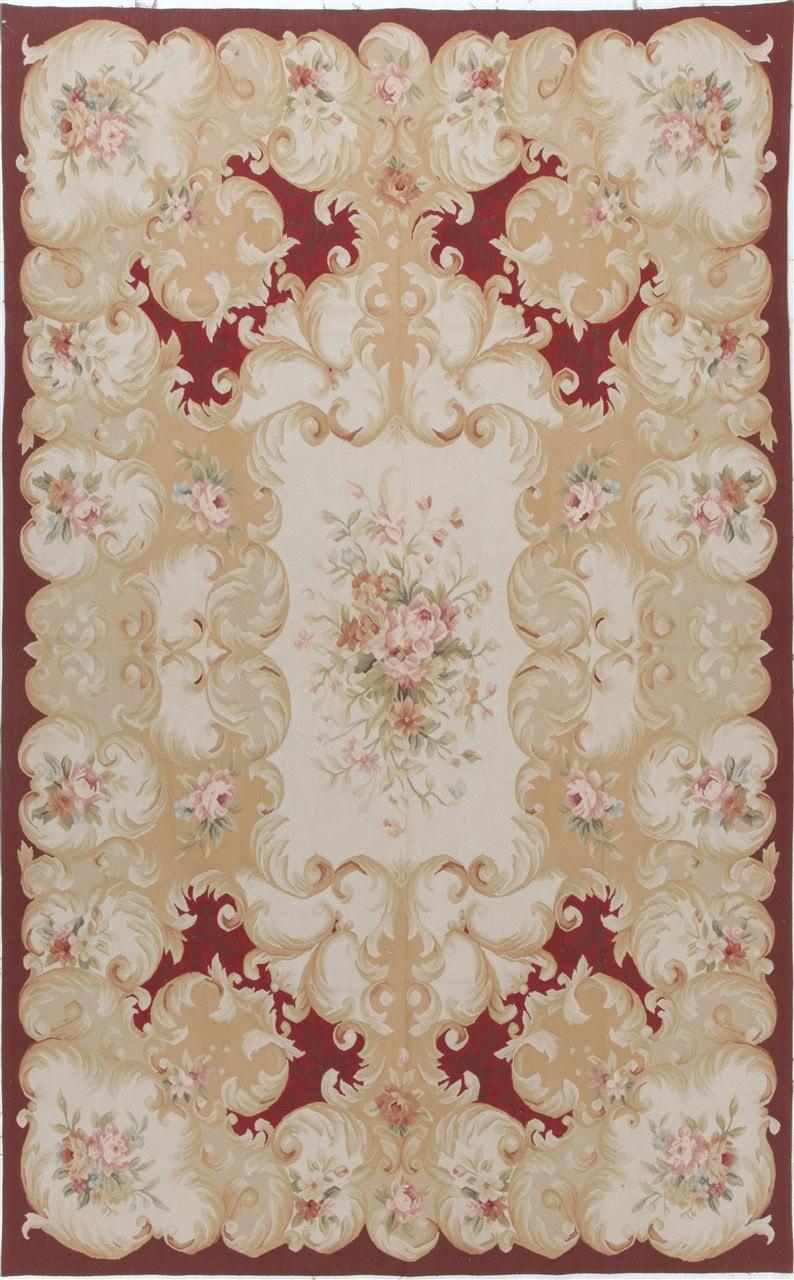
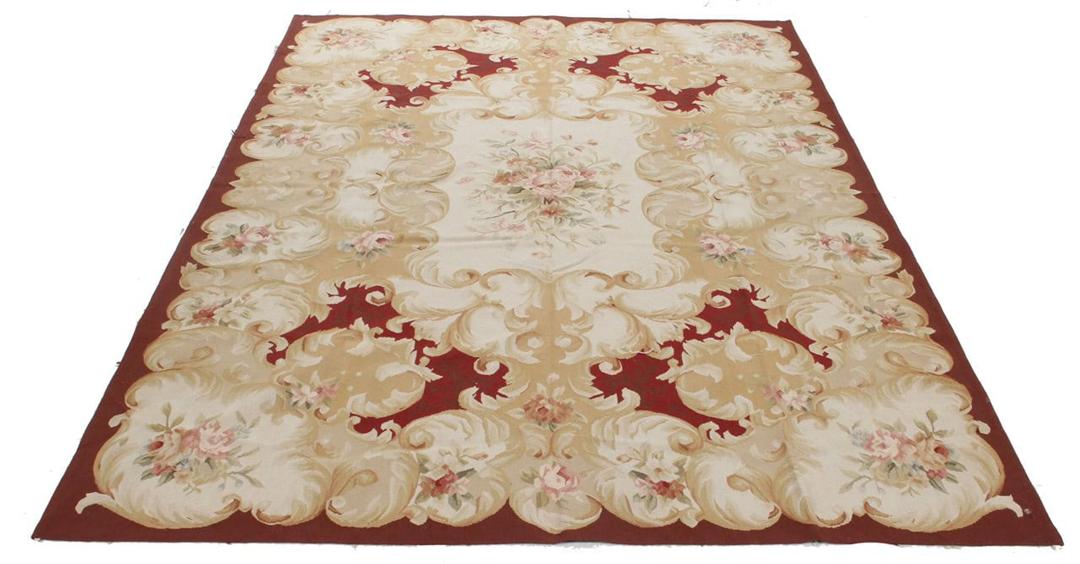
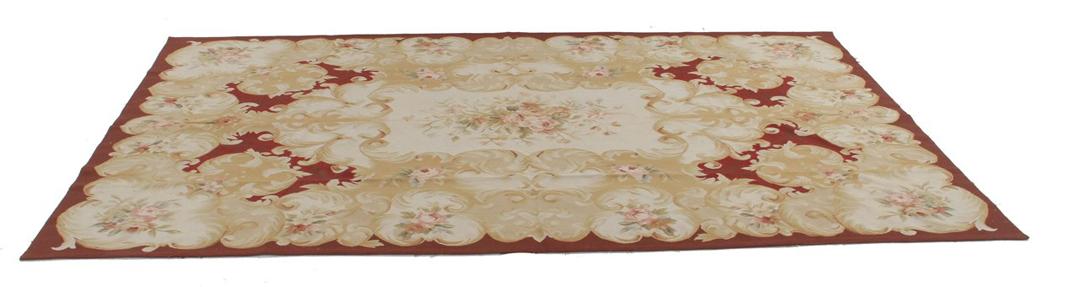
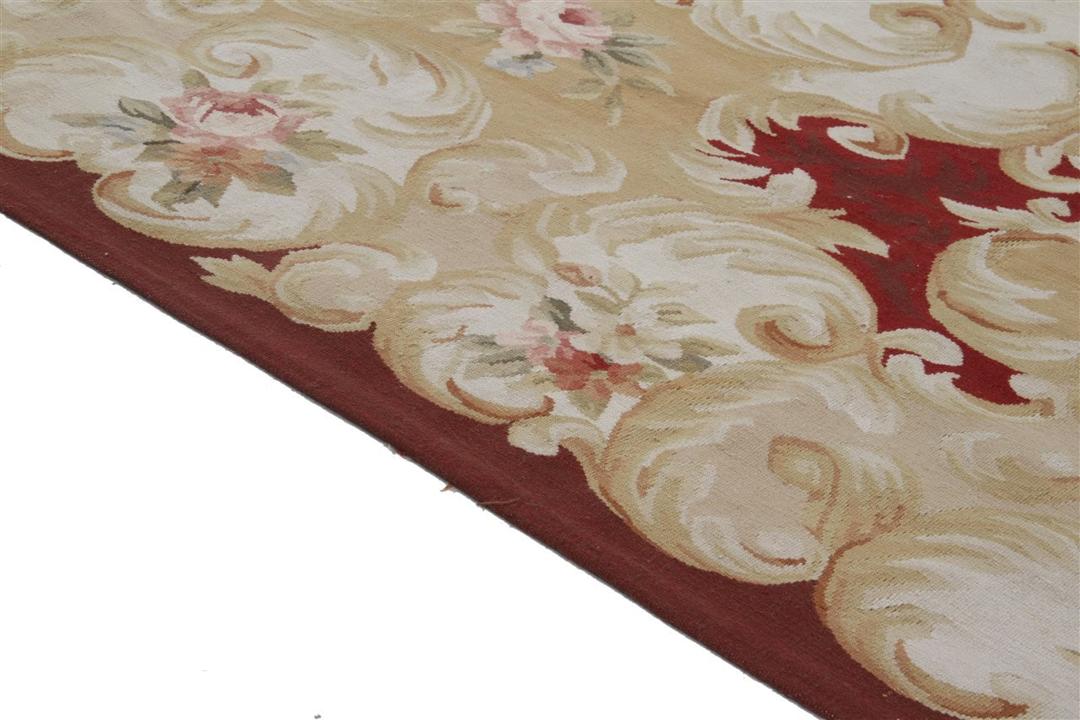
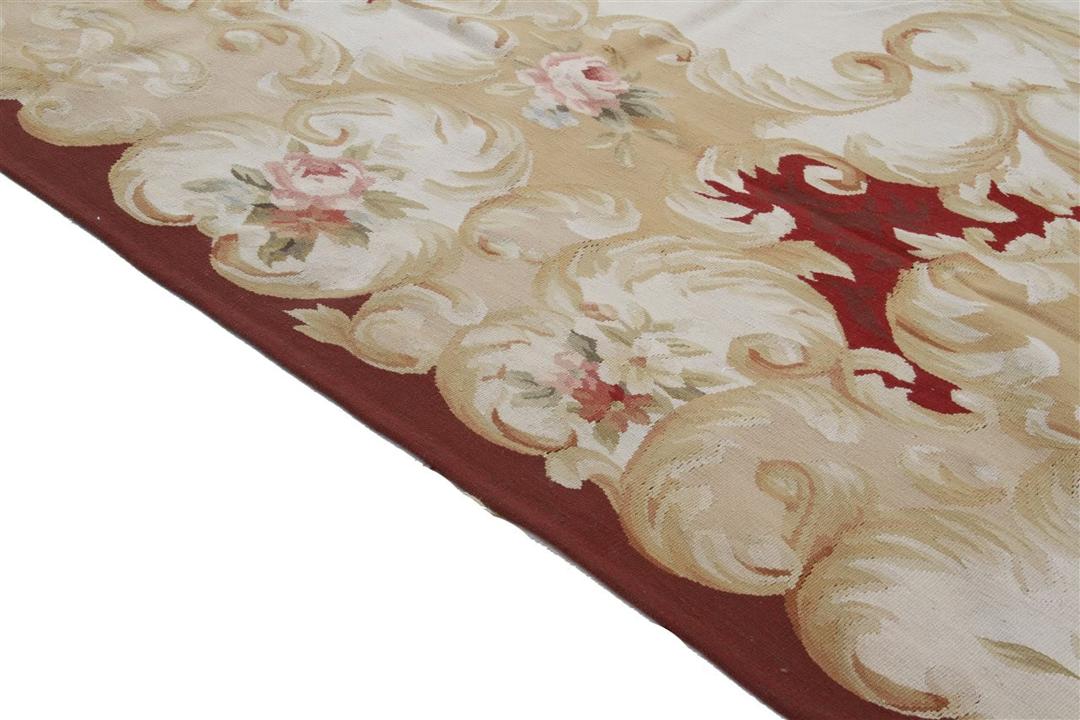
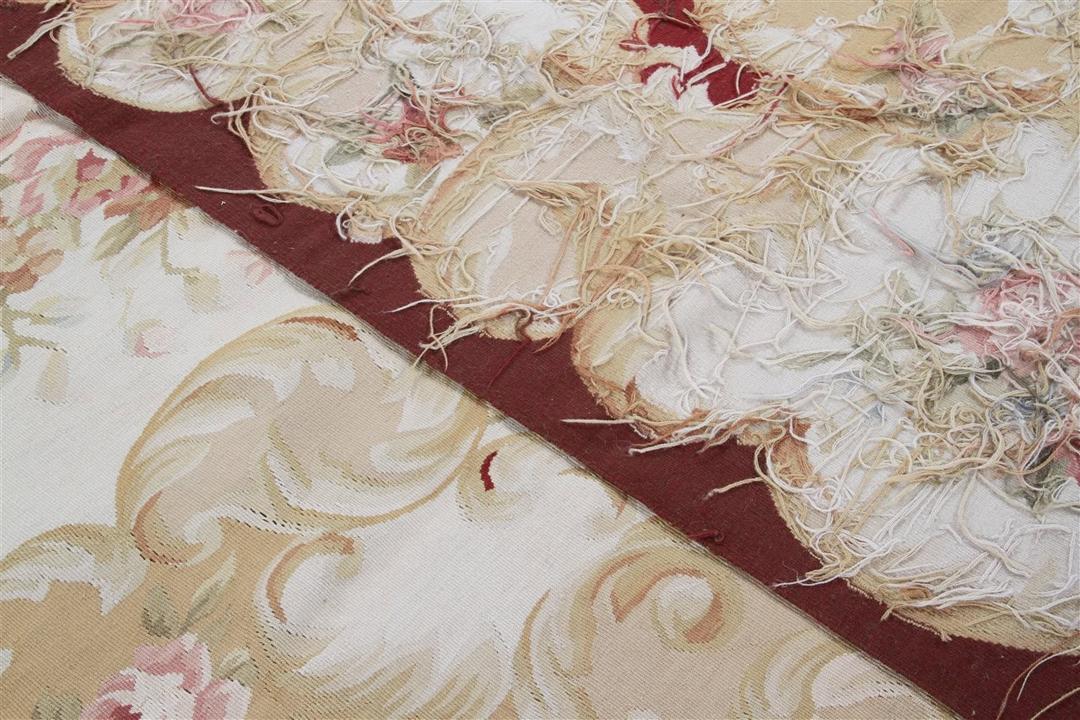
The Aubusson style finds its roots in the historic French town of the same name, which became world-renowned for its production of opulent tapestries and flat-woven floor coverings during the 17th and 18th centuries. These designs were originally commissioned by royalty and the aristocracy to adorn grand palaces, characterised by their lush floral bouquets, neoclassical medallions, and intricate acanthus leaf borders.
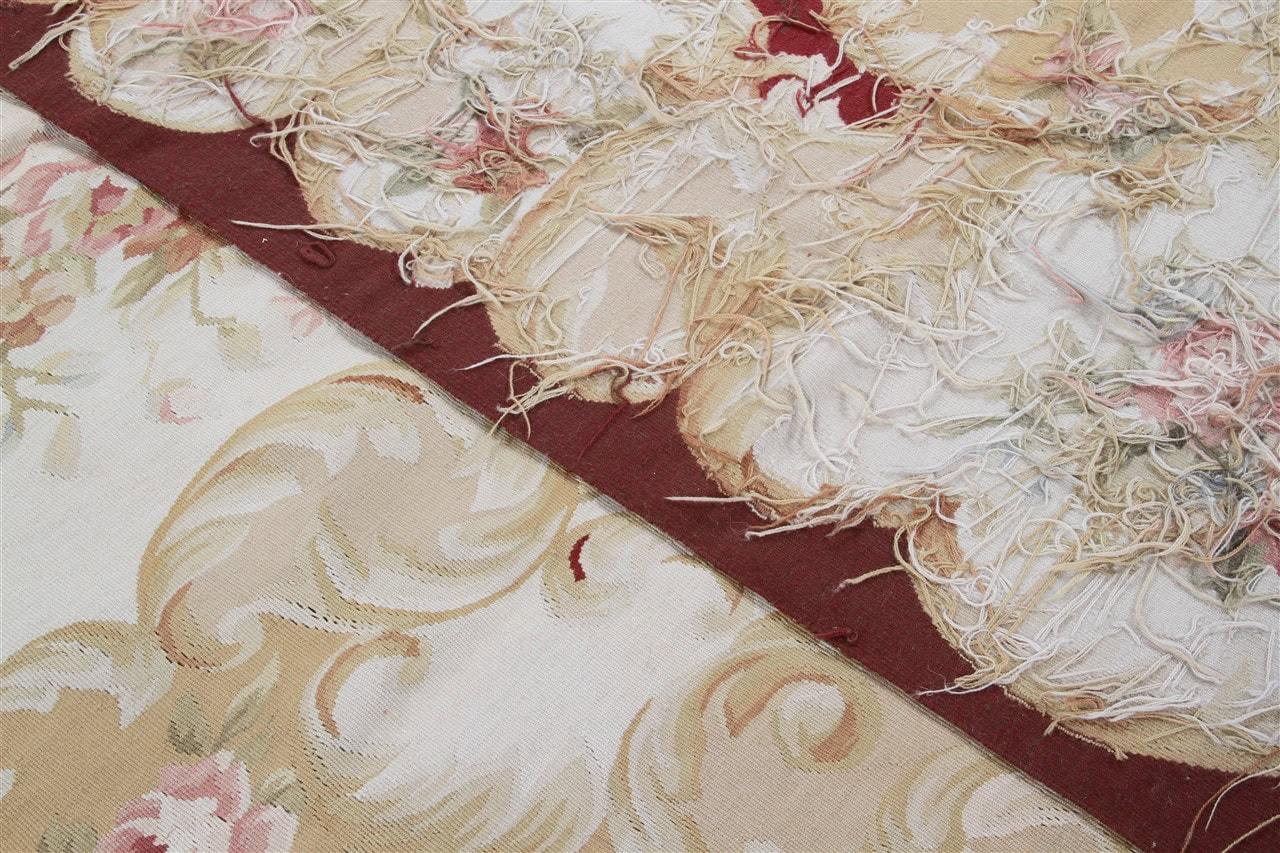
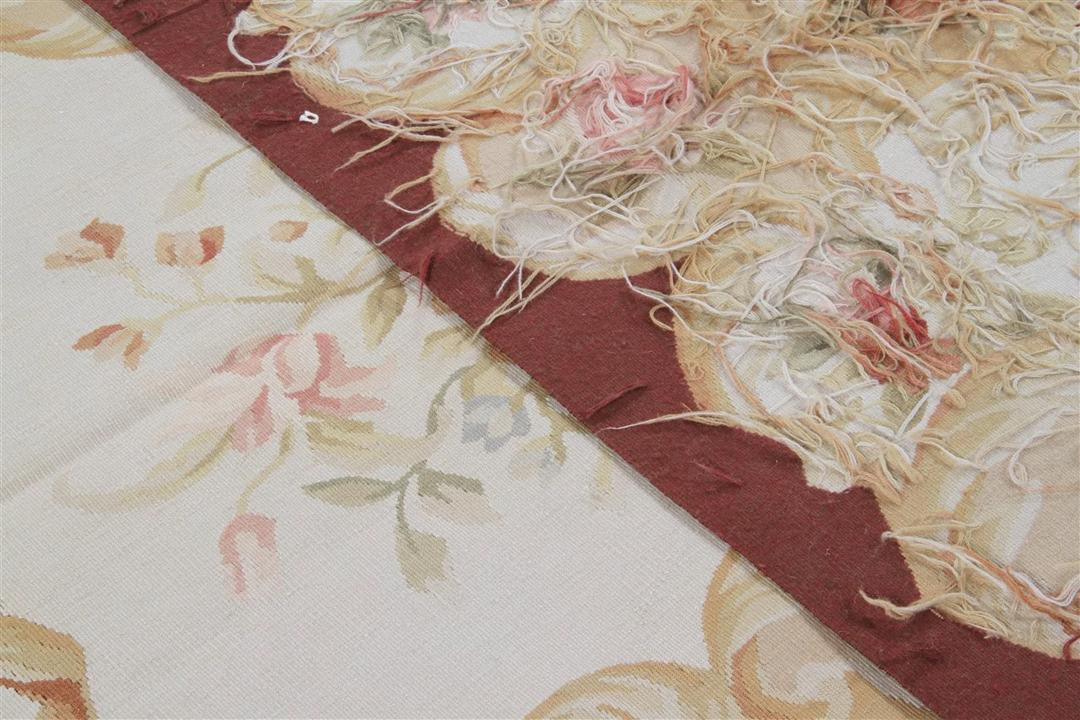
The technical term Kilim refers to a flat-weave construction method that lacks a traditional pile. Unlike knotted rugs, Kilims are created by interweaving the warp and weft strands, resulting in a thin, versatile, and reversible textile. This technique allows for remarkably crisp and detailed patterns, making it the perfect medium for the elaborate, painterly scenes typical of the Aubusson tradition.
The visual language of this rug is defined by its ornate, swirling flourishes and central floral arrangements. These motifs were designed to mimic the depth and shadow of oil paintings, often utilising a sophisticated palette to create a sense of three-dimensional movement. The border serves as a formal frame, grounding the organic floral elements and providing a balanced, structured look.
Today, these rugs are highly valued by collectors who appreciate the marriage of classic French aesthetic sensibilities with the skilled hand-weaving traditions of contemporary artisans. Owning a piece like this is a commitment to heritage and artistry, offering a connection to centuries of interior design history while providing a practical, enduring beauty for the modern home.