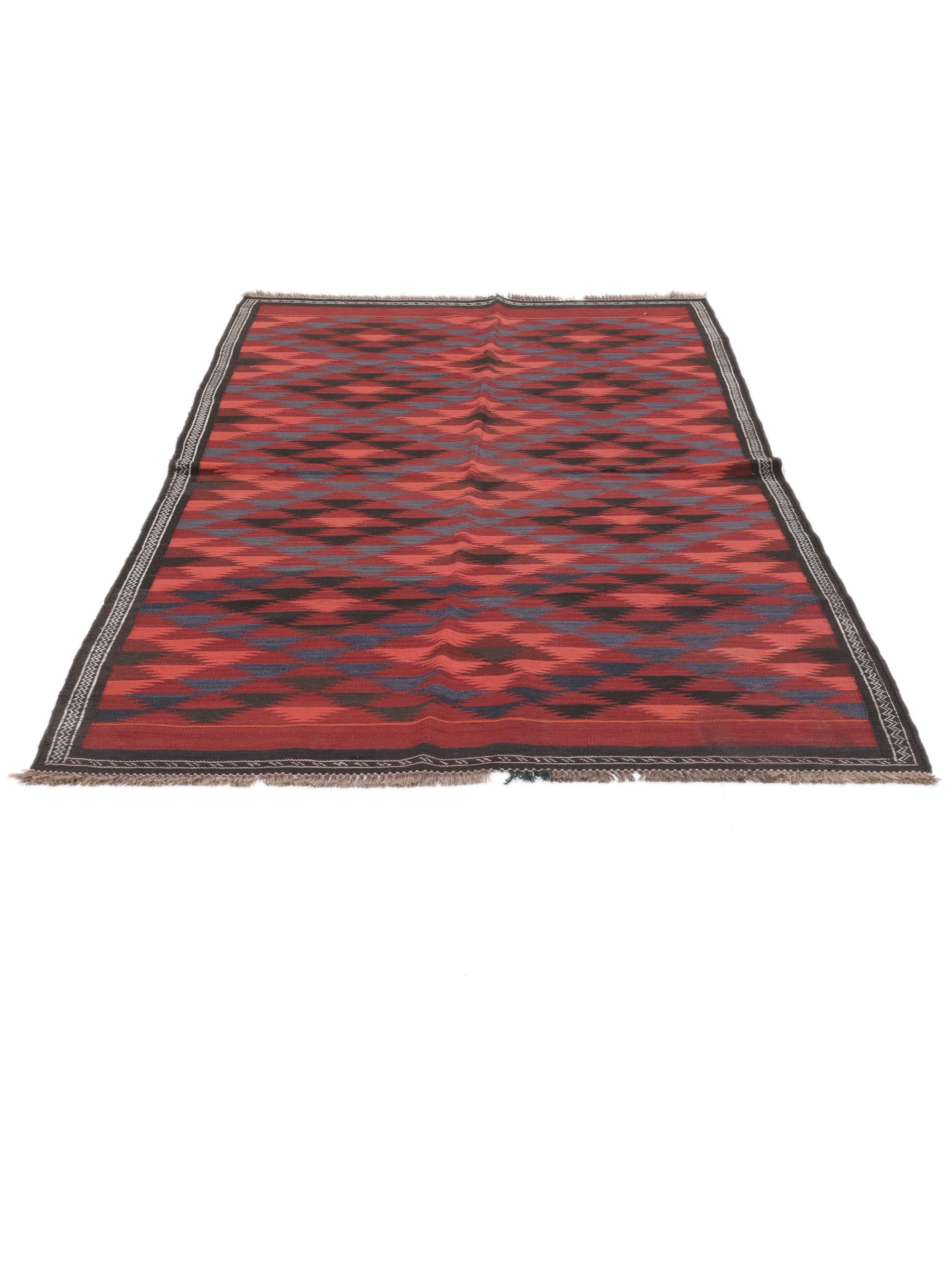
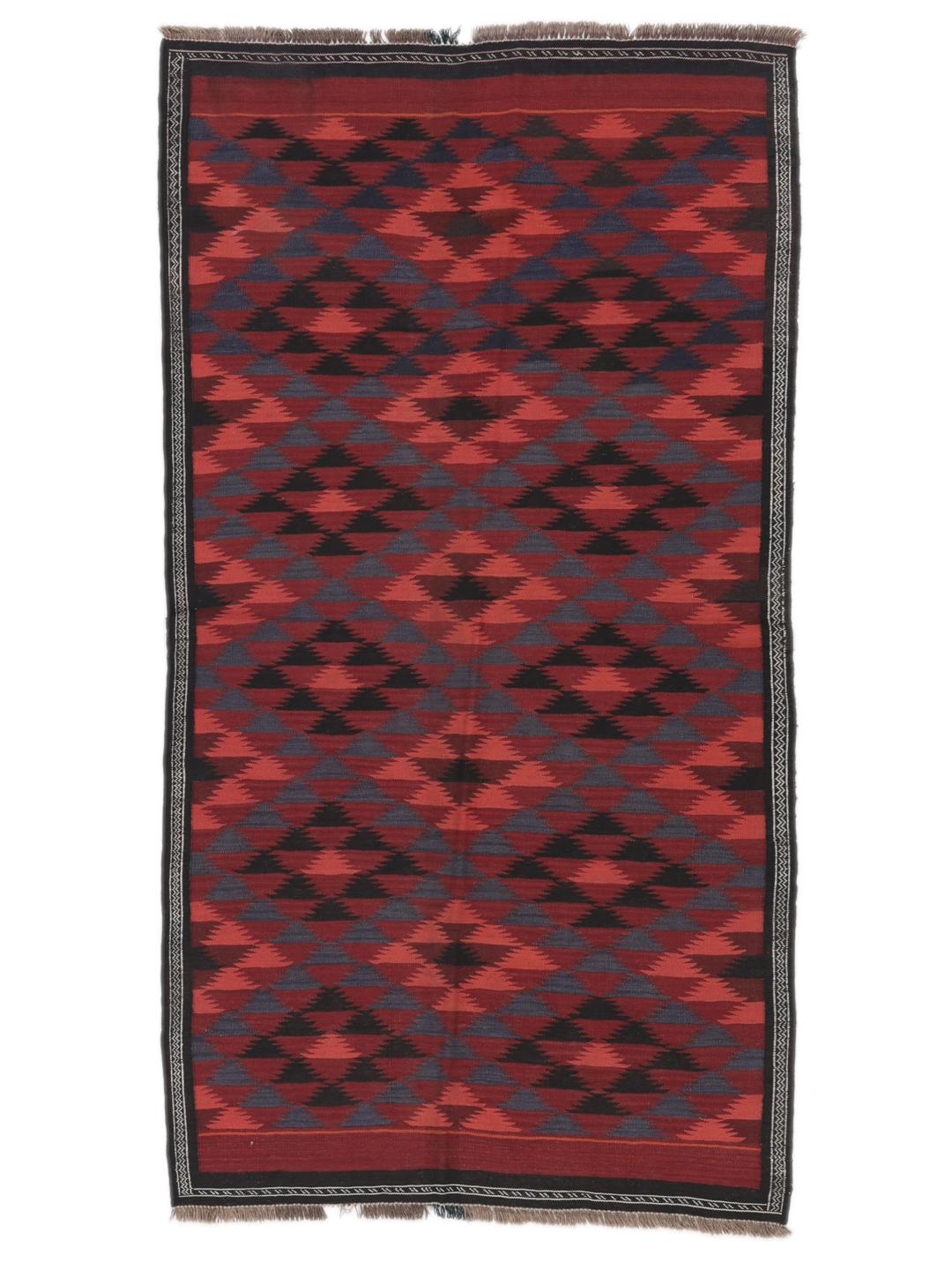
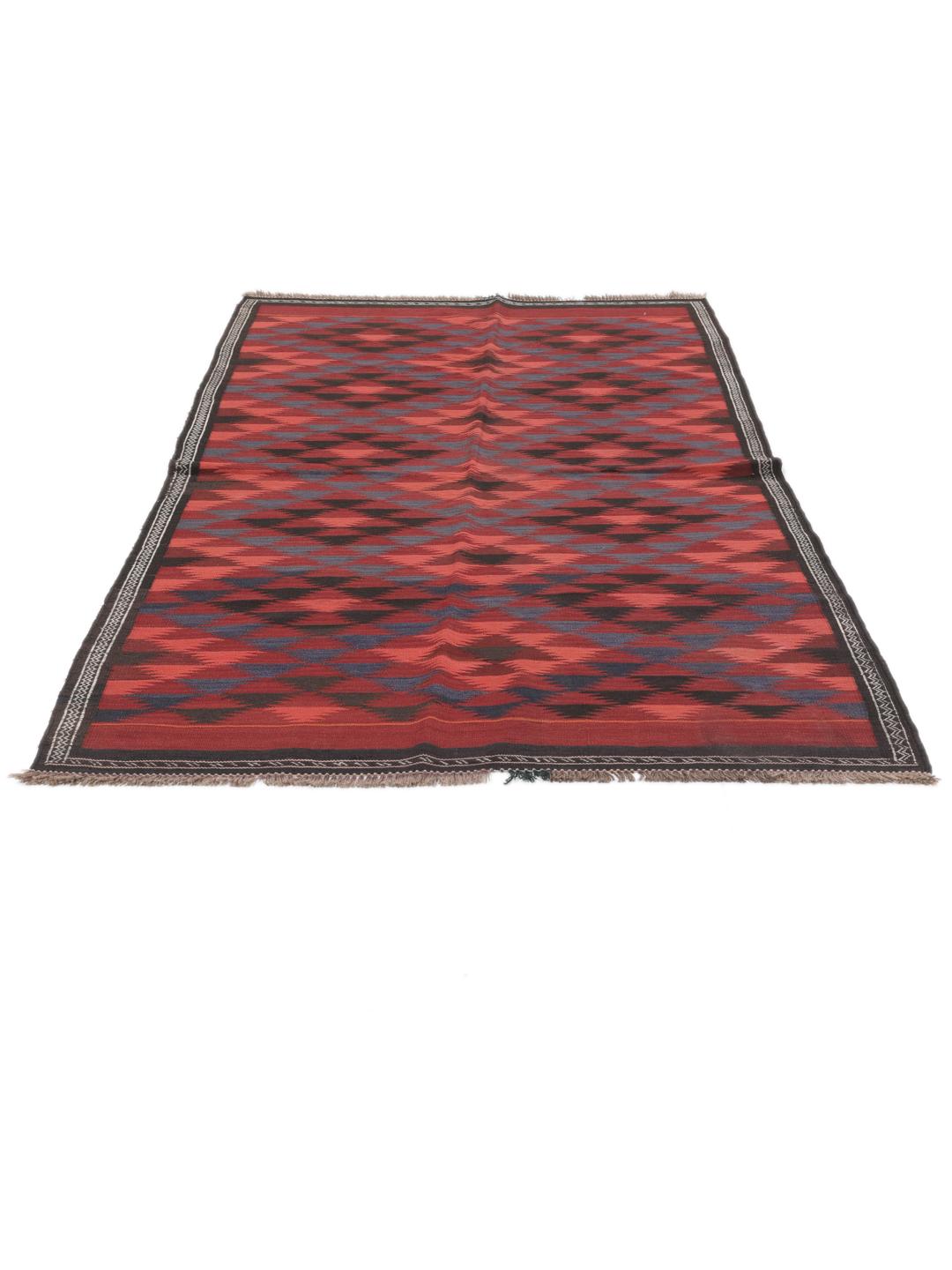
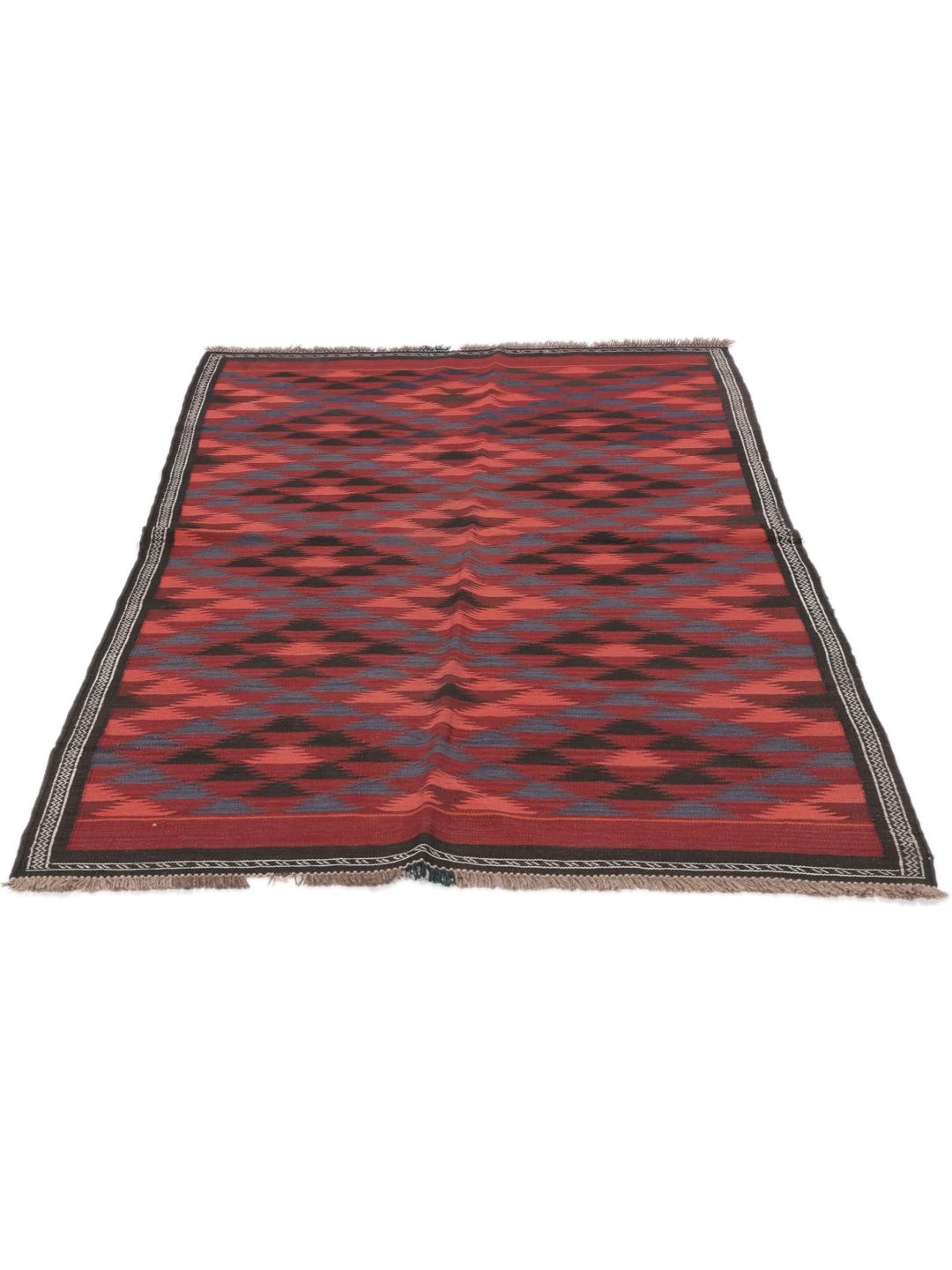
The art of kelim weaving is deeply rooted in the nomadic traditions of Afghanistan and the wider Middle Eastern region. Historically, these flat-woven textiles were essential to the mobile lifestyle of tribal communities, serving as versatile floor coverings, storage sacks, and wall hangings that could be easily transported across the rugged landscape.
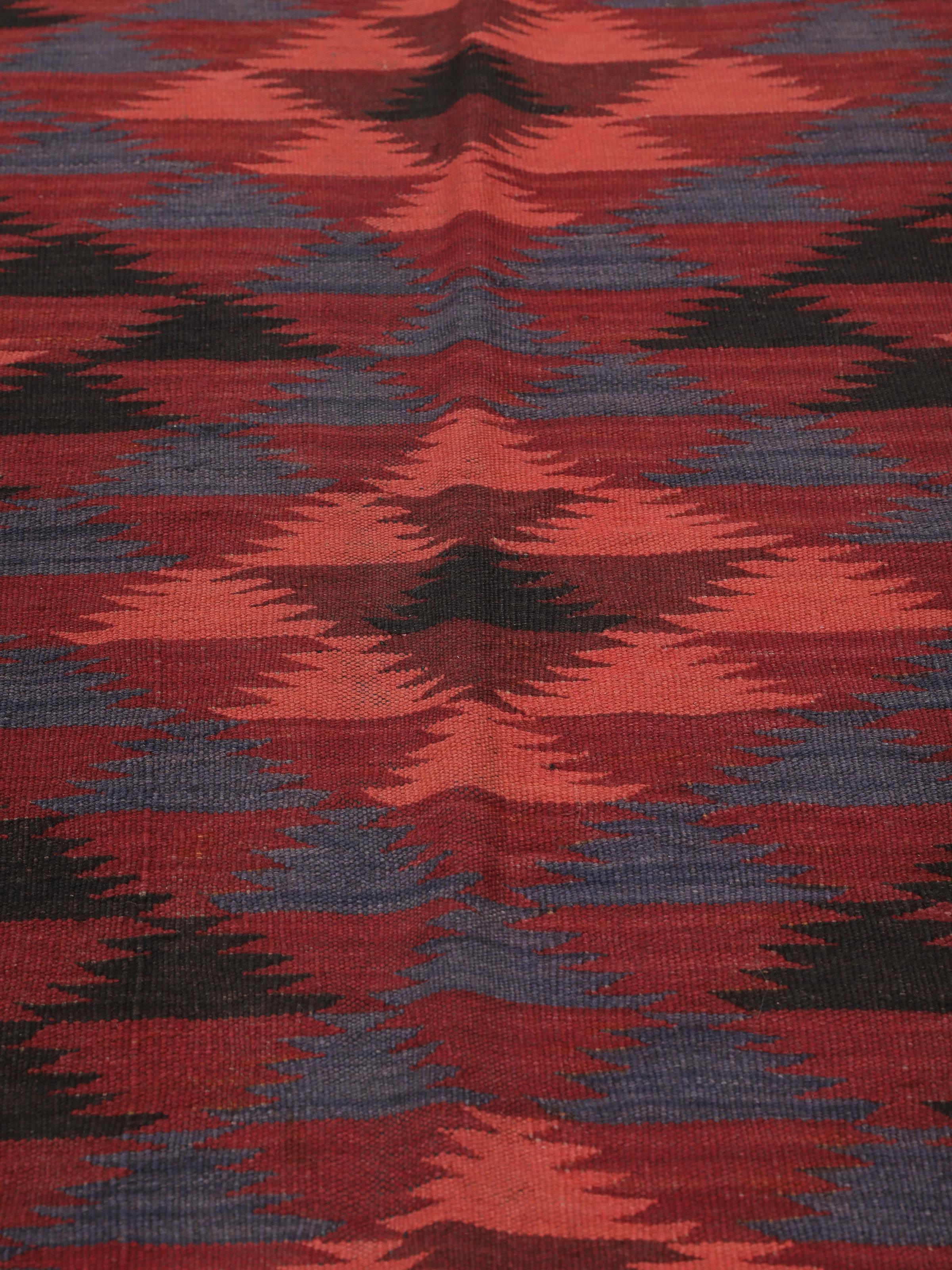
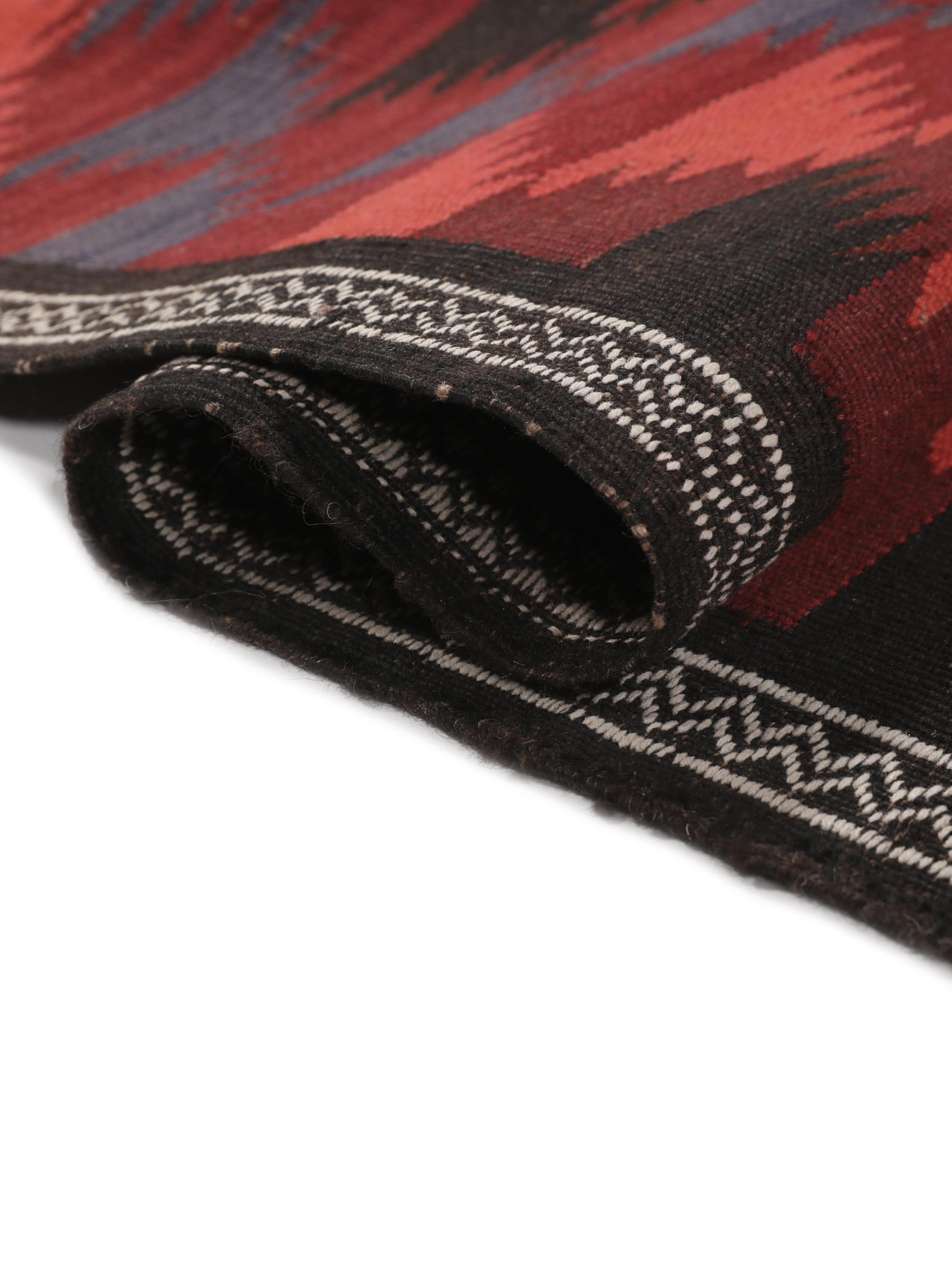
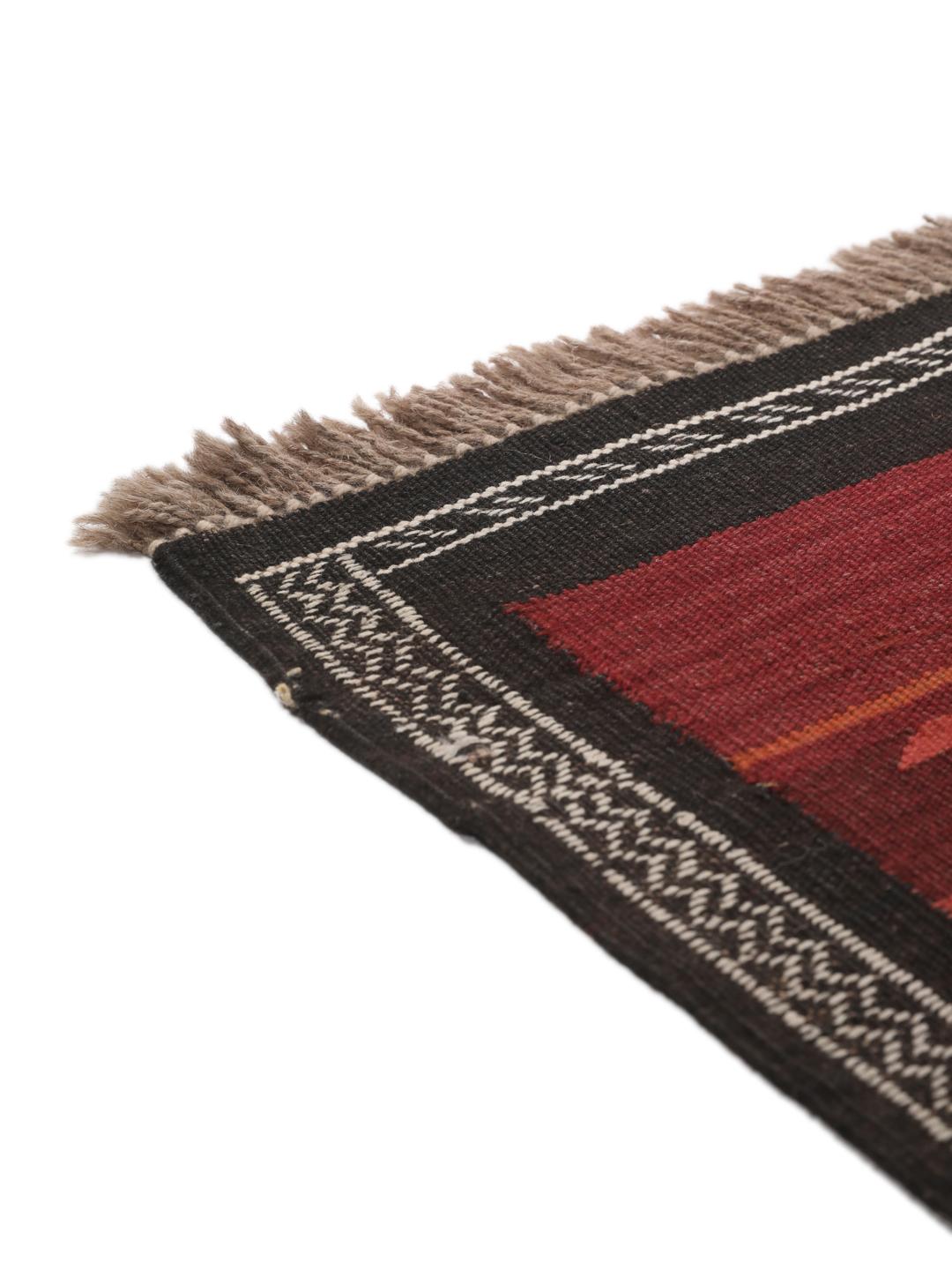
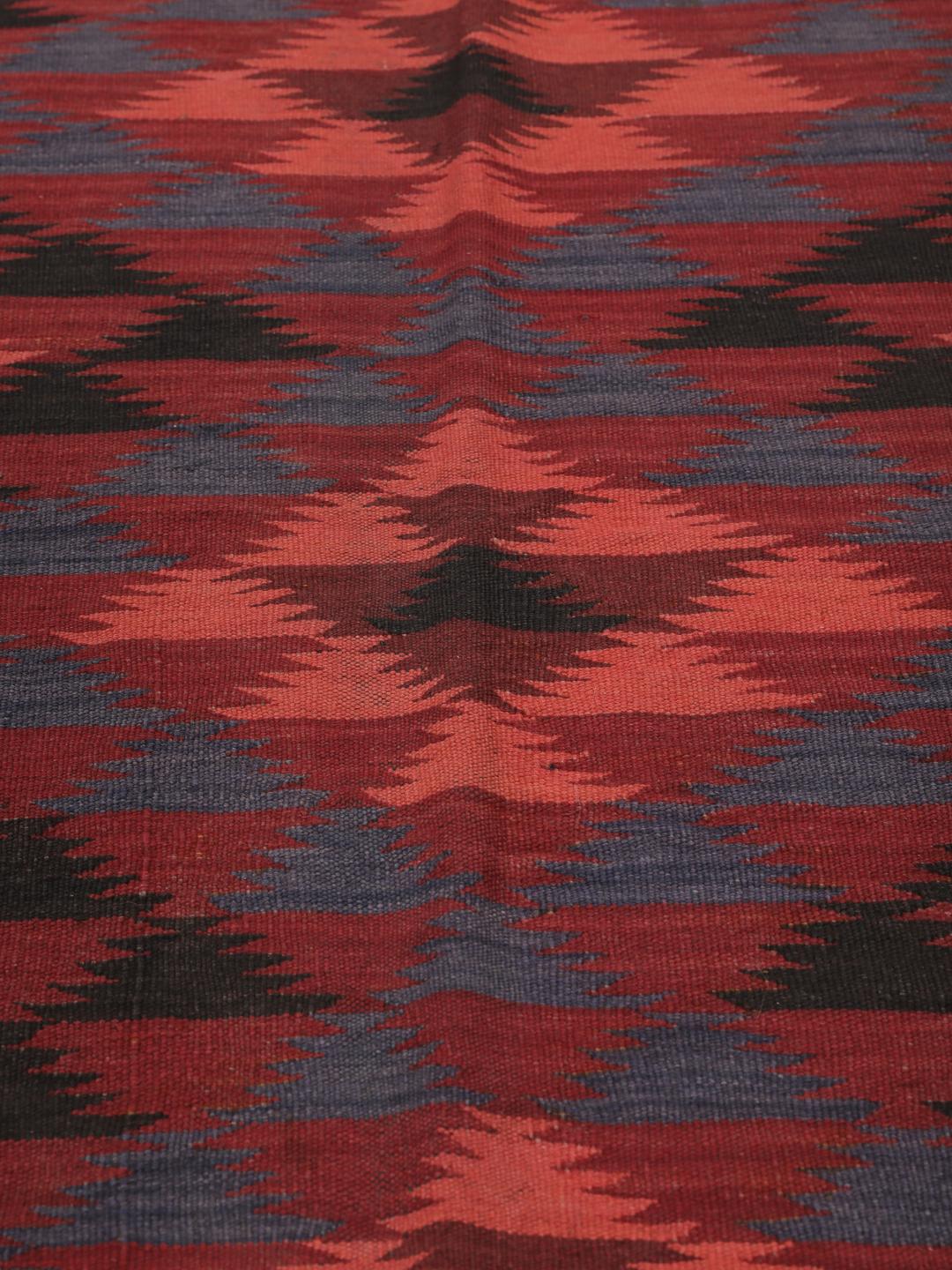
The term 'kelim' refers to a specific tapestry-weave technique where the weft threads are passed through the warp to create a flat, knotless surface. This method requires a high degree of precision, as the weaver must manage multiple colour changes throughout the process to build the complex motifs. The resulting fabric is lightweight yet remarkably strong, making it a masterpiece of functional design.
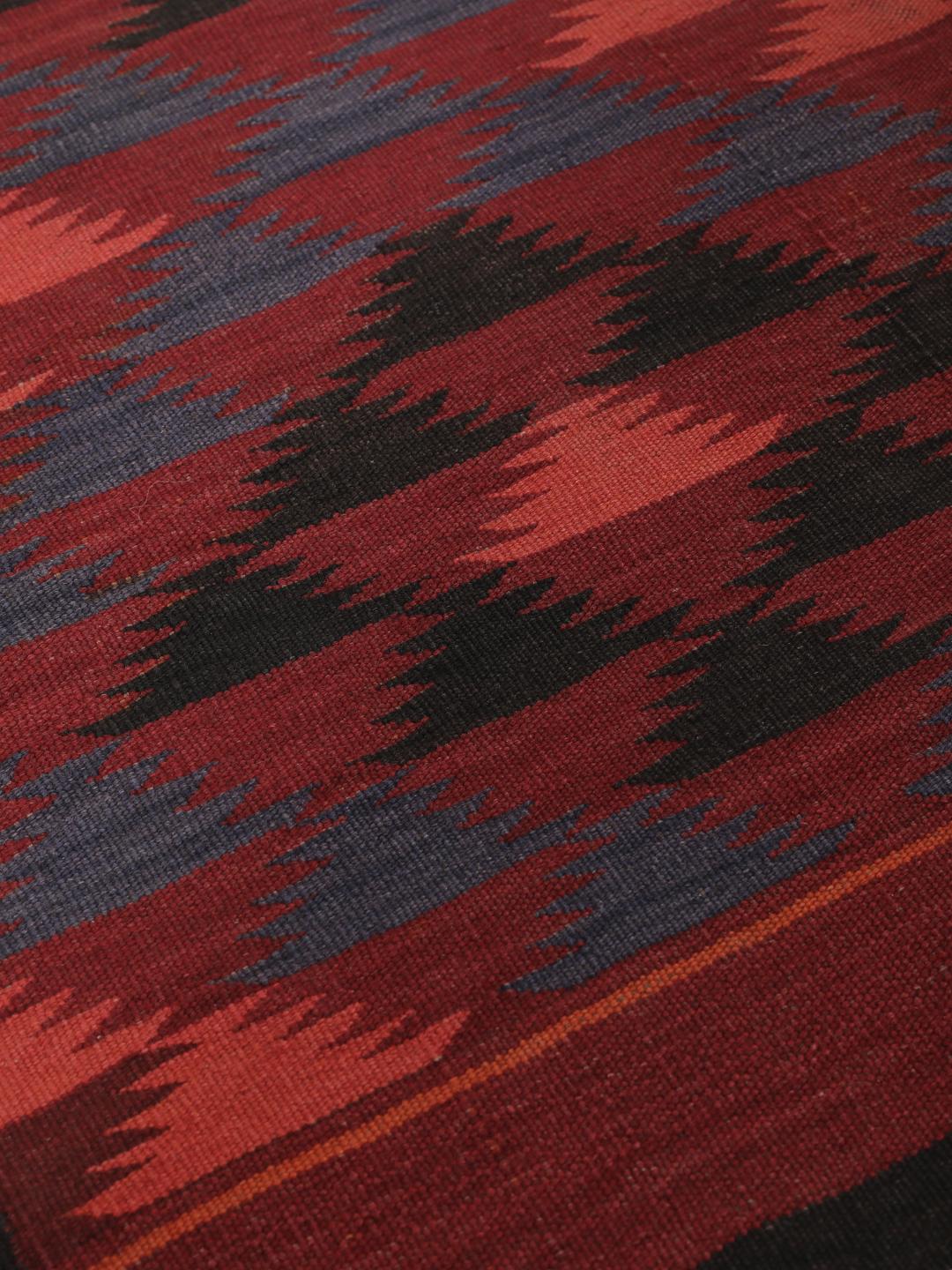
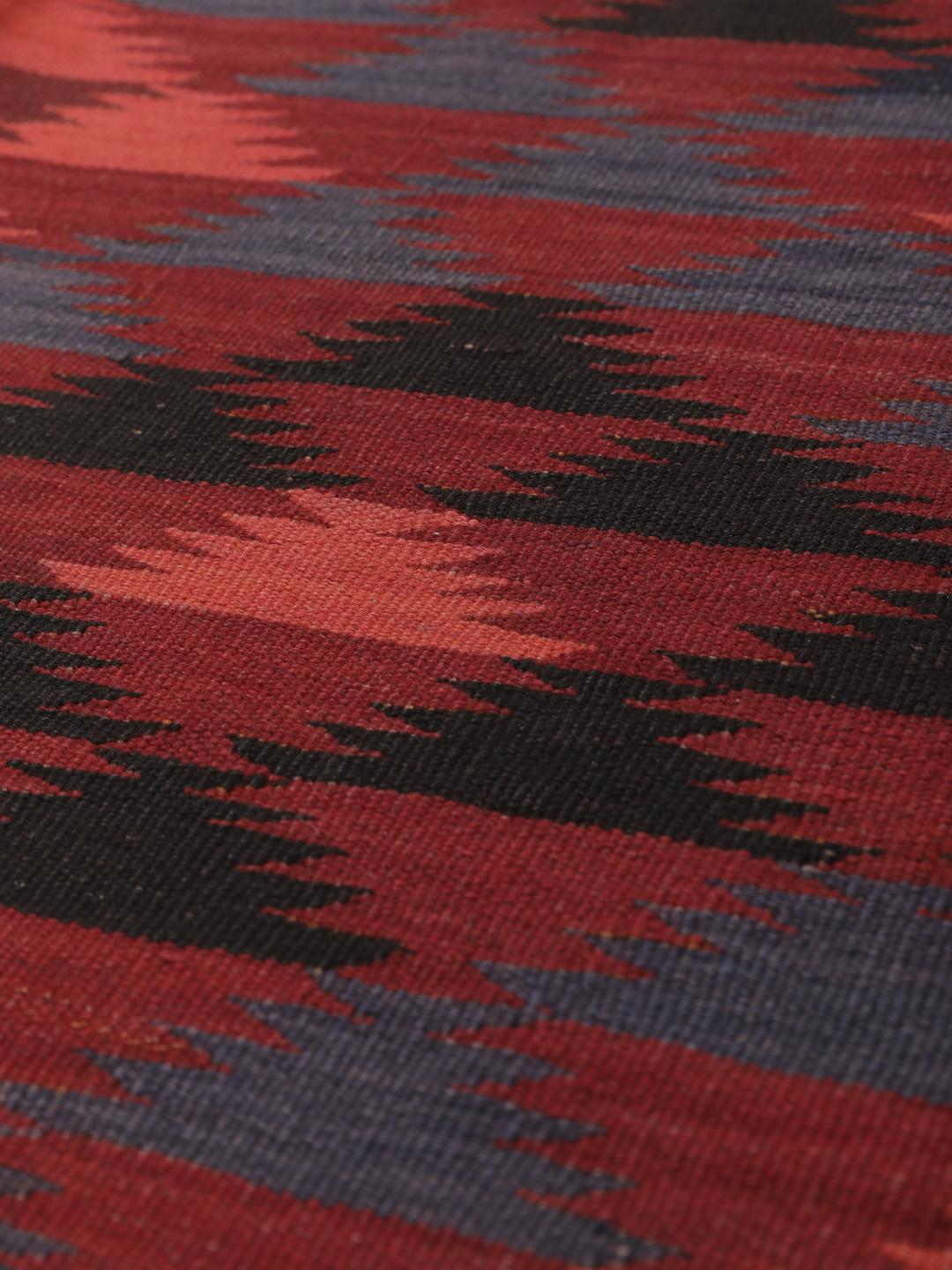
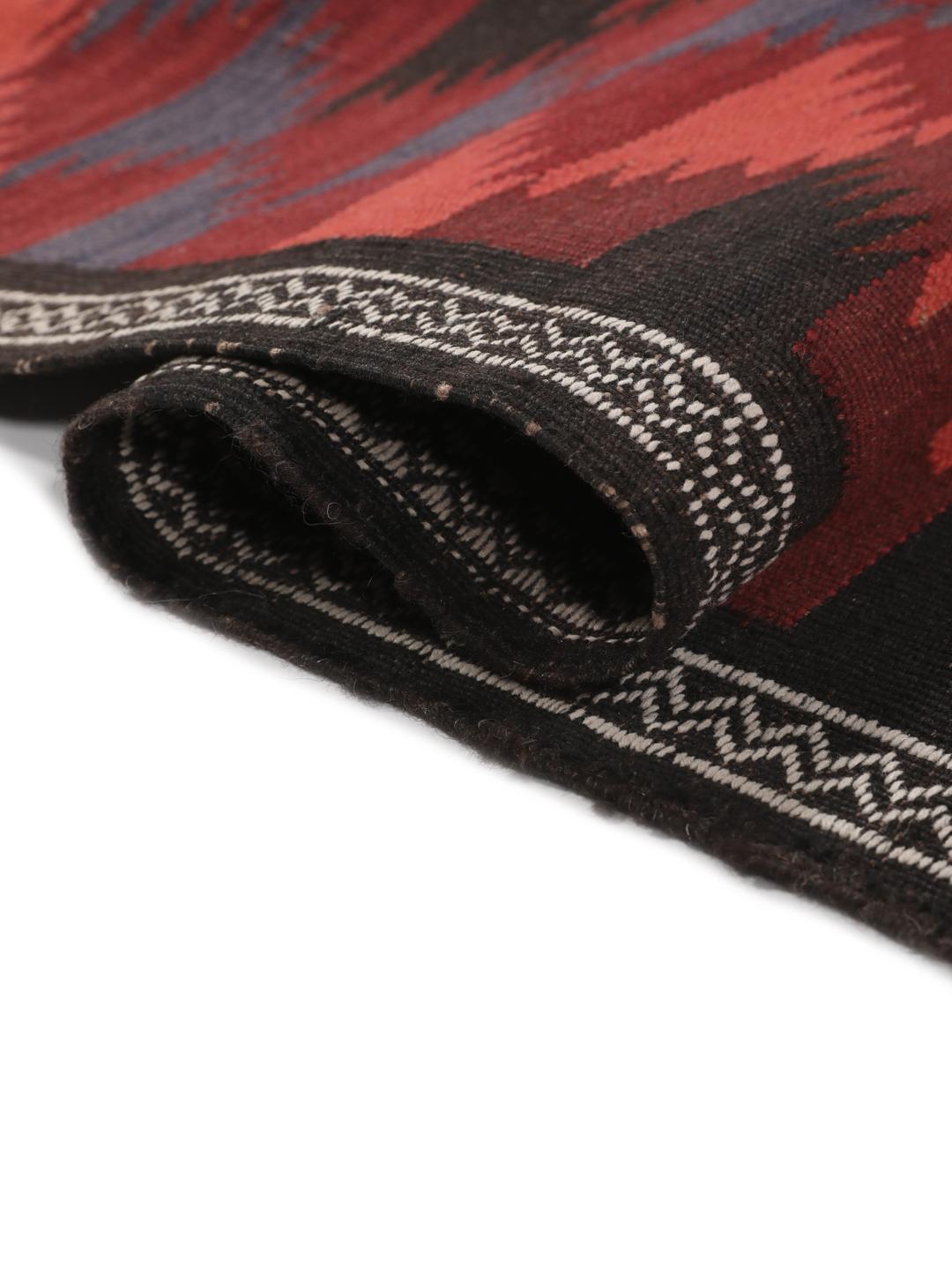
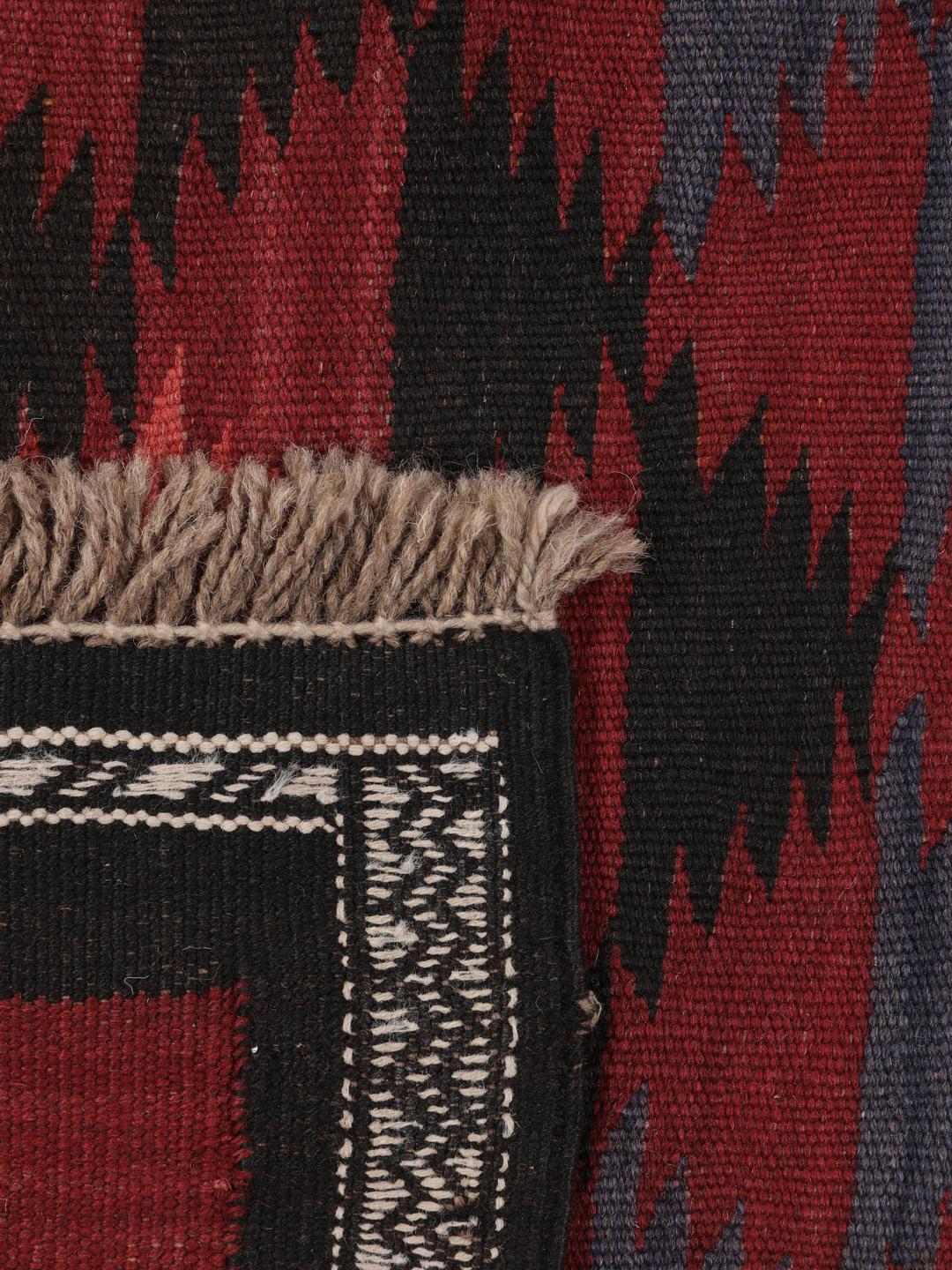
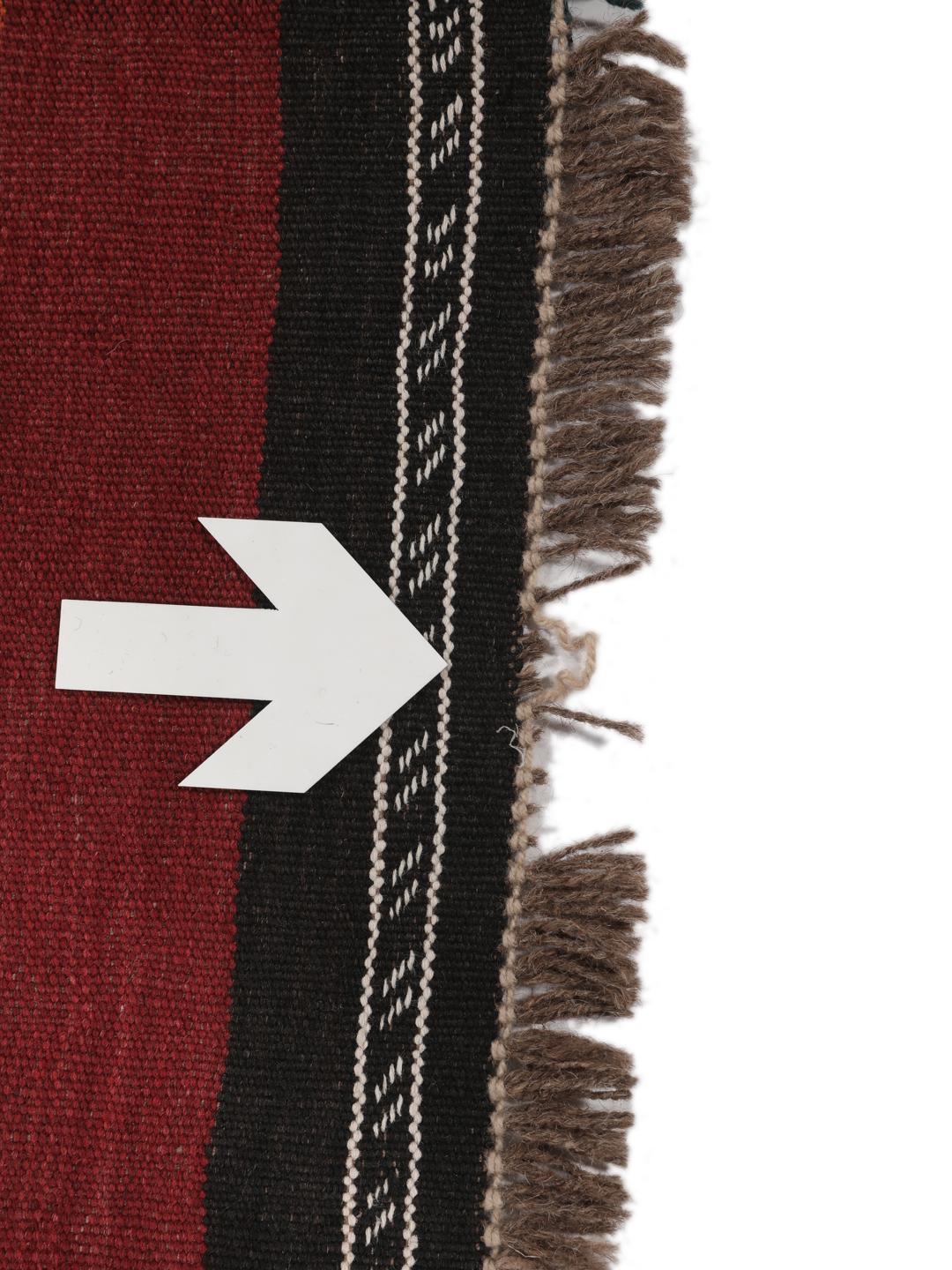
Visually, these rugs are defined by their sharp geometric language, often featuring diamonds, triangles, and intricate borders that carry symbolic meanings from tribal folklore. The deep red and black hues found in this particular piece are characteristic of the region’s traditional natural dyeing methods, which have been used for centuries to achieve rich, lasting colours that age beautifully over time.
Collecting a vintage kelim from Afghanistan is an opportunity to preserve a fading art form. These rugs are valued not only for their aesthetic beauty but for the cultural narrative woven into every thread. By bringing this piece into your home, you are honouring a legacy of skill and creativity that has defined the textile heritage of the Middle East for generations.