What is a Patchwork rug? History, origin and types
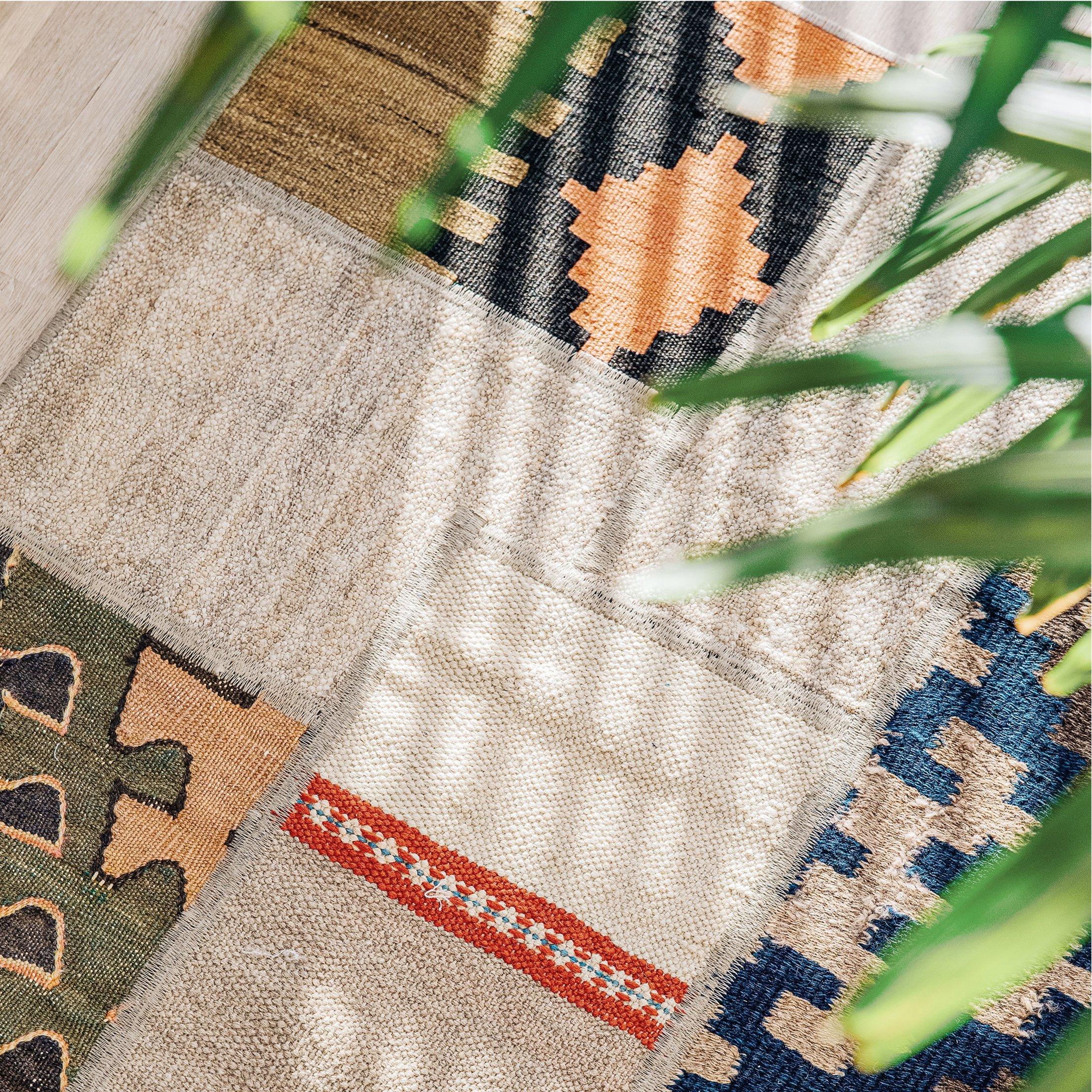
A patchwork rug is a type of rug made by stitching together pieces of vintage or antique carpets to create a new design. The fragments are cleaned, trimmed, and carefully assembled by artisans, resulting in a unique rug that combines traditional craftsmanship with a contemporary layout. This process gives patchwork rugs their distinctive, one-of-a-kind character, with rich variations in colour, pattern, and texture. In this guide, we explore the history and origins of patchwork rugs, how they are made, the different styles available, and why they are popular in modern interior design.
History of patchwork rugs
Patchwork rugs are a modern design idea with roots in long-standing traditions of repair and reuse. In weaving regions such as Anatolia, parts of the Middle East, and the Caucasus, hand-knotted rugs were valuable household items, often kept and repaired for generations. Instead of throwing worn rugs away, damaged areas were restored or repurposed. This mindset of preservation eventually inspired the patchwork rug: a new design created from older carpets.
The style as we know it today developed mainly in Turkey in the late 20th century. Artisans began cutting vintage rugs into smaller sections and stitching them together into new, mosaic-like compositions, often adding a backing for strength. Some pieces were overdyed in bold colours, while others kept their softer, aged look. As interest in vintage design and sustainability grew, patchwork rugs became popular for their mix of history, craftsmanship, and contemporary style.
Where are patchwork rugs made?
Many patchwork rugs are produced in Turkey, where artisans repurpose vintage Anatolian carpets into new designs. The process combines traditional rug craftsmanship with contemporary design techniques, allowing older hand-knotted rugs to be transformed into unique patchwork compositions.
How are patchwork rugs made?
The patches are carefully cleaned, trimmed, and assembled by skilled artisans, ensuring durability while preserving the charm of the original materials. In many cases, the original rug — or several rugs — are dyed before being cut, allowing artisans to create a cohesive new design. Sometimes an entire rug is overdyed and then transformed into a patchwork piece; other times, multiple rugs are dyed and combined into one new creation, depending on the desired size and layout.
This process opens up a wide range of creative possibilities. A new patchwork rug can be crafted from several vintage pieces dyed in varying shades of the same colour for a subtle, harmonious look. Alternatively, different colours can be combined to create a vibrant, multicoloured design with striking contrasts.
The result is a rug that blends history and artistry, offering a distinctive look that combines traditional craftsmanship with a fresh, contemporary feel. Each piece carries the character of its past while being thoughtfully reimagined into something entirely new.
What are the different types of patchwork rugs?
Classic patchwork rugs
Classic patchwork rugs are created from visible sections of traditional rugs, preserving original motifs such as floral medallions and geometric borders. These rugs highlight the heritage of the original carpets while creating a new mosaic-style composition.
Overdyed patchwork rugs
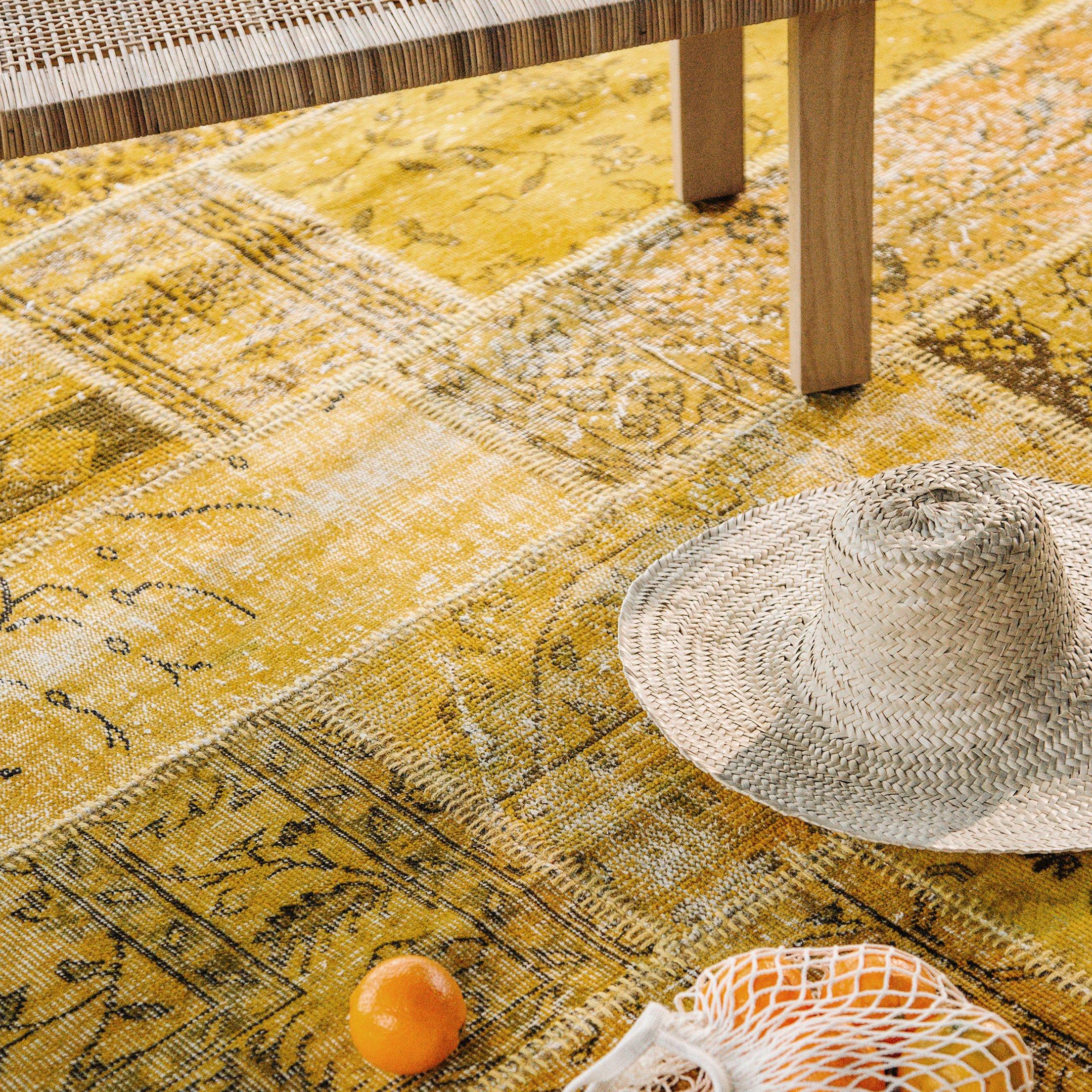
Overdyed patchwork rugs are treated with a single colour after the patchwork process. The dye creates a unified tone while allowing the underlying patterns to remain subtly visible
Geometric patchwork rugs
Geometric patchwork rugs arrange rug fragments in structured layouts such as squares, rectangles, or grid patterns. This method creates a balanced and organized design where repeating shapes form a modern geometric composition. Geometric patchwork rugs are popular in contemporary interiors because they combine traditional materials with clean, architectural patterns.
Neutral and tonal patchwork rugs
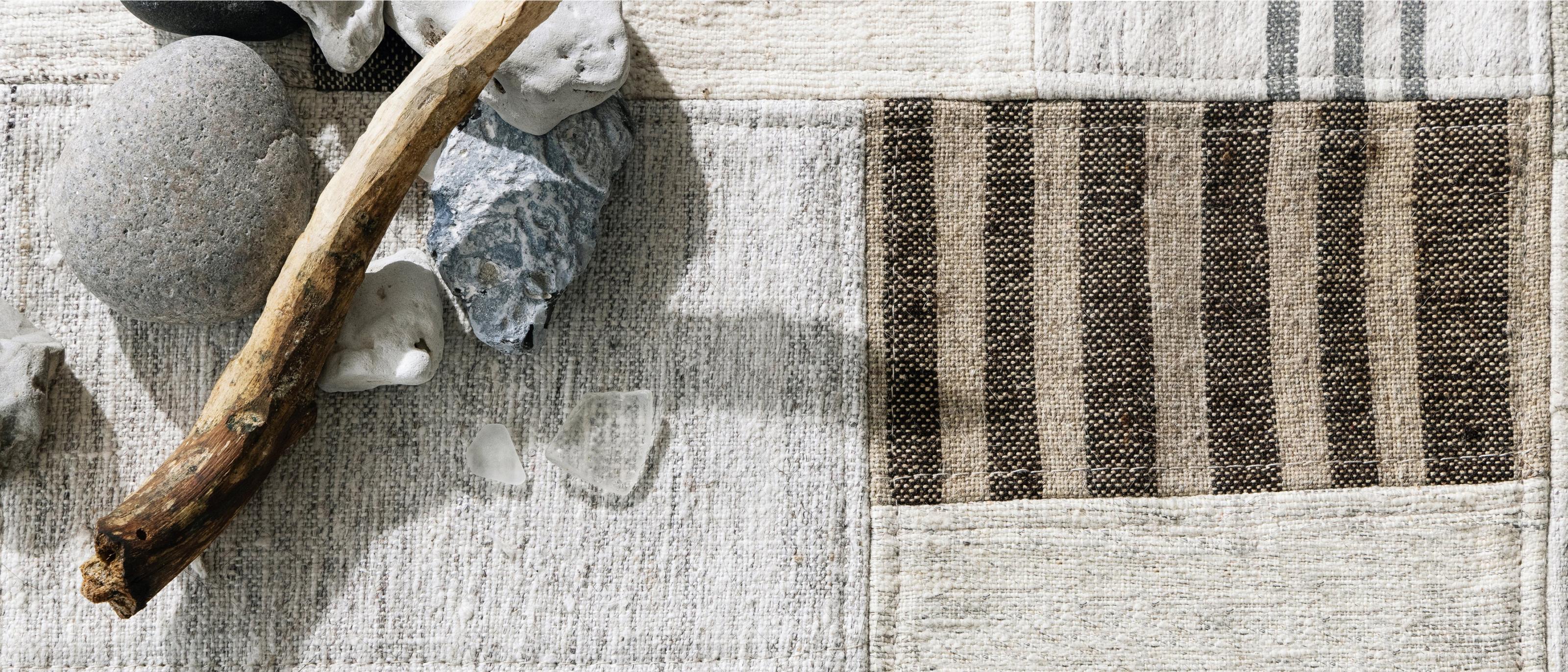
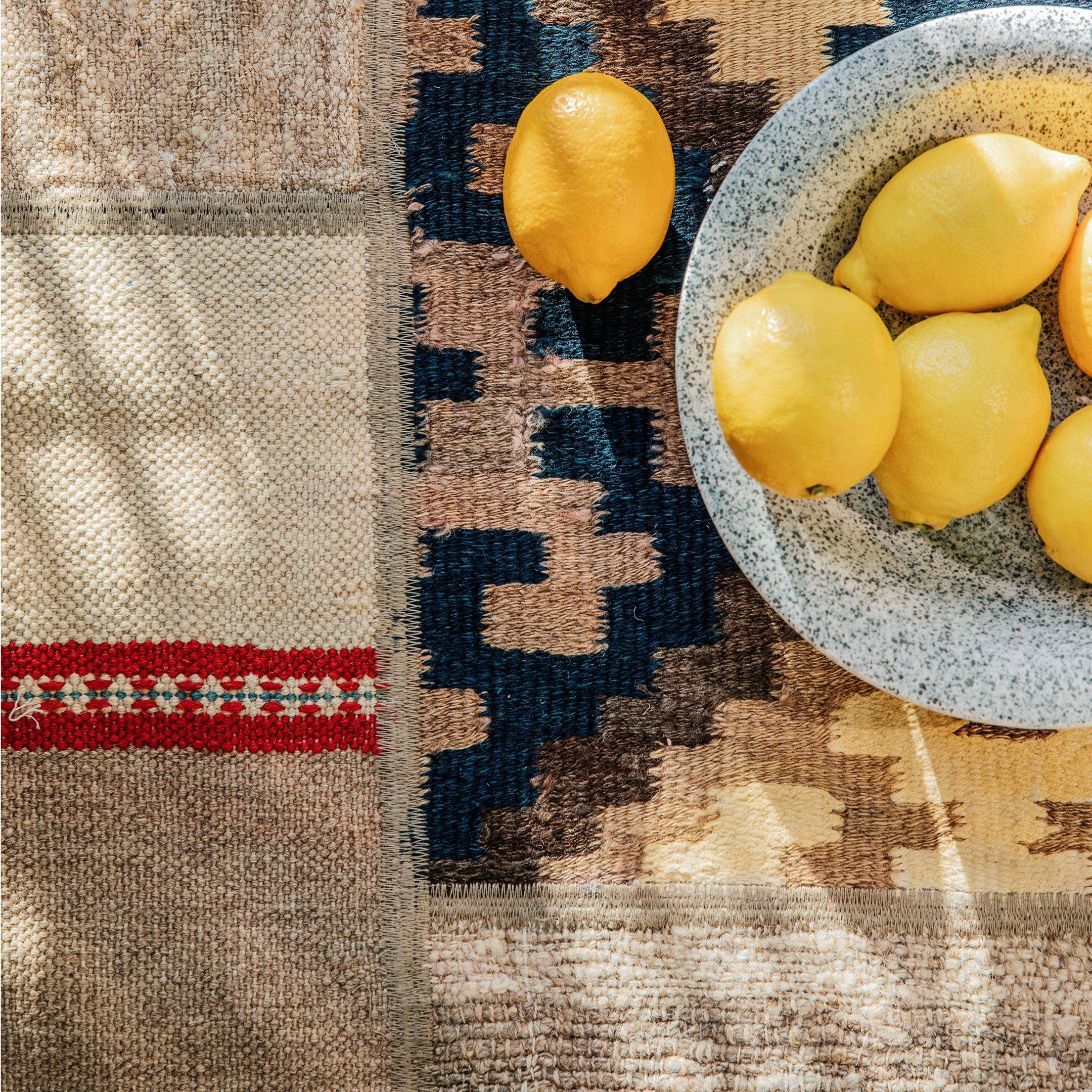
Neutral and tonal patchwork rugs use fragments in similar shades—such as beige, grey, ivory, or soft brown—to create a harmonious and understated look. Instead of strong colour contrasts, these rugs focus on subtle variations in tone, texture, and pattern. This makes them particularly suitable for Scandinavian, minimalist, or modern interior styles.
Contemporary patchwork rugs
Contemporary patchwork rugs reinterpret the traditional patchwork technique with modern design elements. They may feature irregular layouts, faded vintage effects, bold colour contrasts, or abstract compositions. By combining antique rug fragments with modern aesthetics, contemporary patchwork rugs bridge the gap between traditional craftsmanship and current interior design trends.
The sustainable craft behind patchwork rugs
Patchwork rugs are often considered a more sustainable rug option because they give new life to existing materials. Many are created from vintage or surplus rugs that might otherwise go unused. By reusing durable fibres such as wool, patchwork rugs make the most of resources that have already been produced.
In addition, handmade patchwork rugs typically involve traditional craftsmanship rather than large-scale industrial processes, which can result in lower energy consumption compared to mass production. Choosing a well-made patchwork rug and caring for it properly further supports sustainability, as durability and long-term use are key factors in reducing environmental impact.
How to care for your patchwork rug
Although patchwork rugs are durable and well-crafted, proper care is essential to maintain their appearance and longevity.
- Hoover frequently on a low-suction setting without a rotating brush to lift surface dust and dirt
- Turn the rug every few months to promote even wear and balanced colour ageing
- Deal with spills straight away by gently blotting with a clean, dry cloth — avoid rubbing the area
- Keep the rug out of prolonged direct sunlight to minimise uneven fading
- Place an anti-slip underneath to prevent movement, support the backing, and prolong its lifespan
- Avoid excessive moisture, which can affect the wool fibres and underlying structure
- Carefully trim any loose threads with scissors — do not pull them
- Arrange professional cleaning every one to three years, depending on how much foot traffic the rug receives
Bring this timeless style into your space by browsing our complete range of patchwork rugs, offered in different sizes and colour options.
Patchwork rugs FAQ
Many patchwork rugs are made from genuine vintage hand-knotted rugs that have been cut into sections and reassembled into a new design. These original rugs are often decades old, which gives patchwork rugs their distinctive texture and character.
Yes. Because patchwork rugs are assembled from fragments of older carpets, each piece tends to have its own combination of colours, patterns, and wear. This means no two patchwork rugs are exactly alike.
Patchwork rugs are often used in contemporary interiors because their mosaic-style layouts and varied colours can complement both modern and traditional spaces. Designs with neutral tones or structured patterns are especially popular in minimalist settings.
Most patchwork rugs are made from wool because many vintage rugs were originally hand-knotted using wool fibres. Wool is durable, naturally resilient, and perfect for long-term use in rugs.