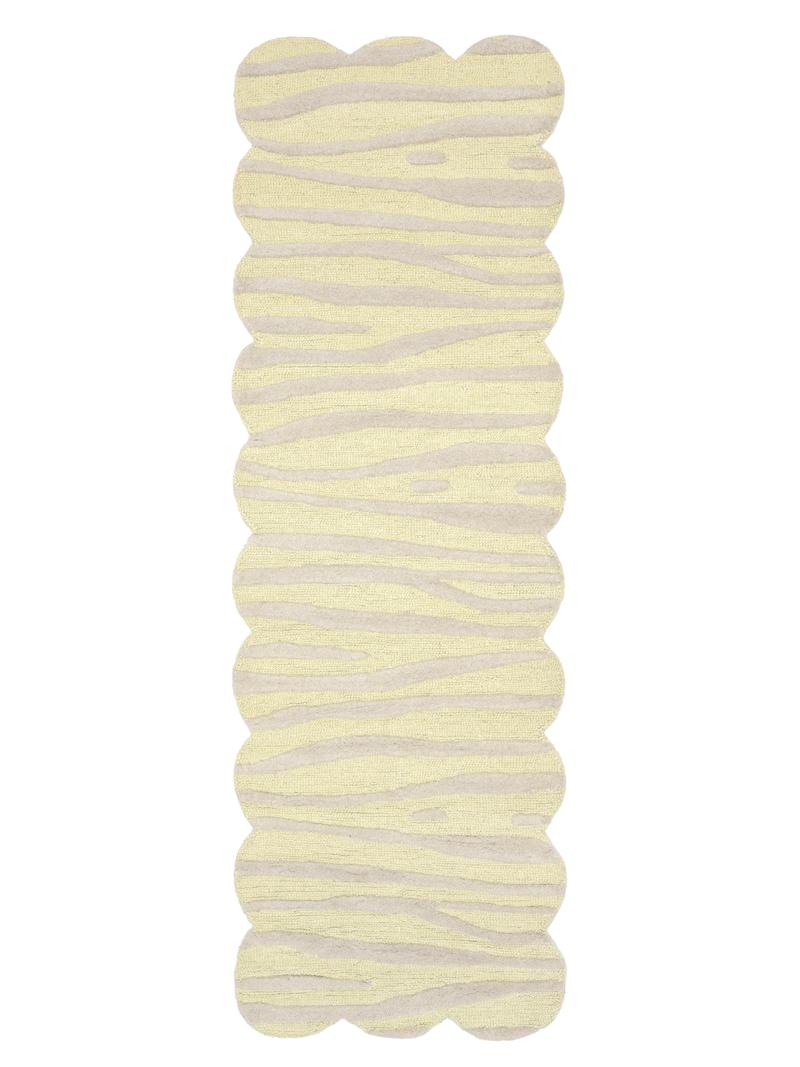
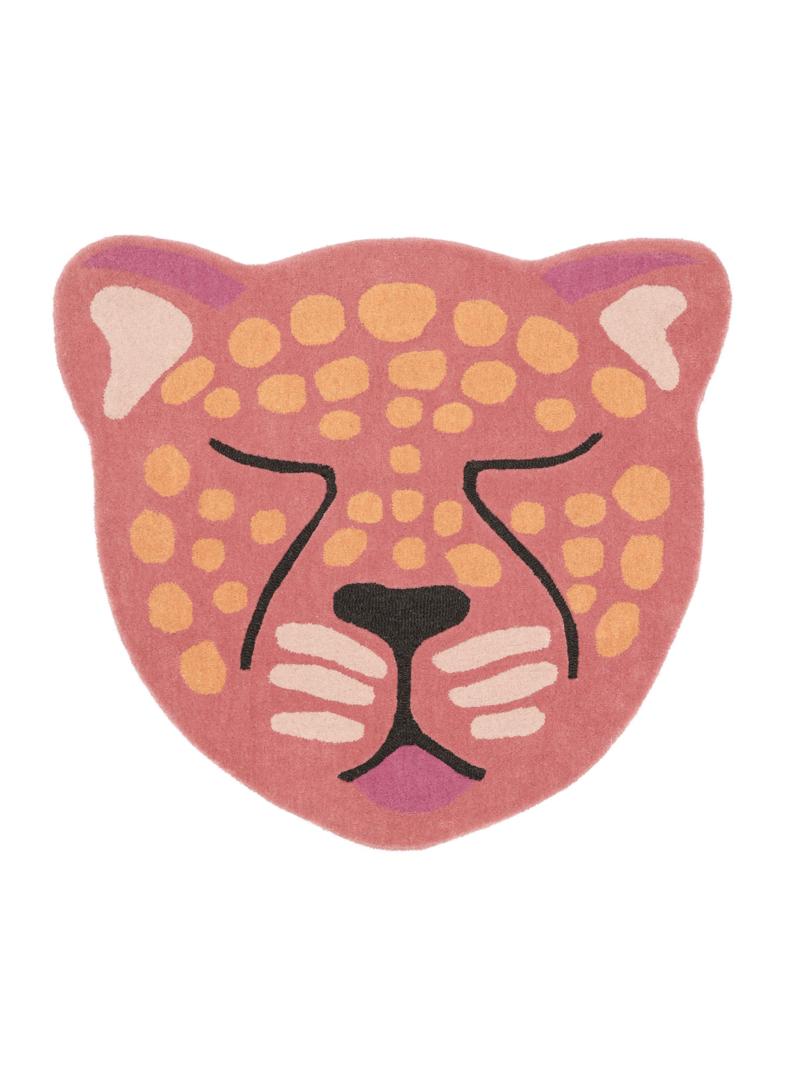
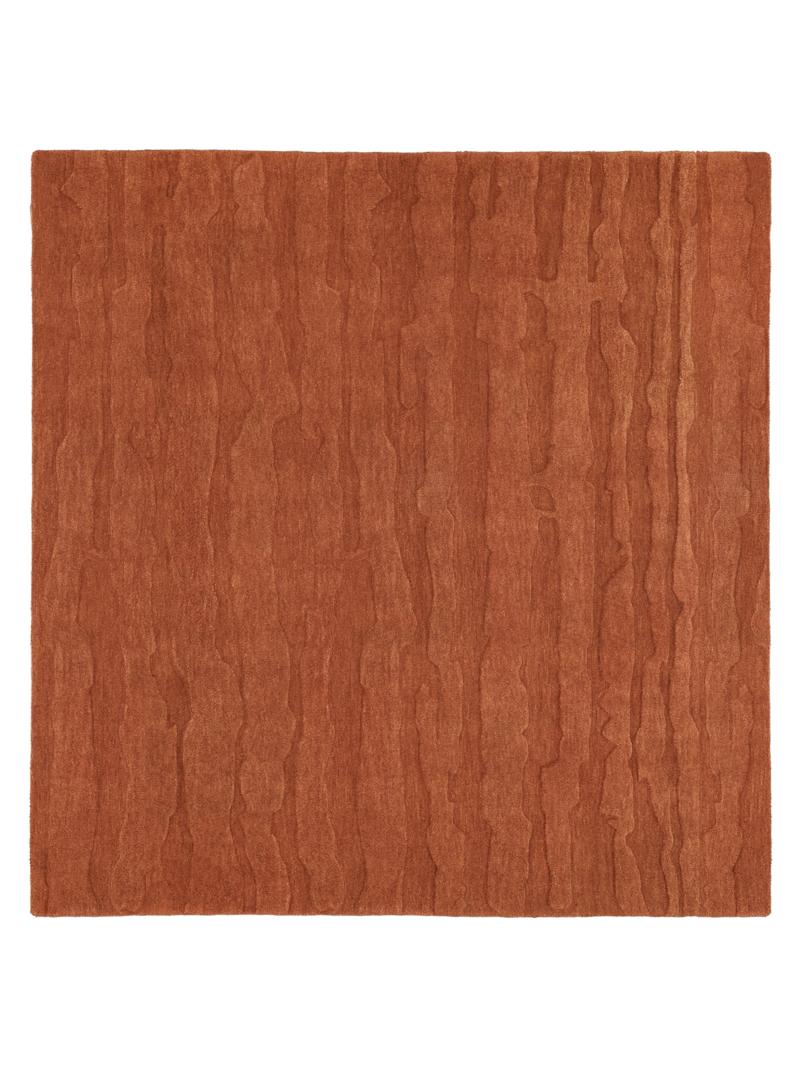
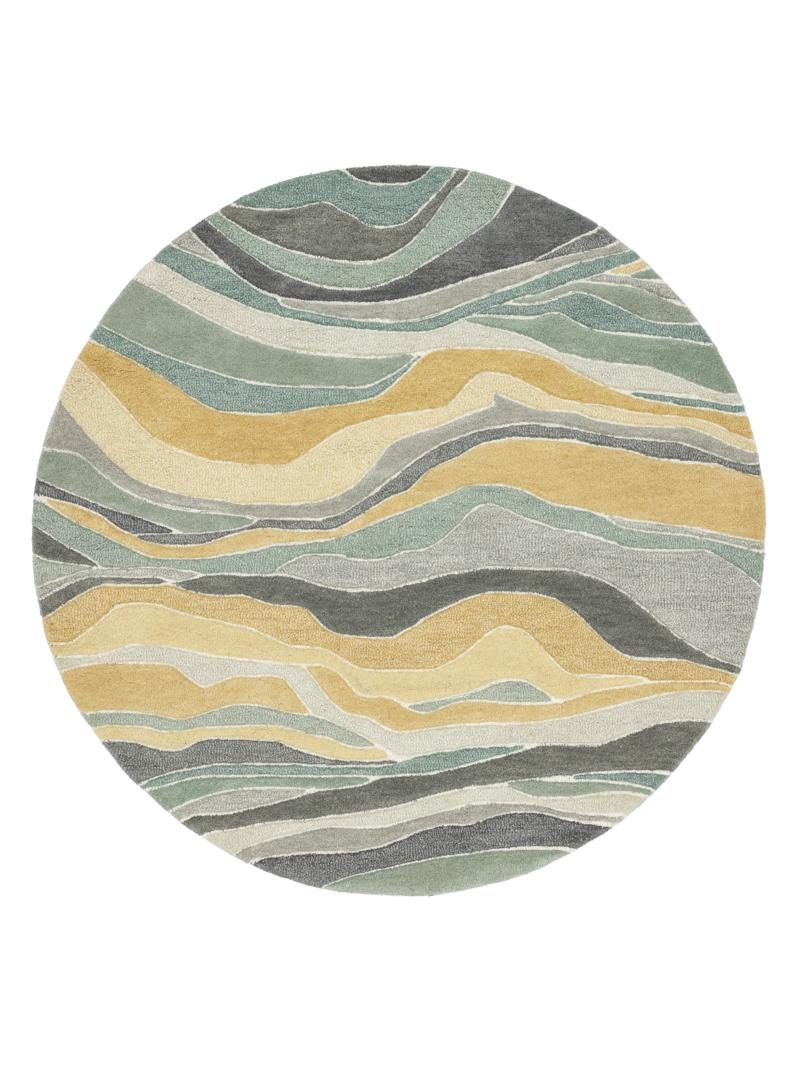
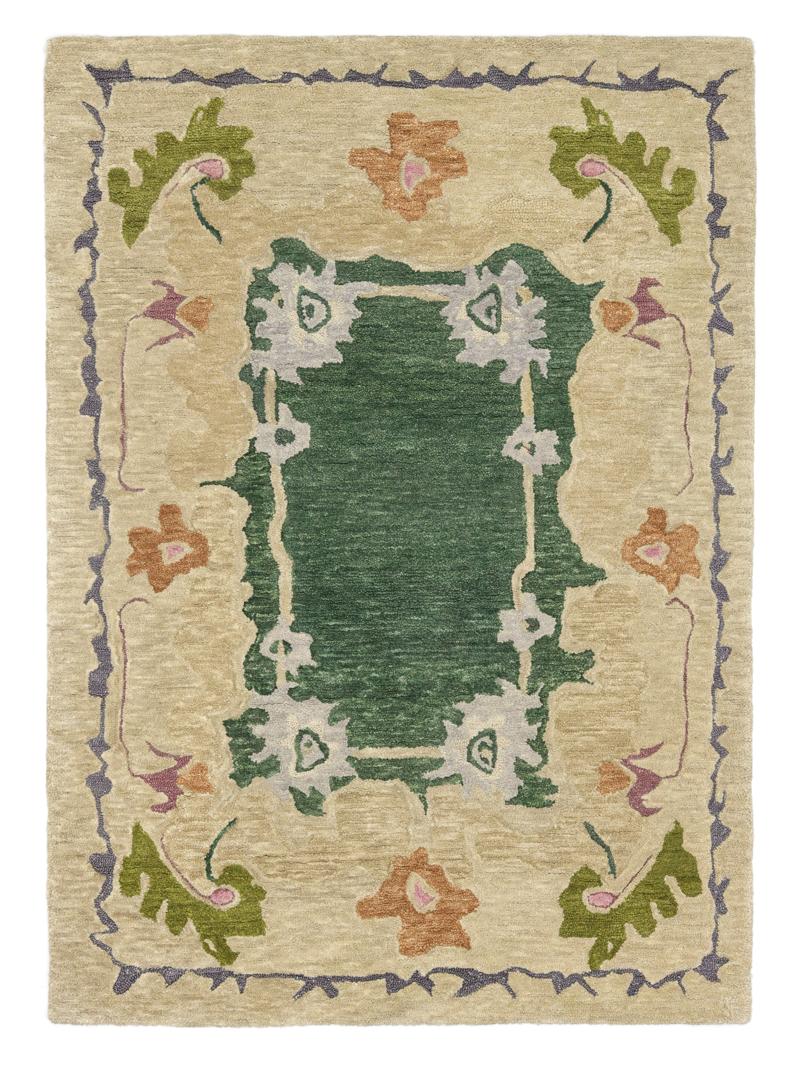
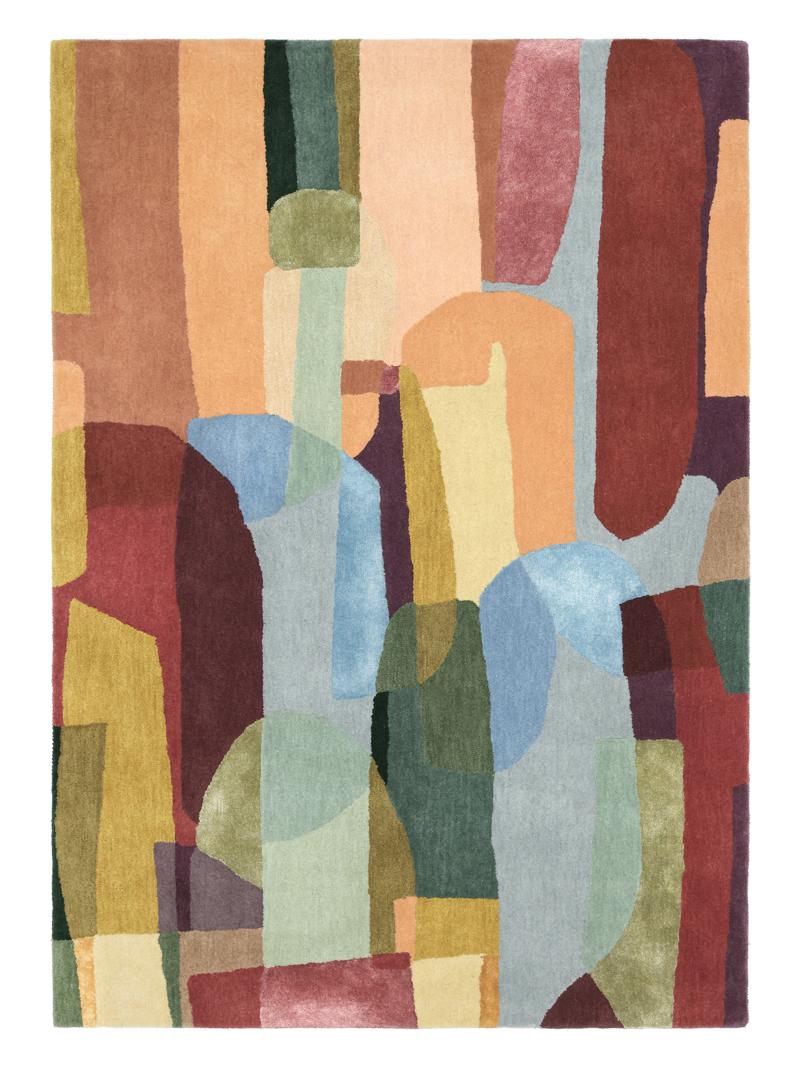
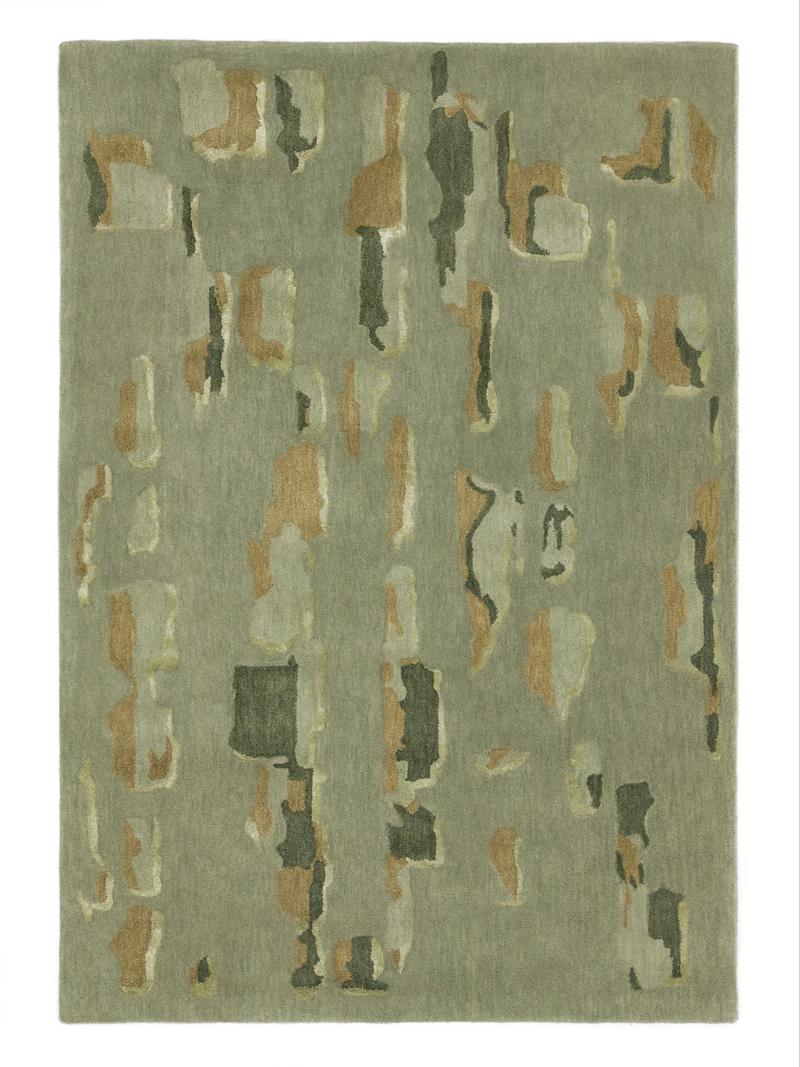
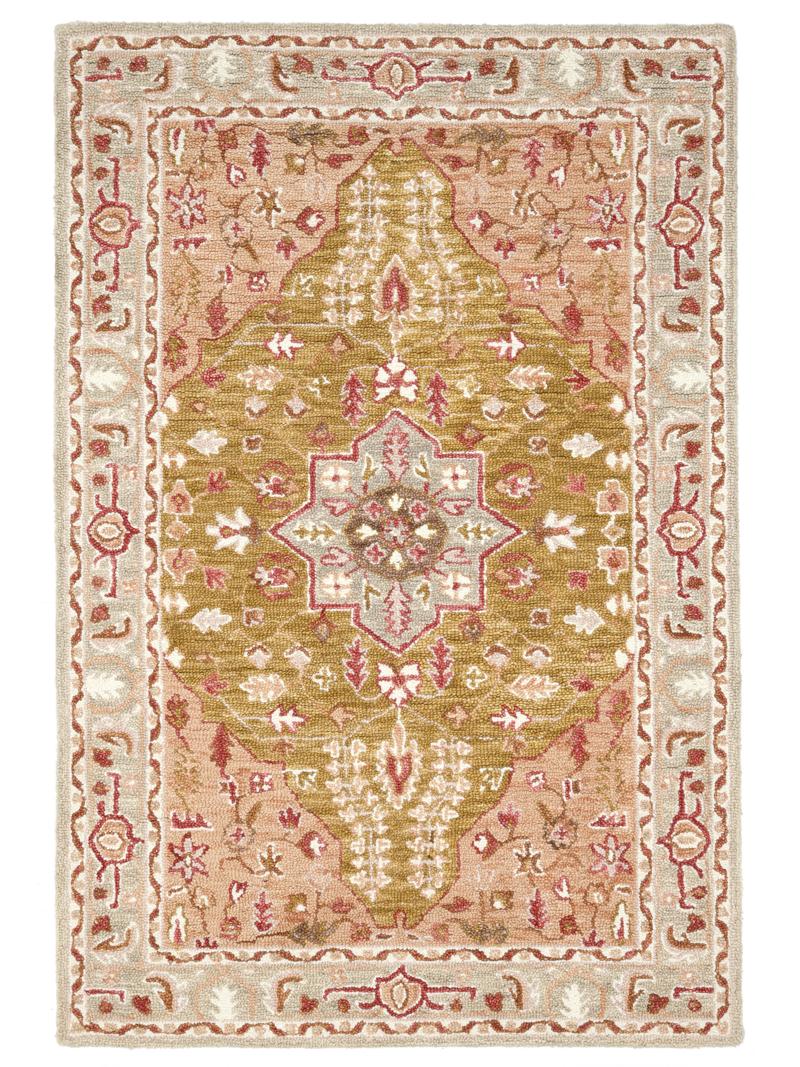
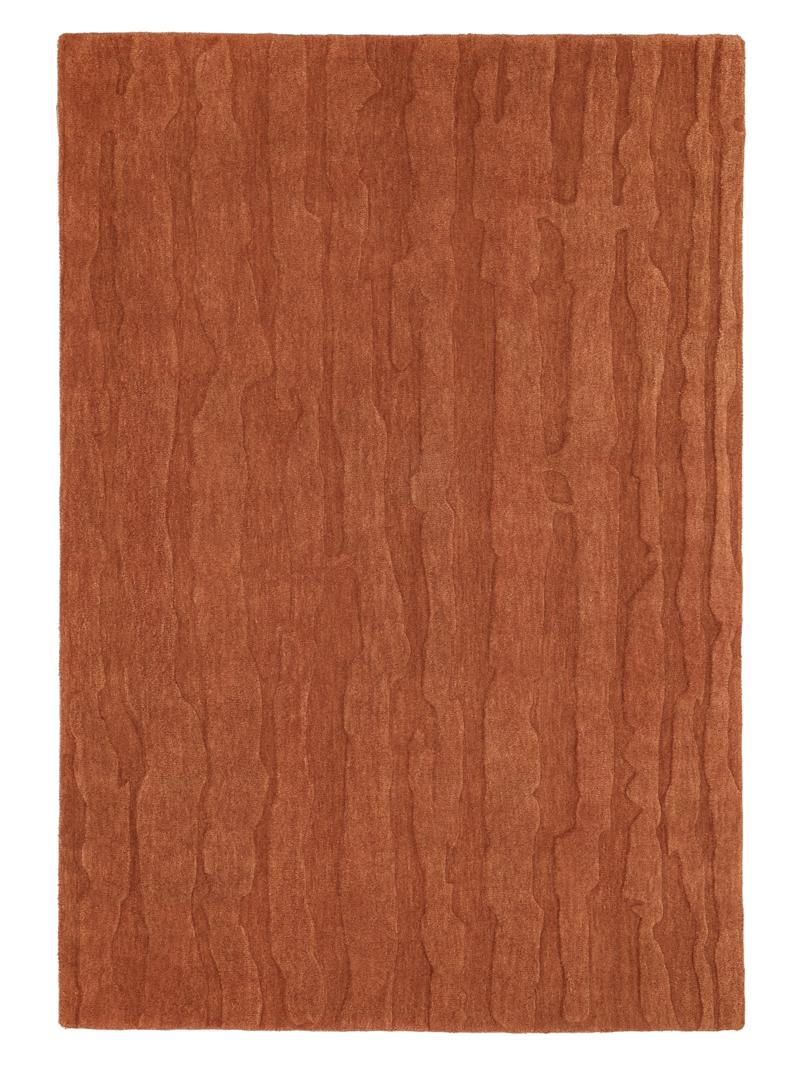
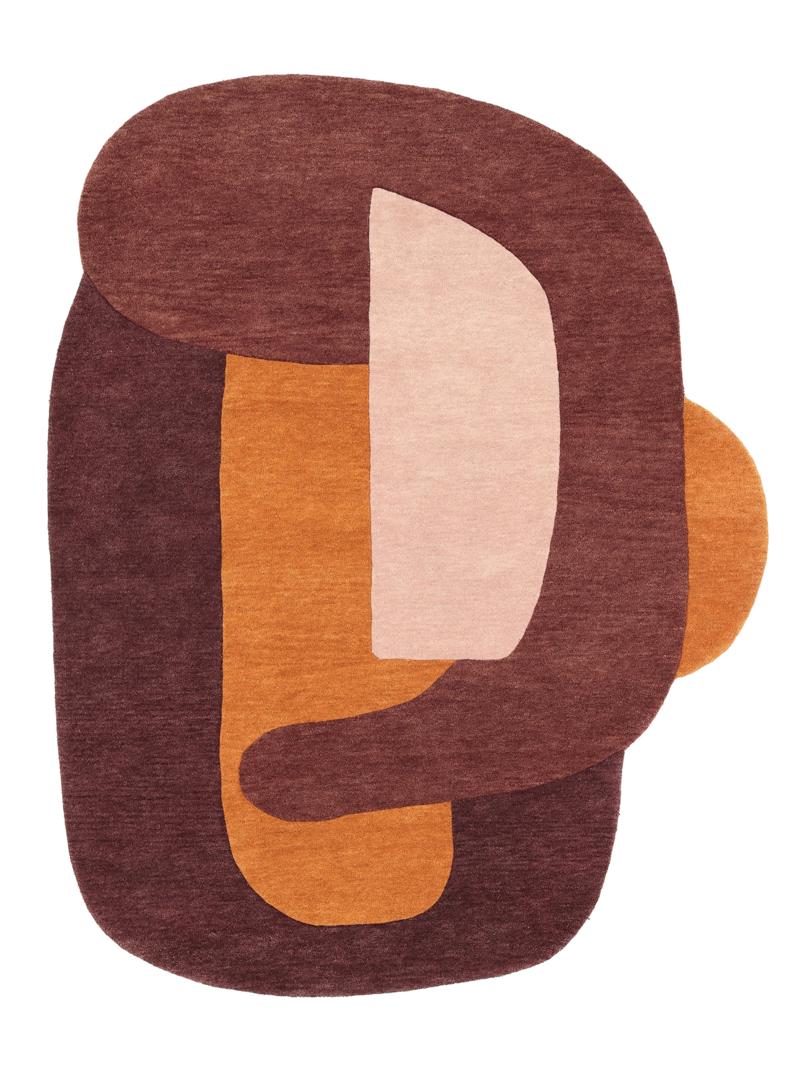
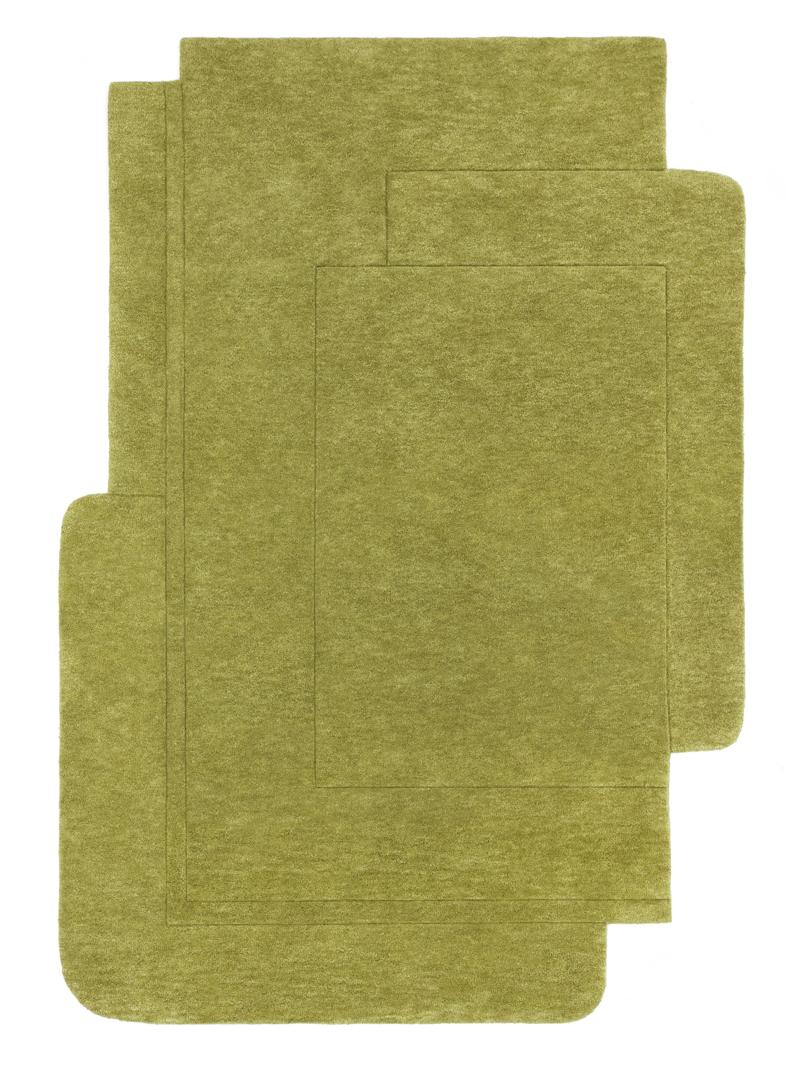
What are hand-tufted rugs? The craftsmanship behind every loop and cut
Hand-tufted rugs are created through skilled craftsmanship, precision, and carefully controlled texture work. Handmade by trained tufters using a hand-operated tufting gun, each rug is built row by row across a prepared canvas, creating distinctive loop and cut pile surfaces with individual character and subtle natural variations.
From yarn preparation to hand-finishing details, every stage of the process contributes to the texture, depth, and distinctive quality that defines hand-tufted rugs.
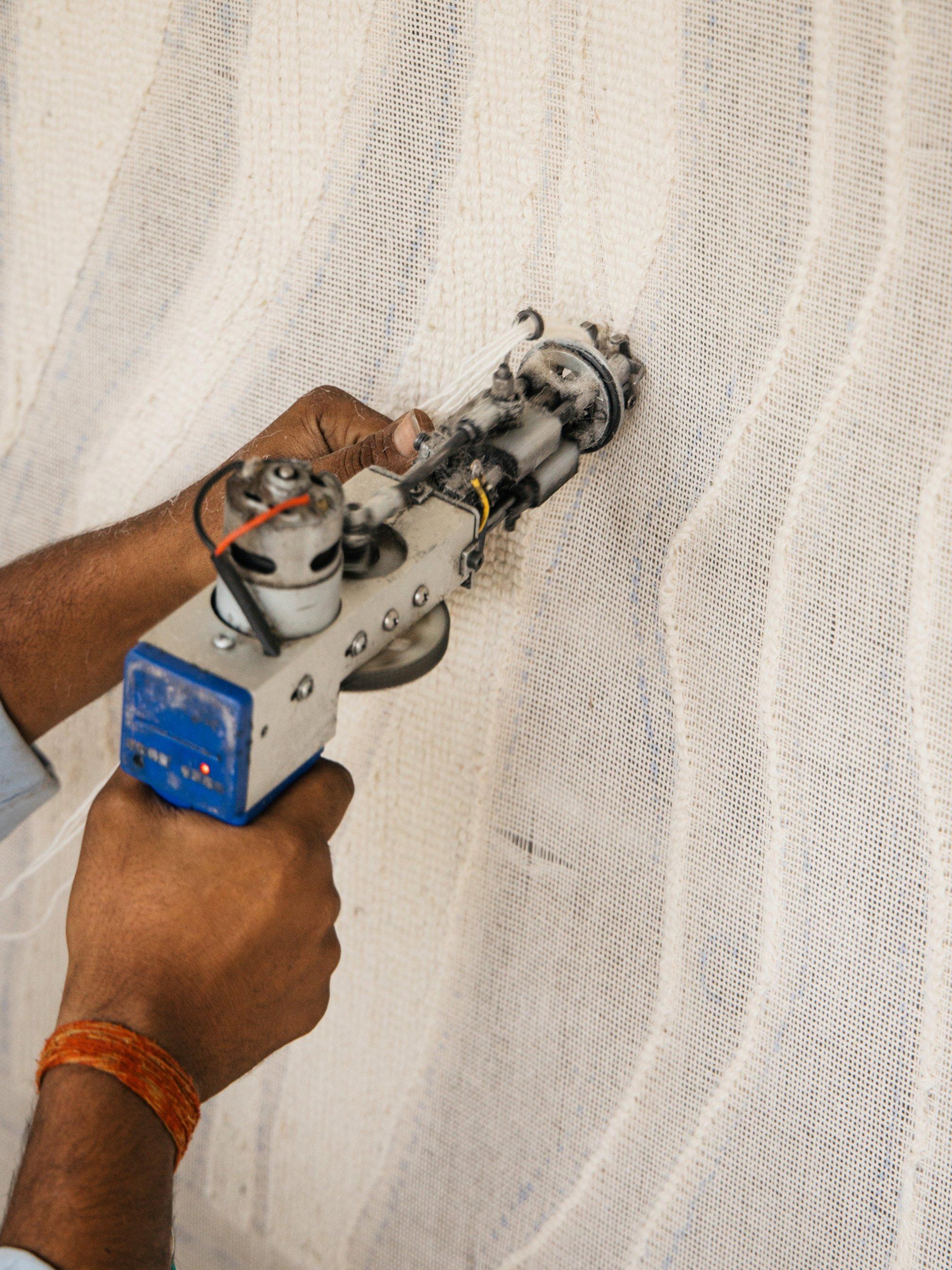
What is a hand-tufted rug?
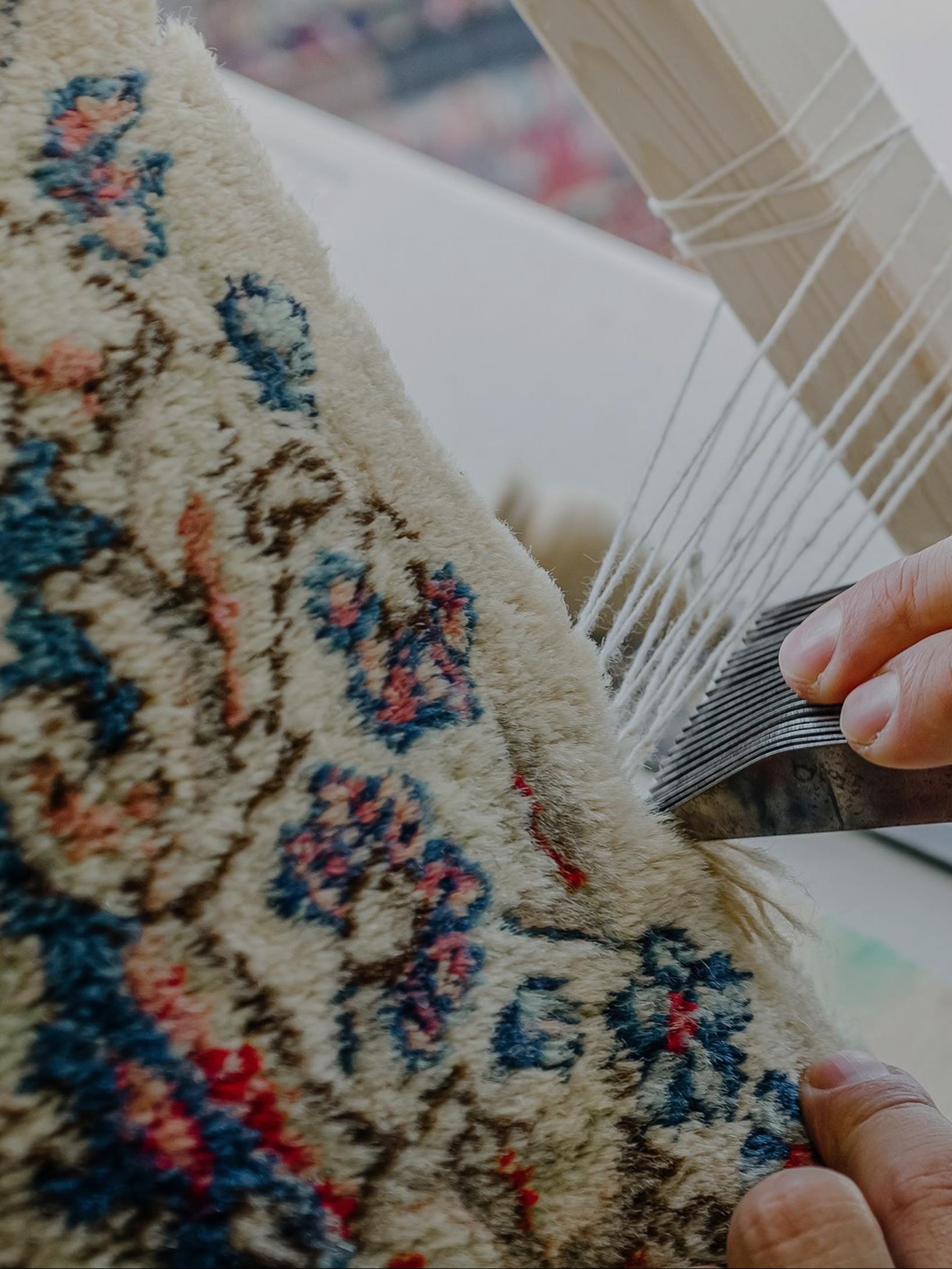
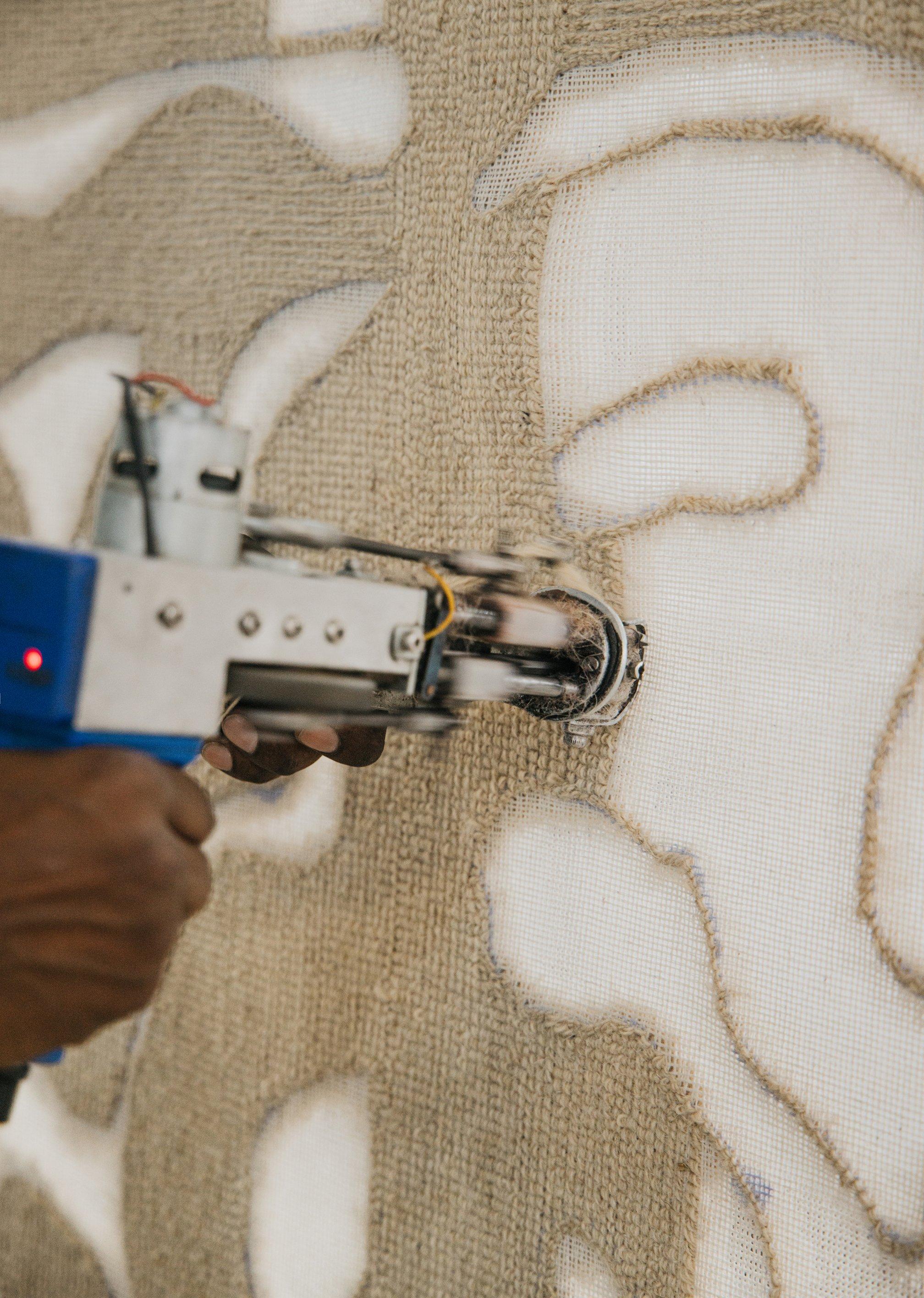
A hand-tufted rug is created by pushing yarn through a stretched canvas backing using a hand-operated tufting gun. Unlike hand-knotted rugs, where every knot is tied individually, hand-tufted rugs rely on tufting craftsmanship guided entirely by the artisan’s control, judgement, and experience.
Skilled tufters control the speed, angle, and pressure of the tufting gun to build consistent texture, balanced tension, and precise detailing across the surface — allowing complex patterns and rich textural effects to emerge row by row.
Types of hand-tufted pile construction
- Hand-tufted loop pile: the yarn loops remain intact, creating a more structured surface with visible texture and dimensional character.
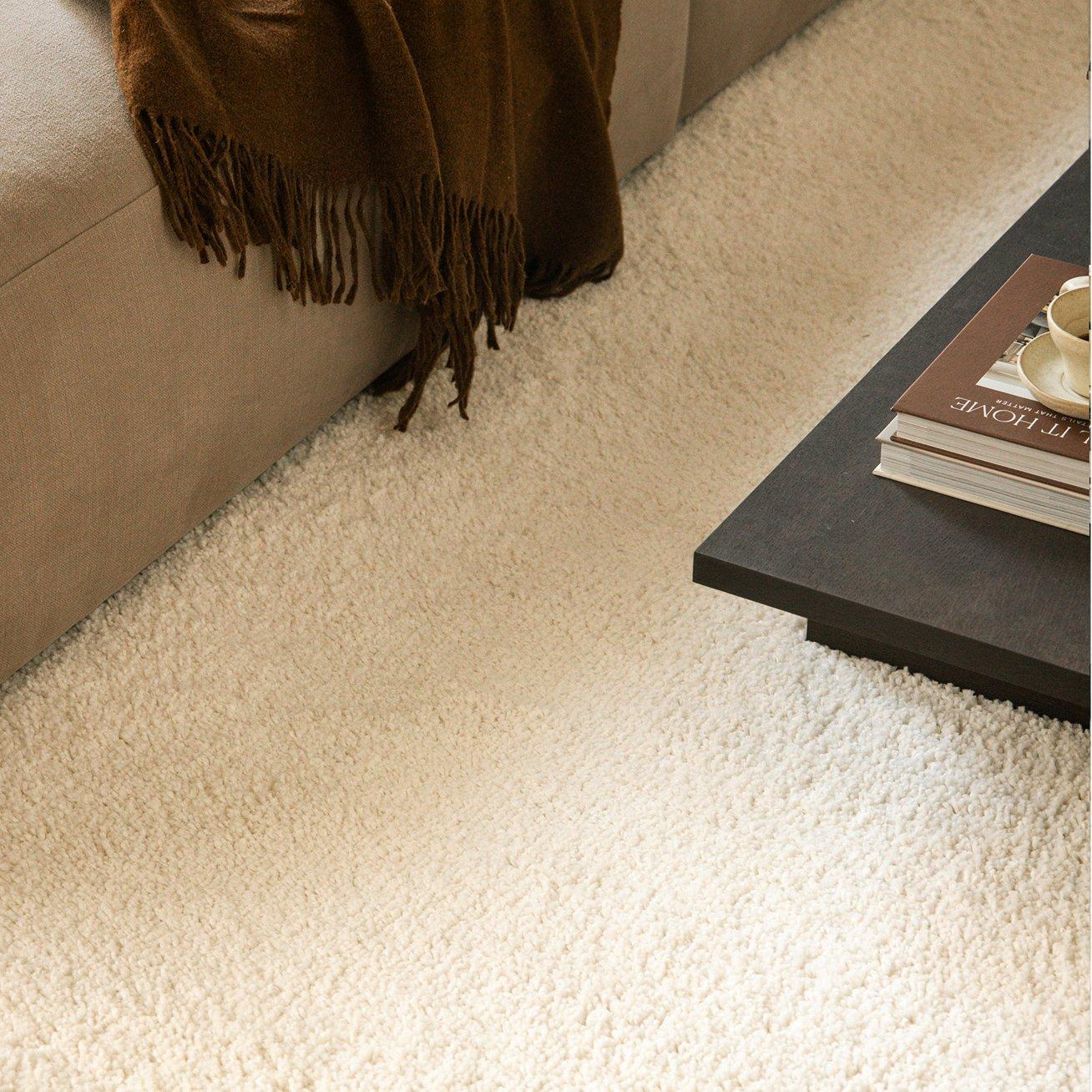
- Hand-tufted cut pile: the loops are cut to create a softer, denser, and more plush texture with a smoother finish.
Both constructions give hand-tufted rugs their distinctive tactile depth, natural variation, and artisan-made appearance.
Canvas preparation and pattern tracing: where craftsmanship begins
Before tufting begins, the canvas backing is stretched tightly onto a frame to create an even working surface. Once tensioned, the design is traced directly onto the surface by hand — borders, colour zones, and intricate motifs carefully mapped out to guide the tufting process row by row.
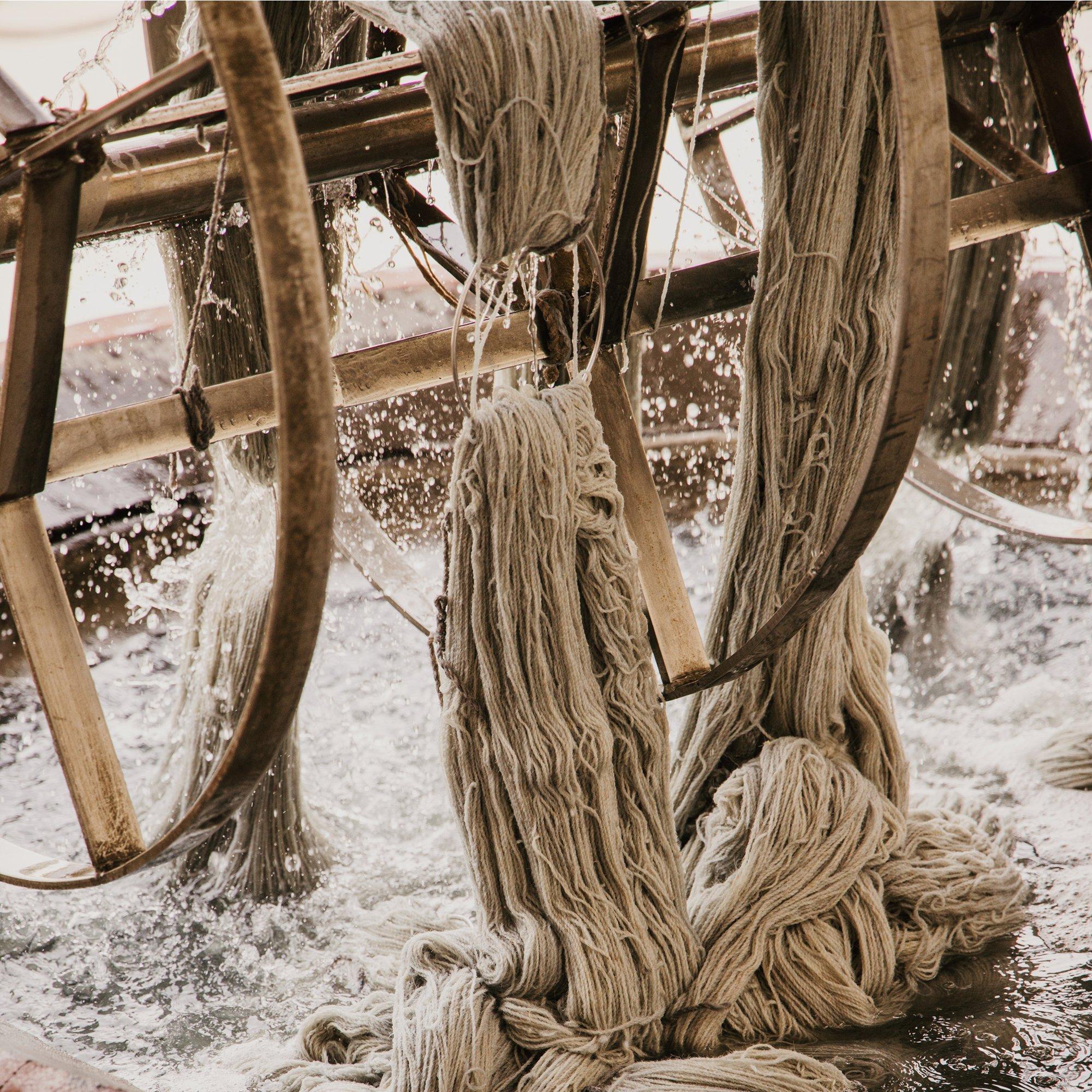
Raw yarn preparation and hand dyeing
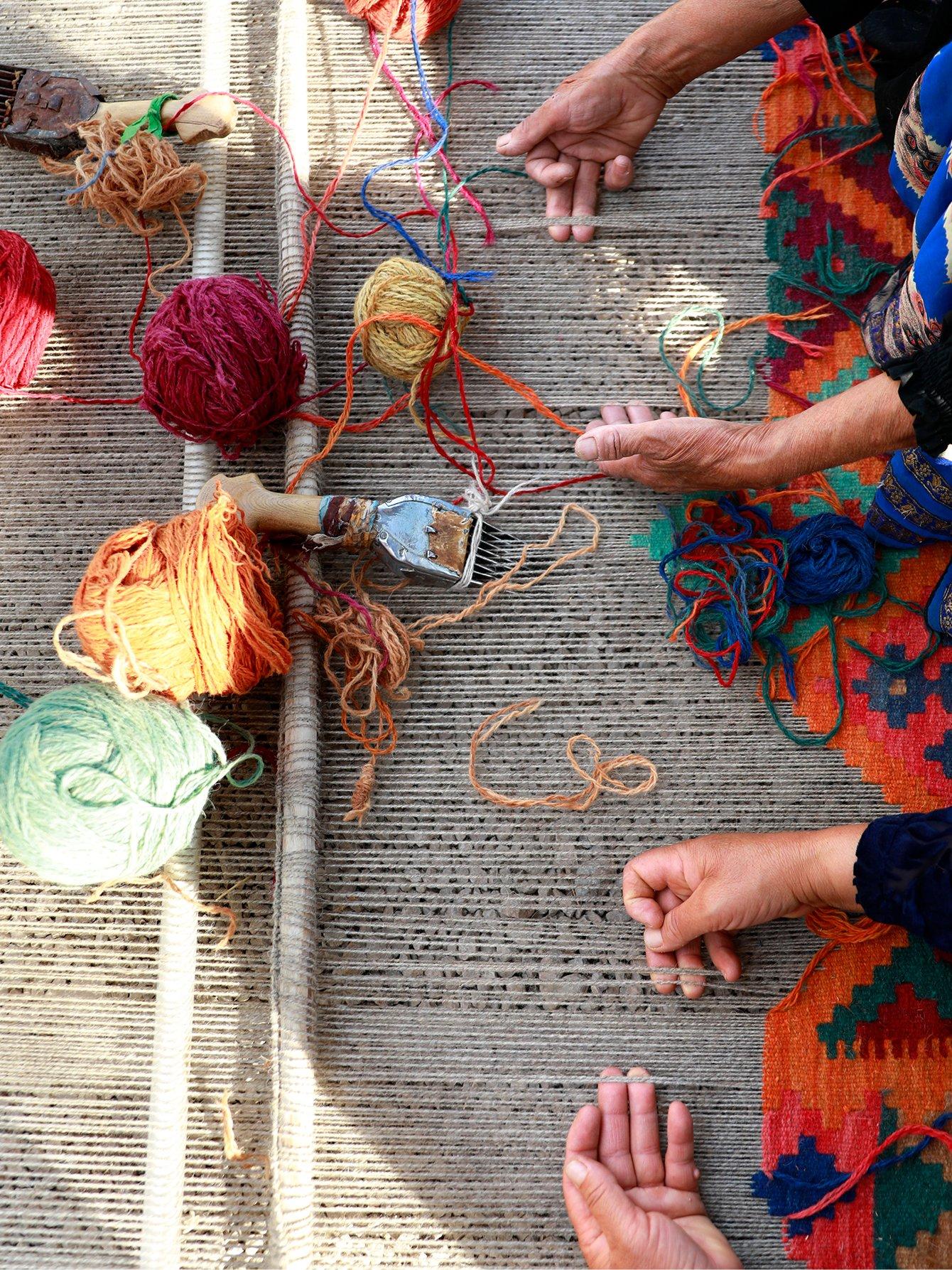
Raw yarn preparation takes place alongside the design process. Fibres are cleaned through traditional spinning techniques and winding methods, then wound into yarn coils ready to be loaded into the tufting gun bobbins, reflecting generations of artisan yarn craftsmanship.
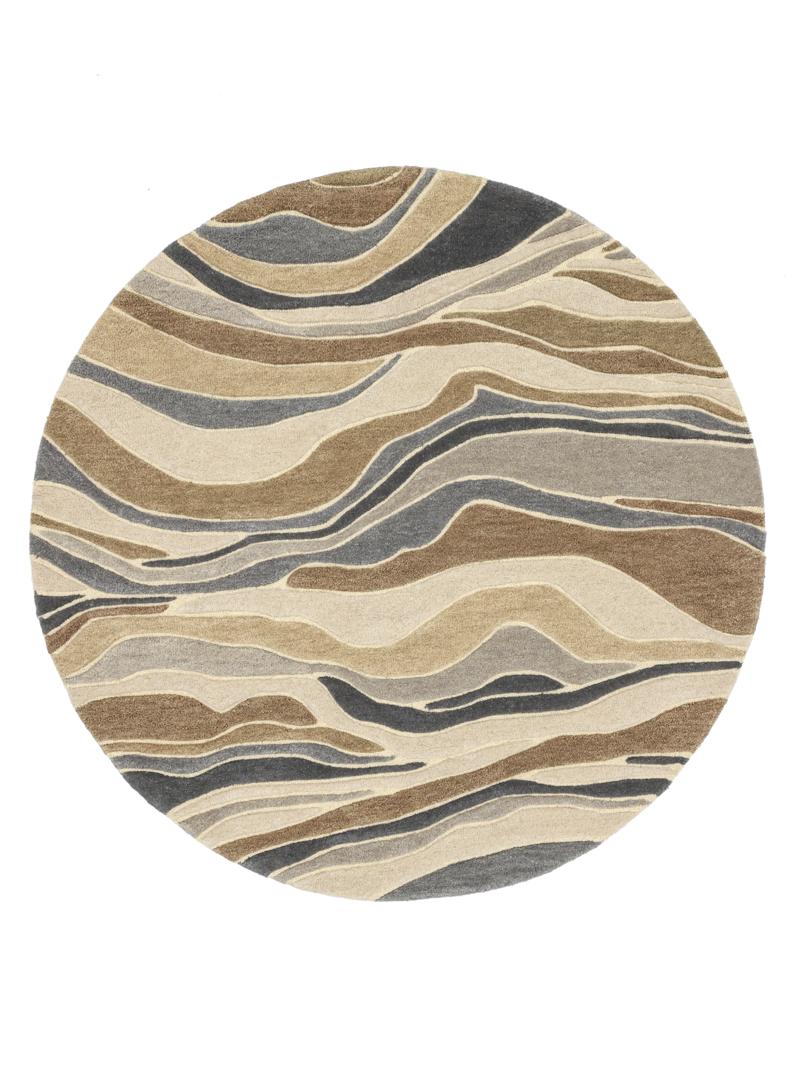
Handspun yarn and the dyeing process shape the rug’s surface quality long before tufting begins. Variations in twist, texture, and dye absorption create subtle tonal shifts known as the abrash yarn effect, a natural colour variation that gives the rugs greater depth, movement, and organic texture.
The dye process creates natural colour variation and subtle abrash effects that enhance the rug’s appearance.
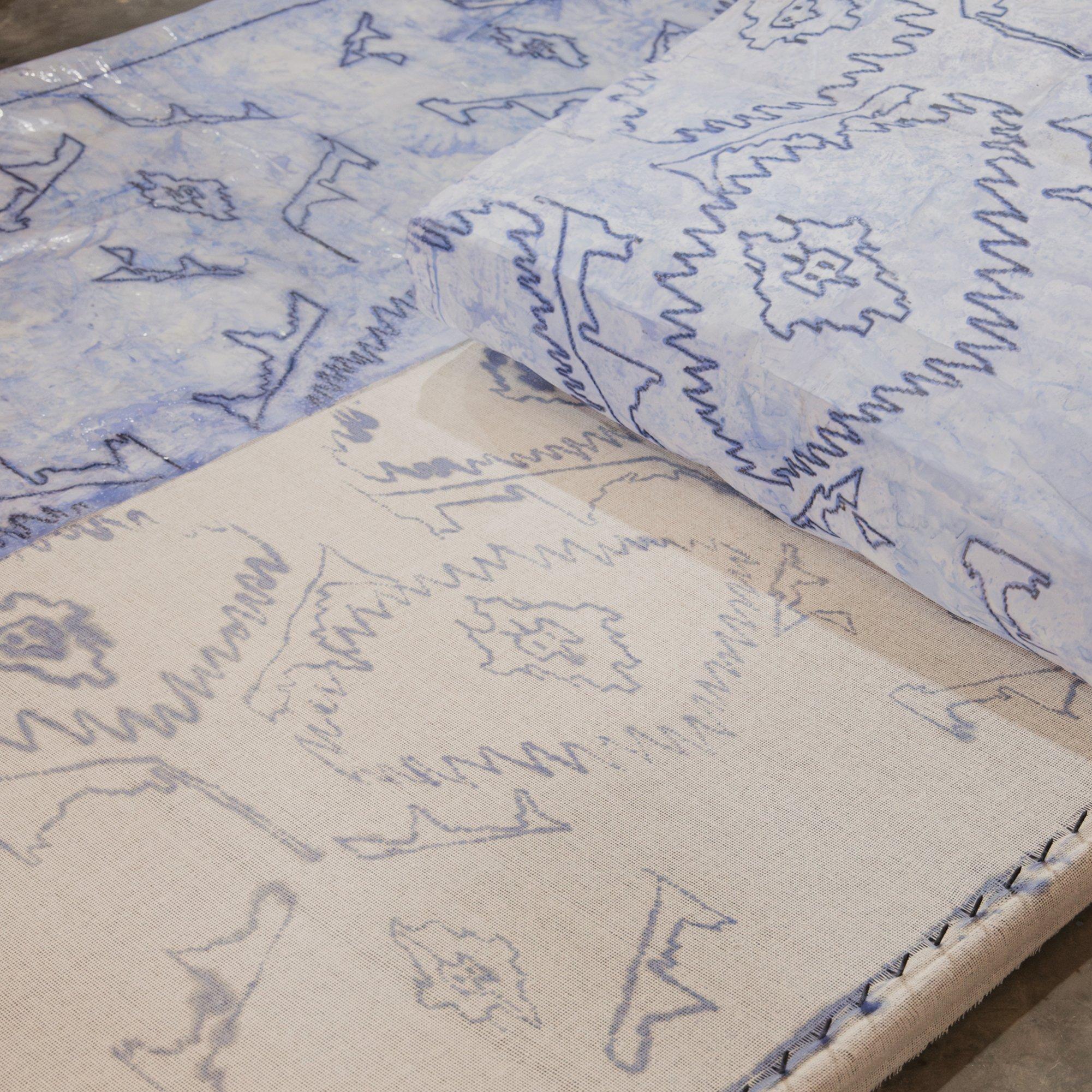
Canvas preparation and pattern tracing
The prepared canvas forms the structural base of the rug. Skilled artisans stretch the woven foundation cloth tightly onto a frame, then trace the design directly onto the surface by hand, mapping out pattern outlines, colour zones, and motif boundaries in careful detail. This traced canvas guides every pass of the tufting gun, ensuring the finished design is sharp, balanced, and precisely executed.
Tufting craftsmanship: the rhythm of the gun
With the canvas prepared and fibres loaded, the artisan guides the hand-operated tufting gun across the backing in steady, controlled passes — building the rug row by row through rhythm, precision, and experience. The hand-tufted pile texture emerges through careful placement and surface sculpting, giving each rug unique detailing and subtle textural differences.
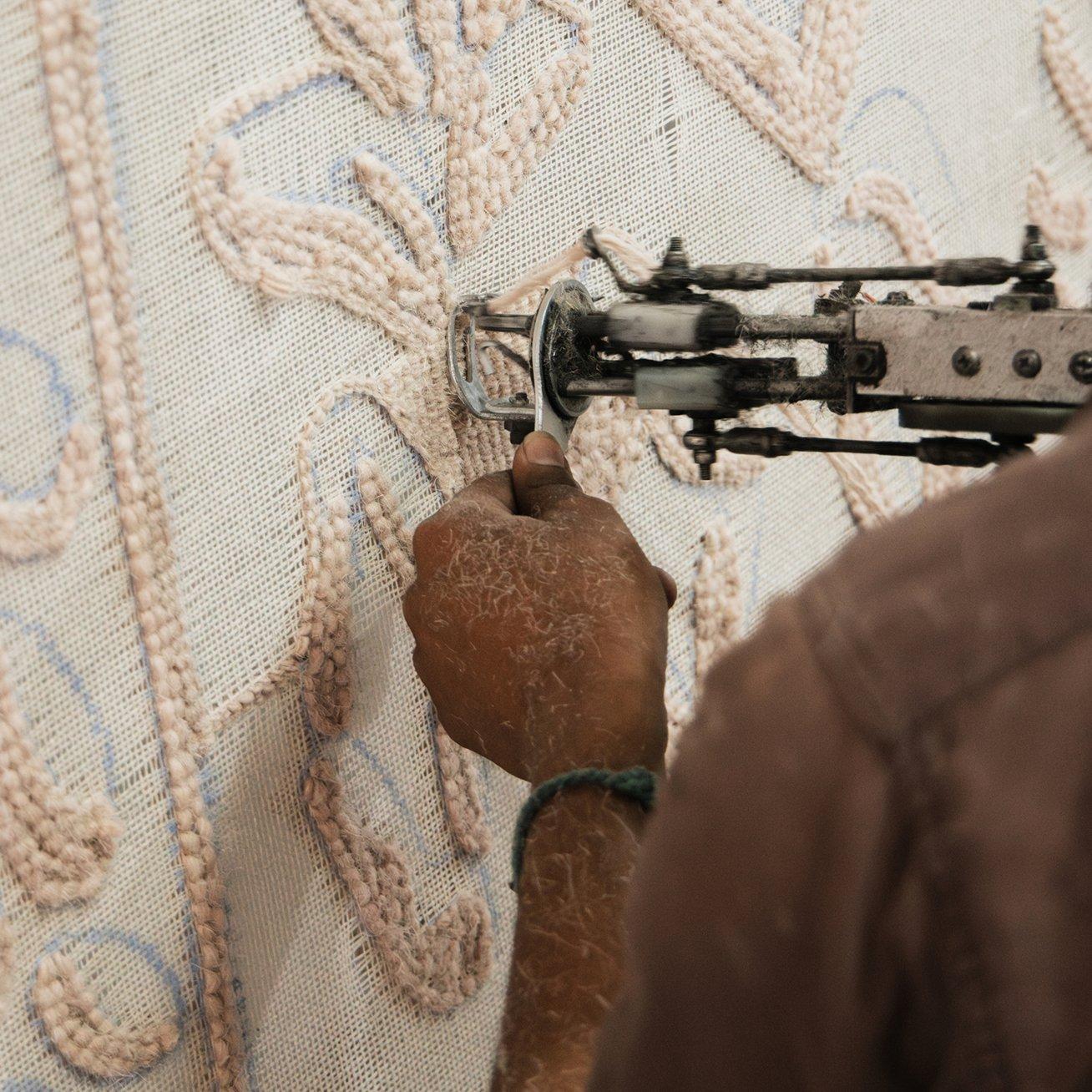
The craftsmanship behind every movement
Tufting is both technical and physical. Skilled tufters continuously adjust speed, angle, and direction while following the traced pattern across the canvas. Every movement is directed by the artisan’s judgement rather than an automated process — giving hand-tufted rugs their genuine handmade craftsmanship and differences in all details.
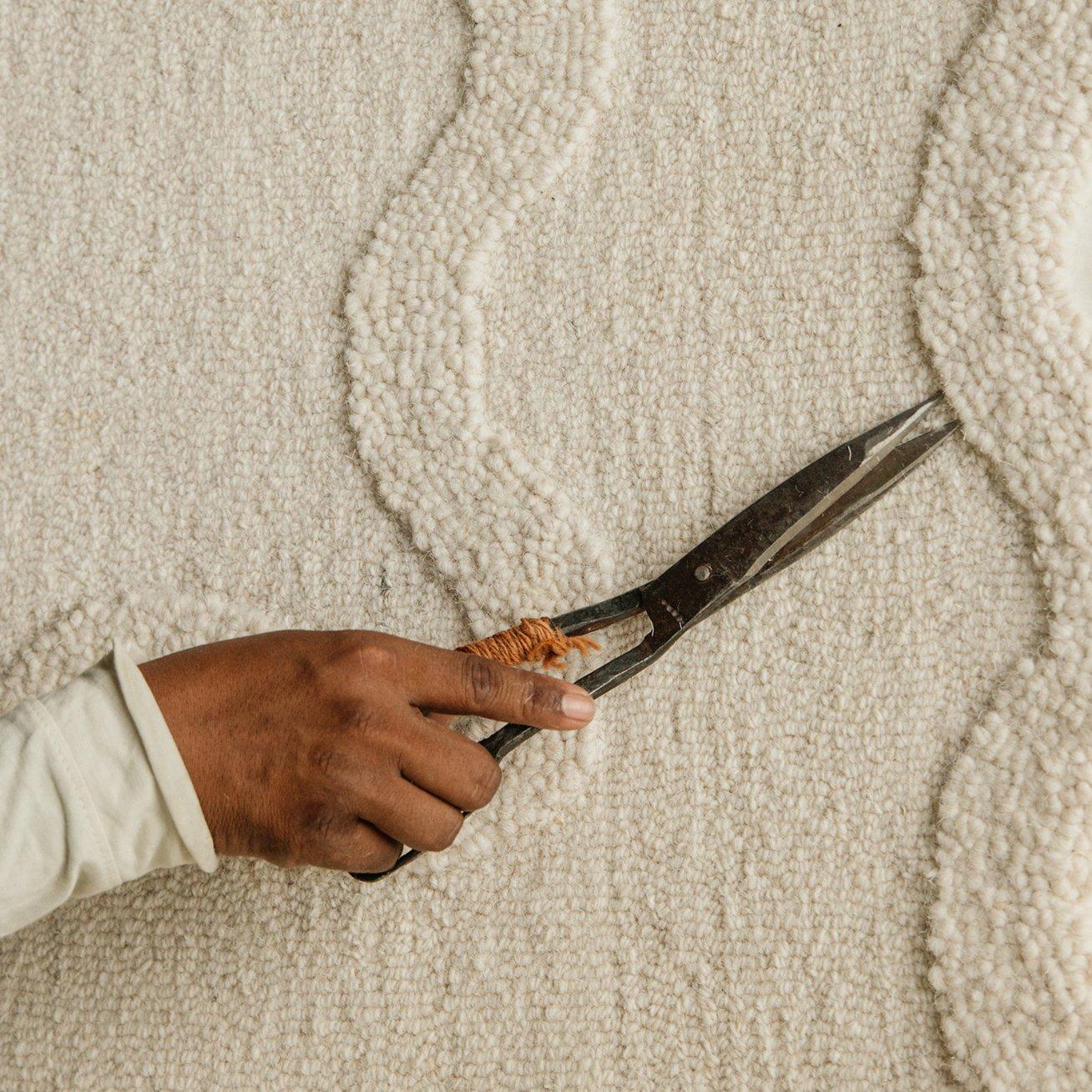
Loop pile, cut pile, and high and low construction
Different tufting techniques create distinct surface textures and tactile qualities:
- Hand-tufted loop construction: uncut yarn loops create a firmer, denser texture with visible structure and dimensional surface definition.
- Hand-tufted cut pile: the loops are cut to produce a softer, smoother, and more velvety texture with greater visual softness.
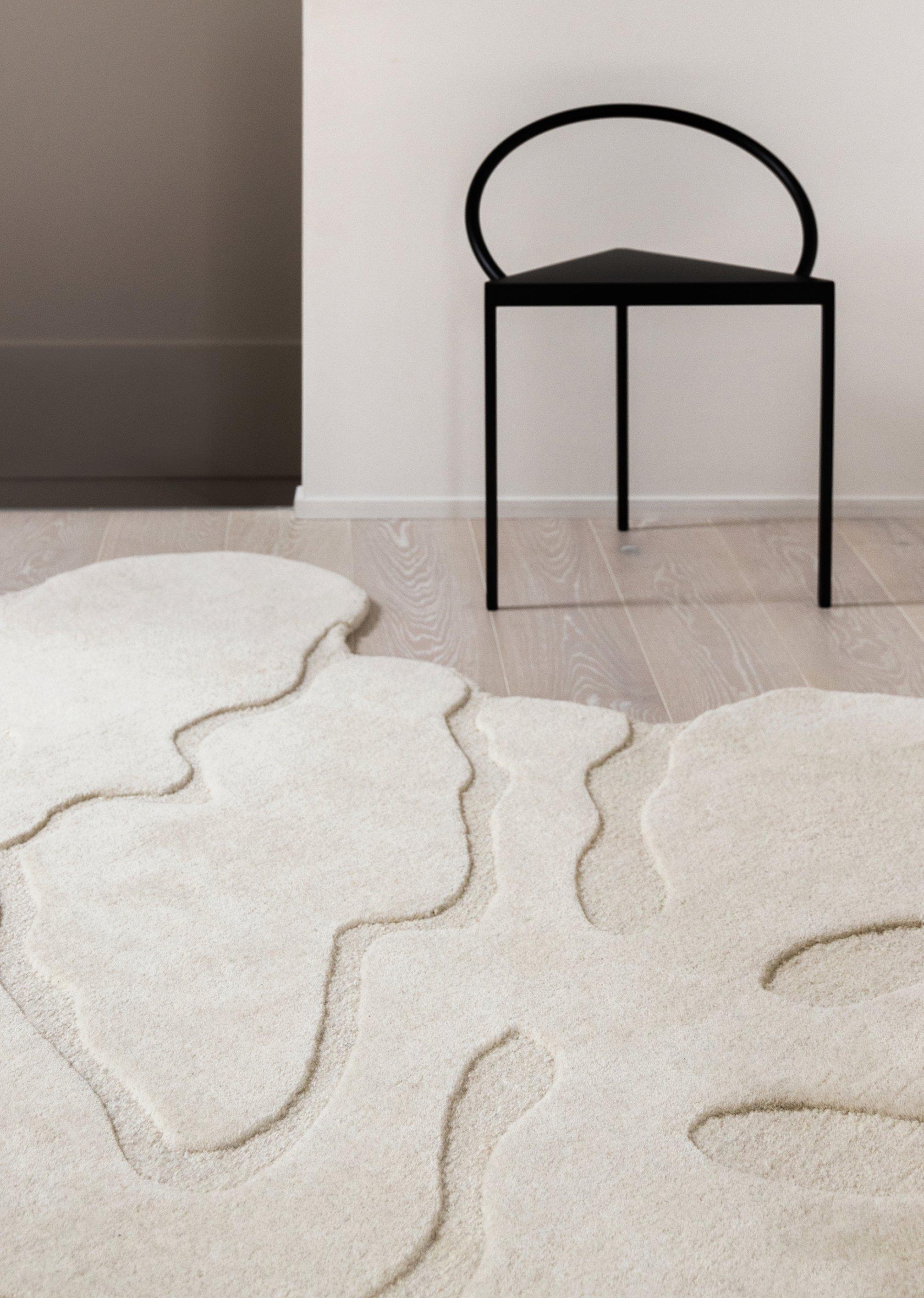
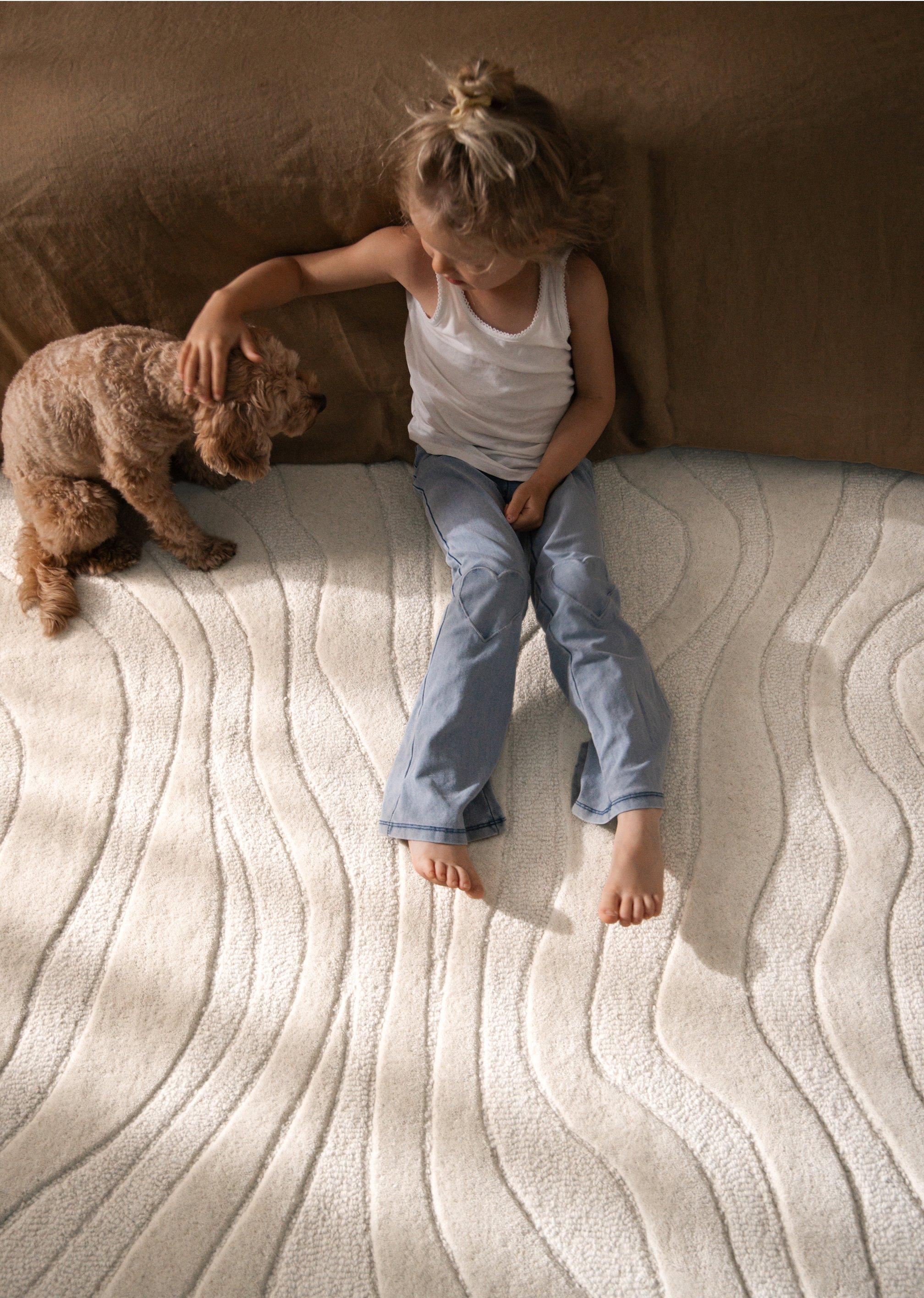
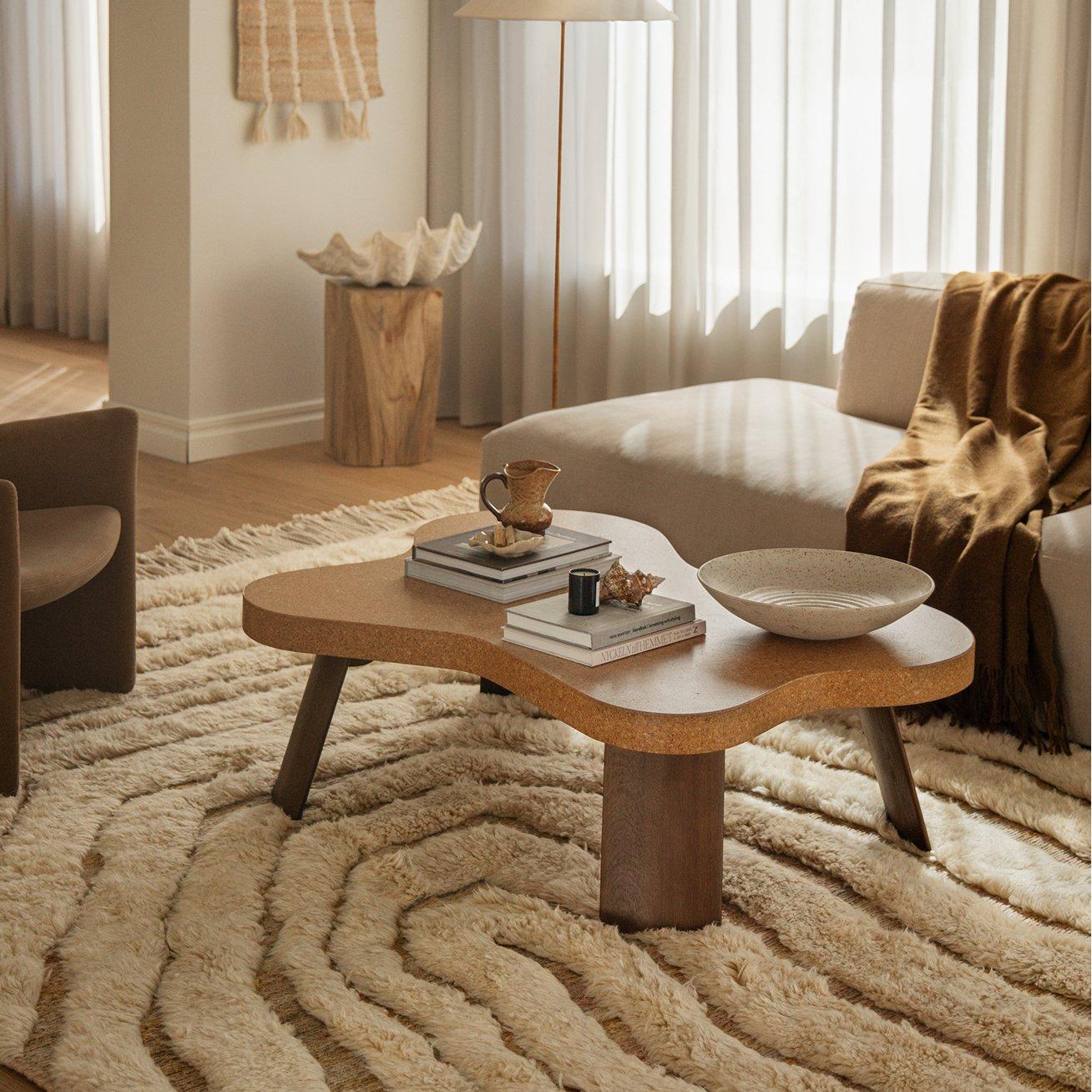
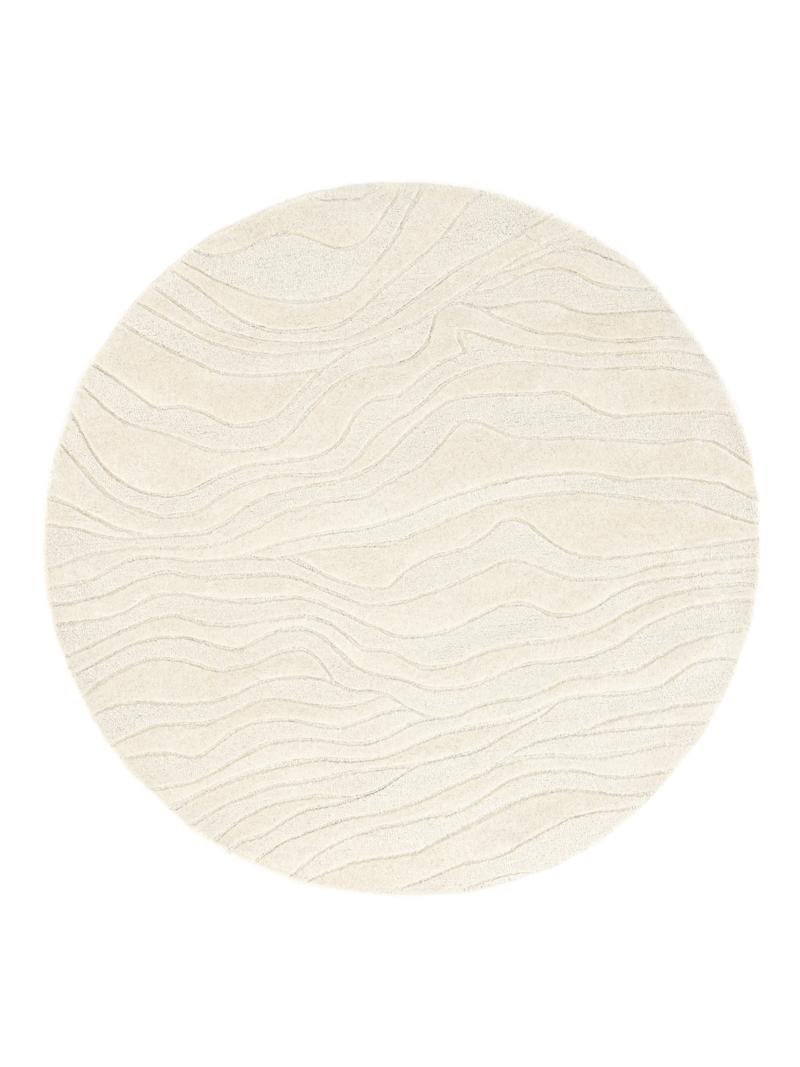
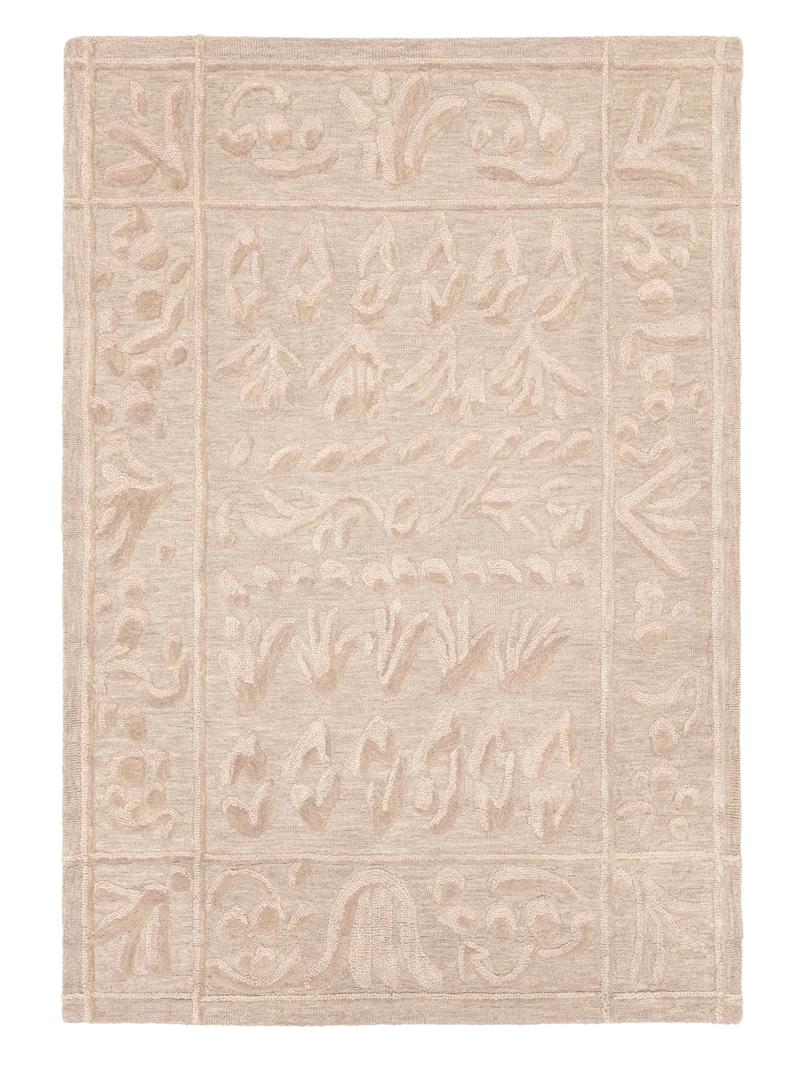
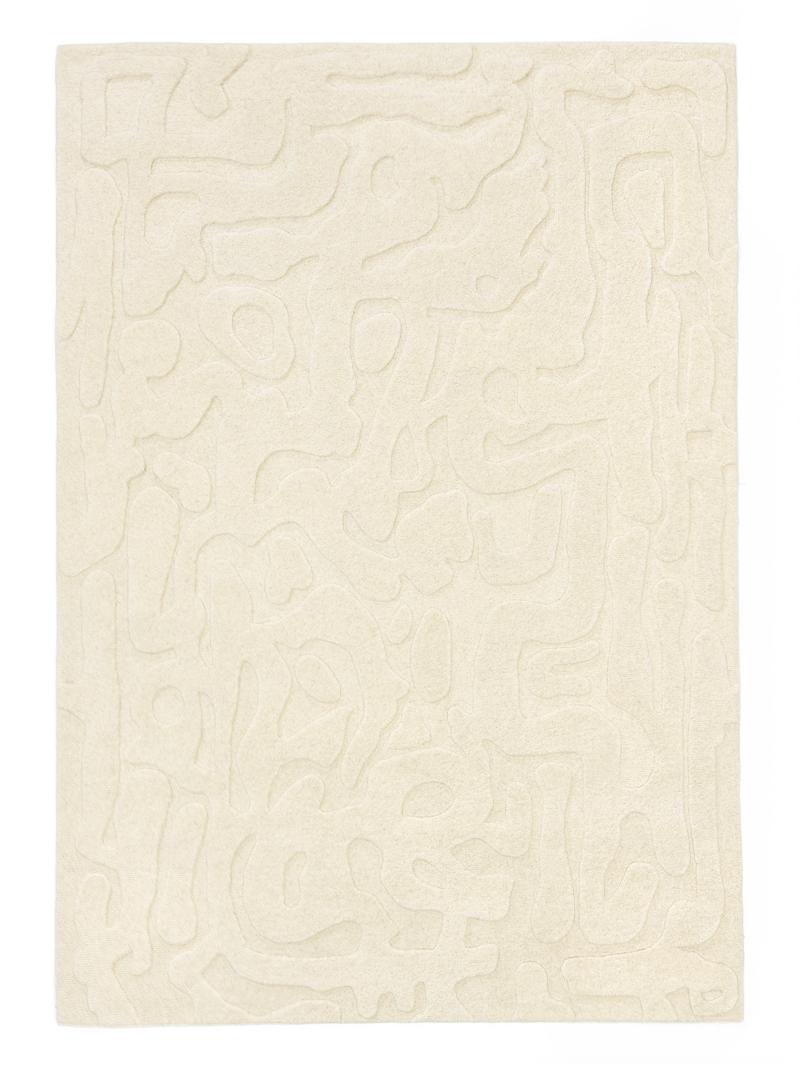
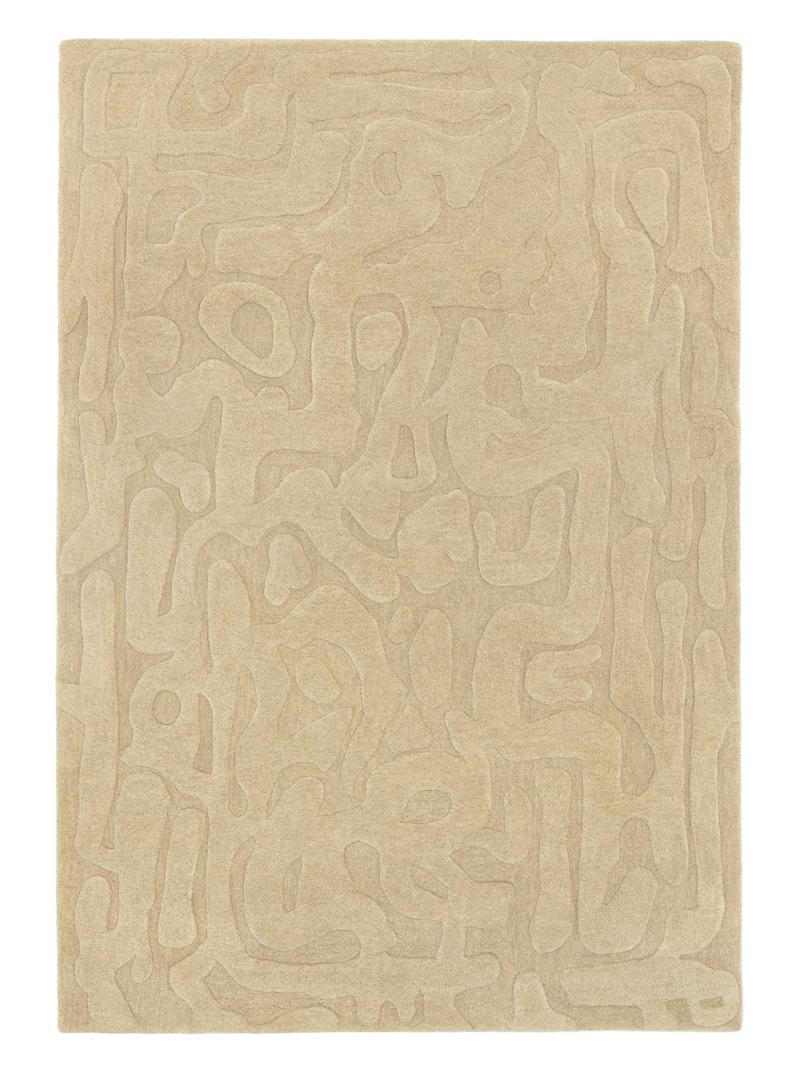
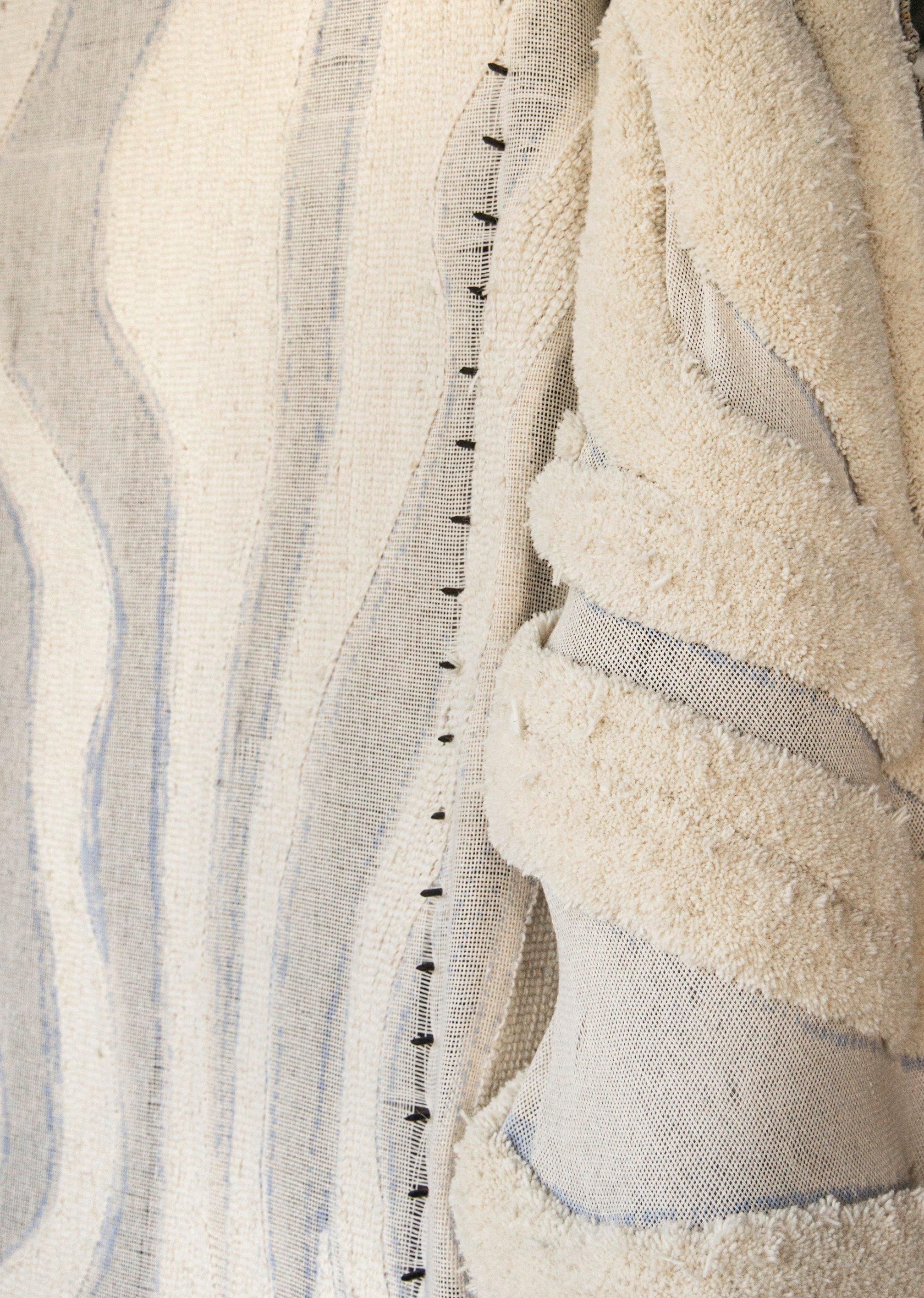
Many rugs combine both techniques within a single design, using contrasts between loop and cut areas to create depth, pattern variation, and textural movement. This is known as a high and low construction, where loop pile sits lower and denser, cut pile rises above it, catching light differently and creating a sculpted, relief-like surface. Explore our range of high and low rugs at Rugvista.
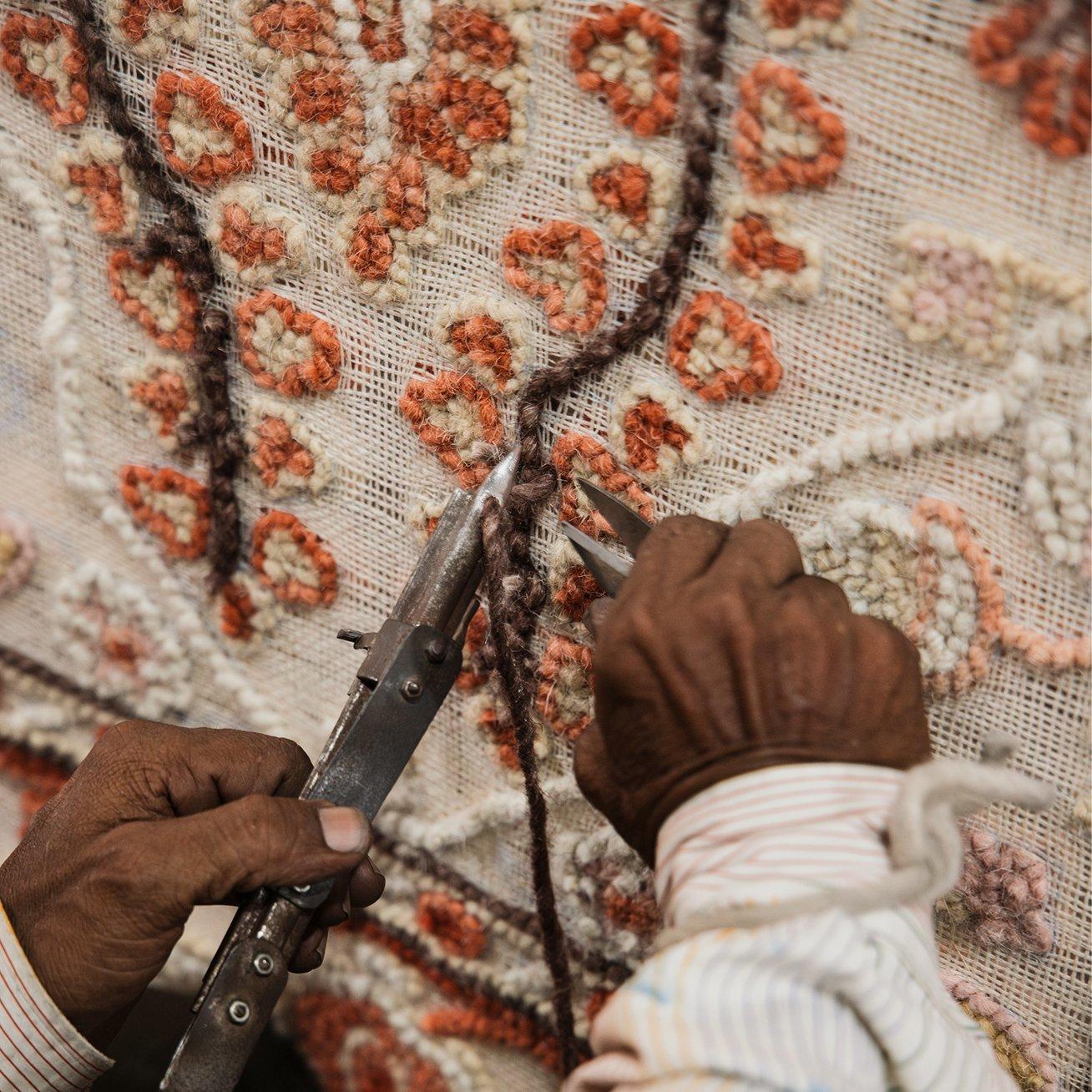
Natural variation and handmade character
Because every pass of the tufting gun is guided by hand, subtle variations naturally emerge — slight differences in density, organic pattern edges, and tonal shifts from hand-dyed yarn. These textural differences are not imperfections, but part of the authentic character of something crafted by hand through skilled tufting craftsmanship.
Washing, drying, and finishing a hand-tufted rug
Once tufting is complete, the rug moves through a series of finishing stages that refine its texture, appearance, and final character. After washing, it is laid flat to dry naturally, allowing the fibres to relax and settle evenly — preserving the tonal variation created during yarn dyeing and tufting.
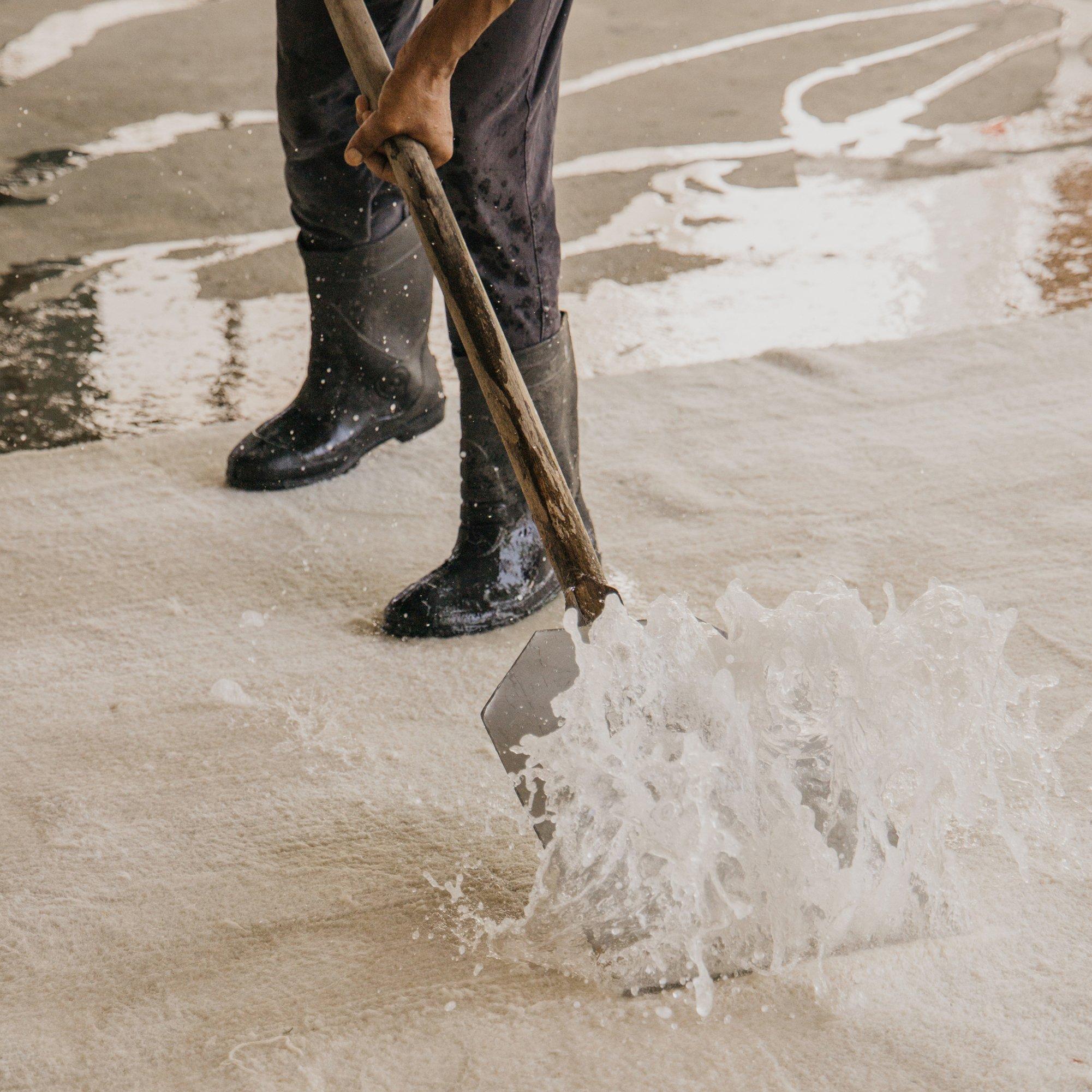
The washing process
Washing removes excess latex, residual dye, and fibres left from tufting. Beyond cleaning the surface, it allows the colours to settle and reveal their full depth. For rugs made with hand-dyed yarn, this stage enhances the natural abrash effect — subtle tonal shifts and organic colour movement that contribute to the rug’s artisan-made appearance
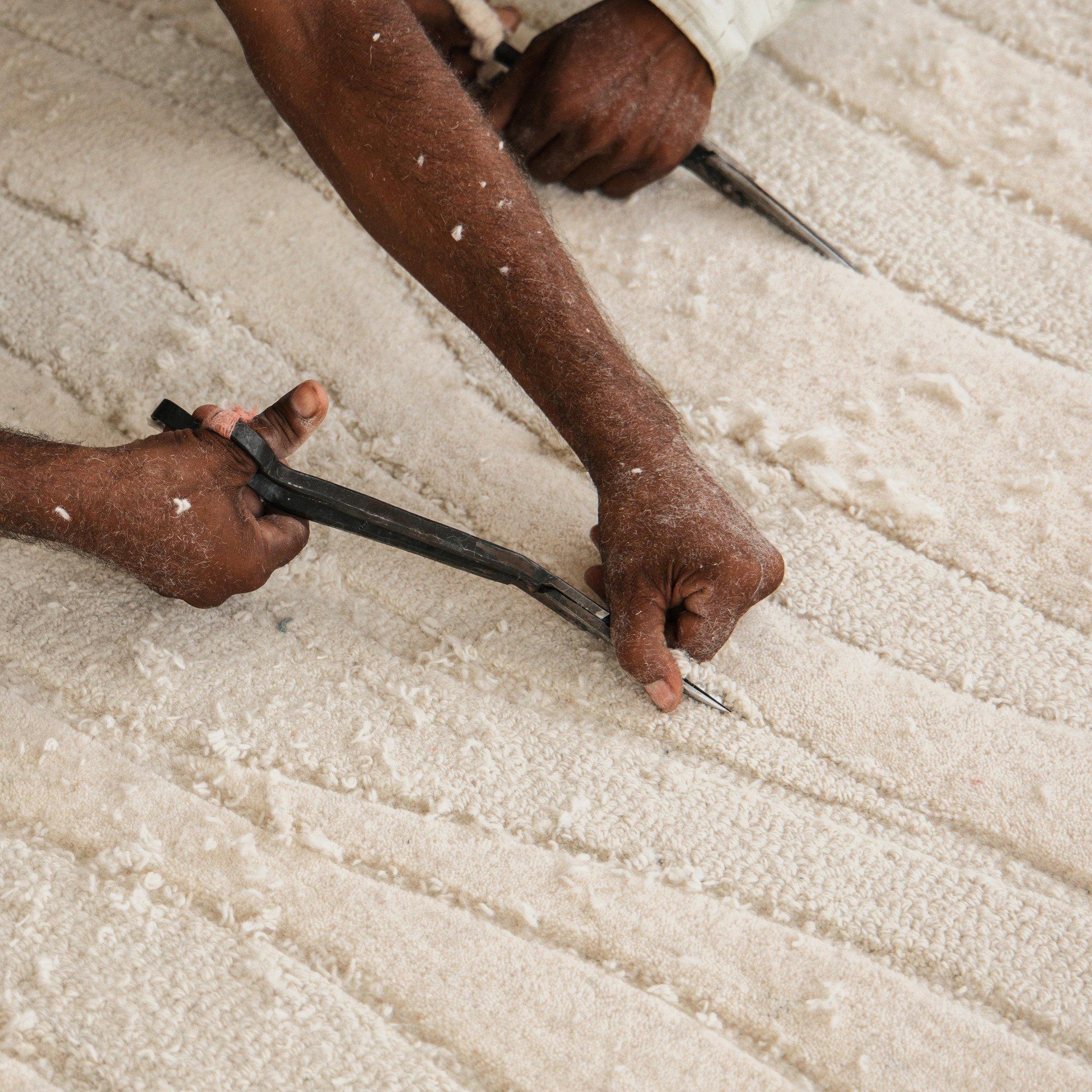
Hand carving
Many hand-tufted rugs undergo hand carving once the pile has dried. Skilled artisans use carving tools to define pattern edges, sculpt raised areas, and create deliberate differences in pile height, adding depth, shadow, and dimensional texture to the surface.
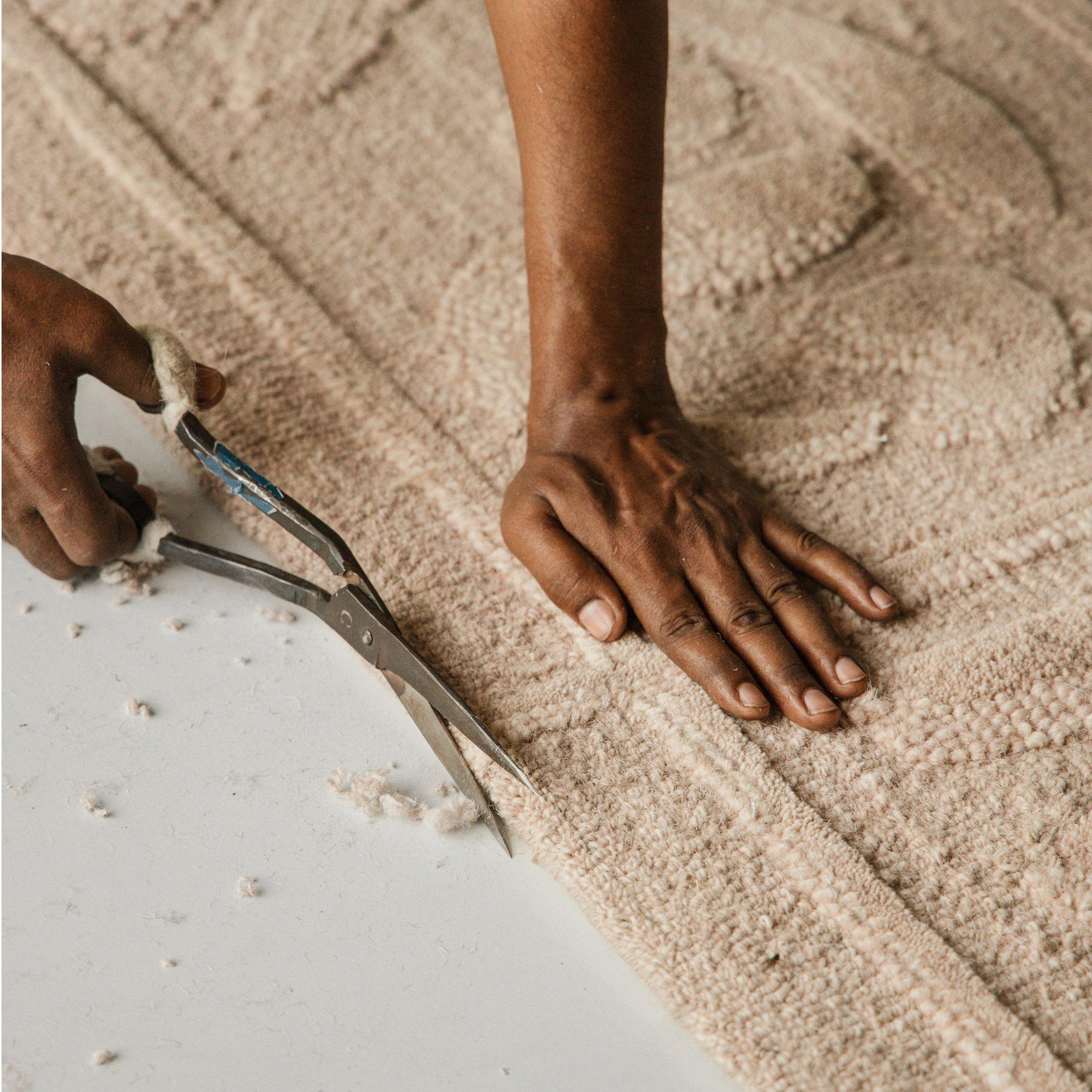
Precision shearing and hand-finished detailing
Shearing trims excess yarn to an even height, improving surface definition and bringing clarity to the overall design. After shearing, artisans carry out a detailed finishing inspection, correcting minor irregularities, refining edges, and adjusting loose tufts. Where fringes are included, they are secured and hand-finished individually. These details are completed entirely by hand, giving each hand-tufted rug its own character and presence.
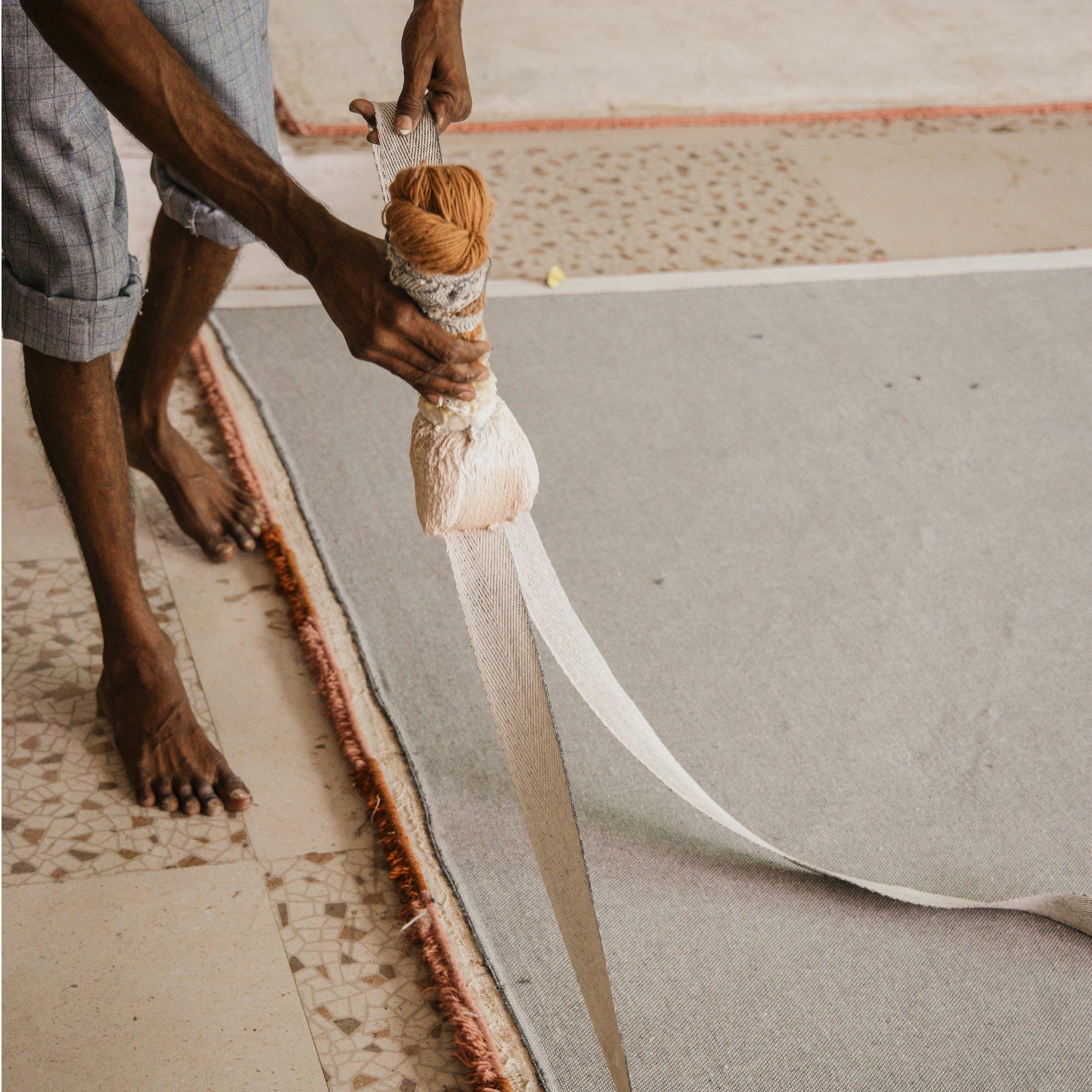
Backing and finishing
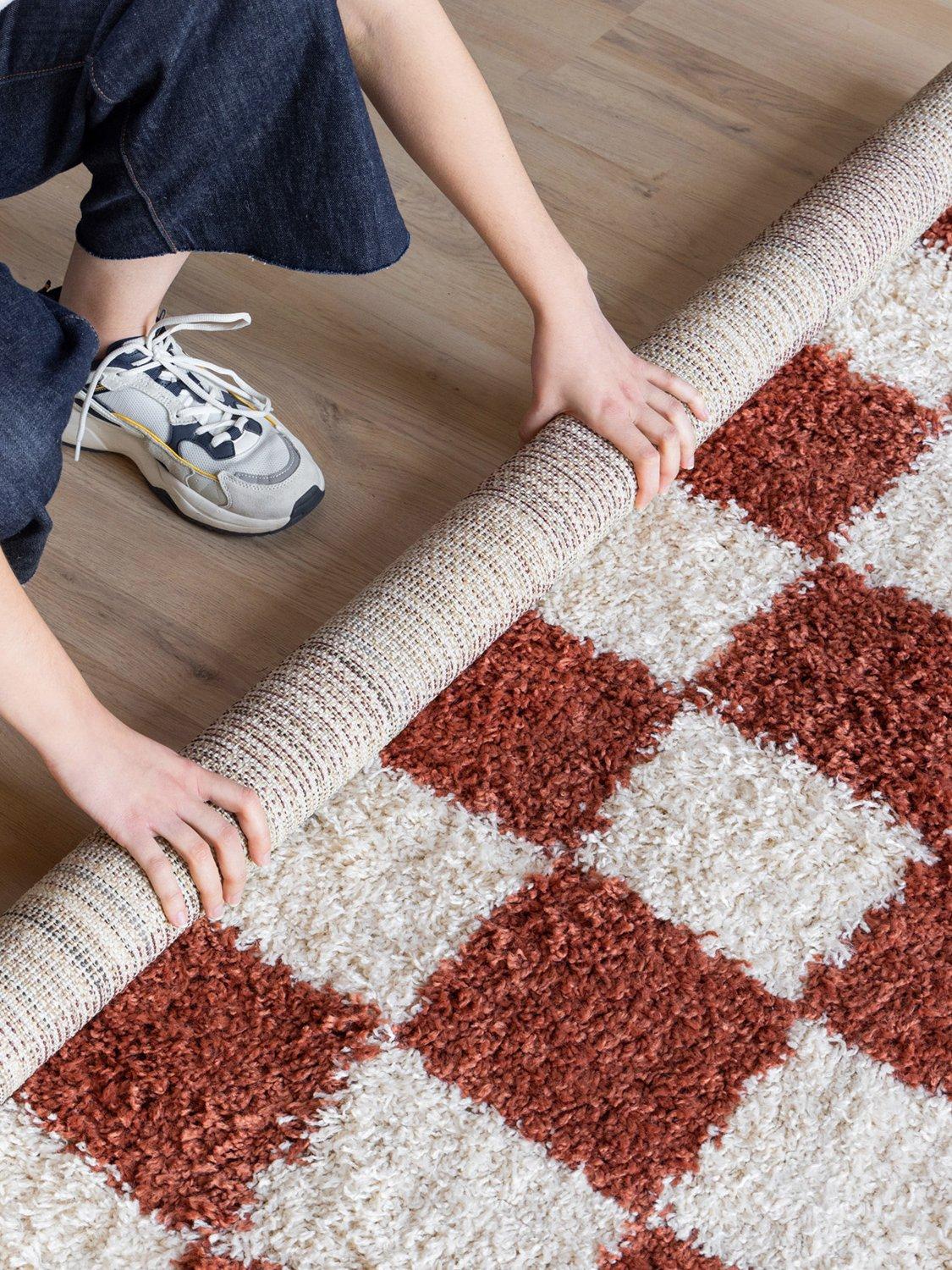
Once the pile is complete, latex is applied to the underside of the canvas to bind and secure the tufted yarn. A cotton backing is then added to reinforce the structure and protect it from daily wear. The rug is then stretched on a frame to ensure it lies flat and holds its shape over time. The back is fixed and sealed for long-term stability, and edges and grip points are finished by hand, giving the rug clean lines and a secure feel underfoot.
Browse our full range of hand-tufted rugs, available in loop pile, cut pile, and high and low constructions.
What makes a hand-tufted rug unique in your home
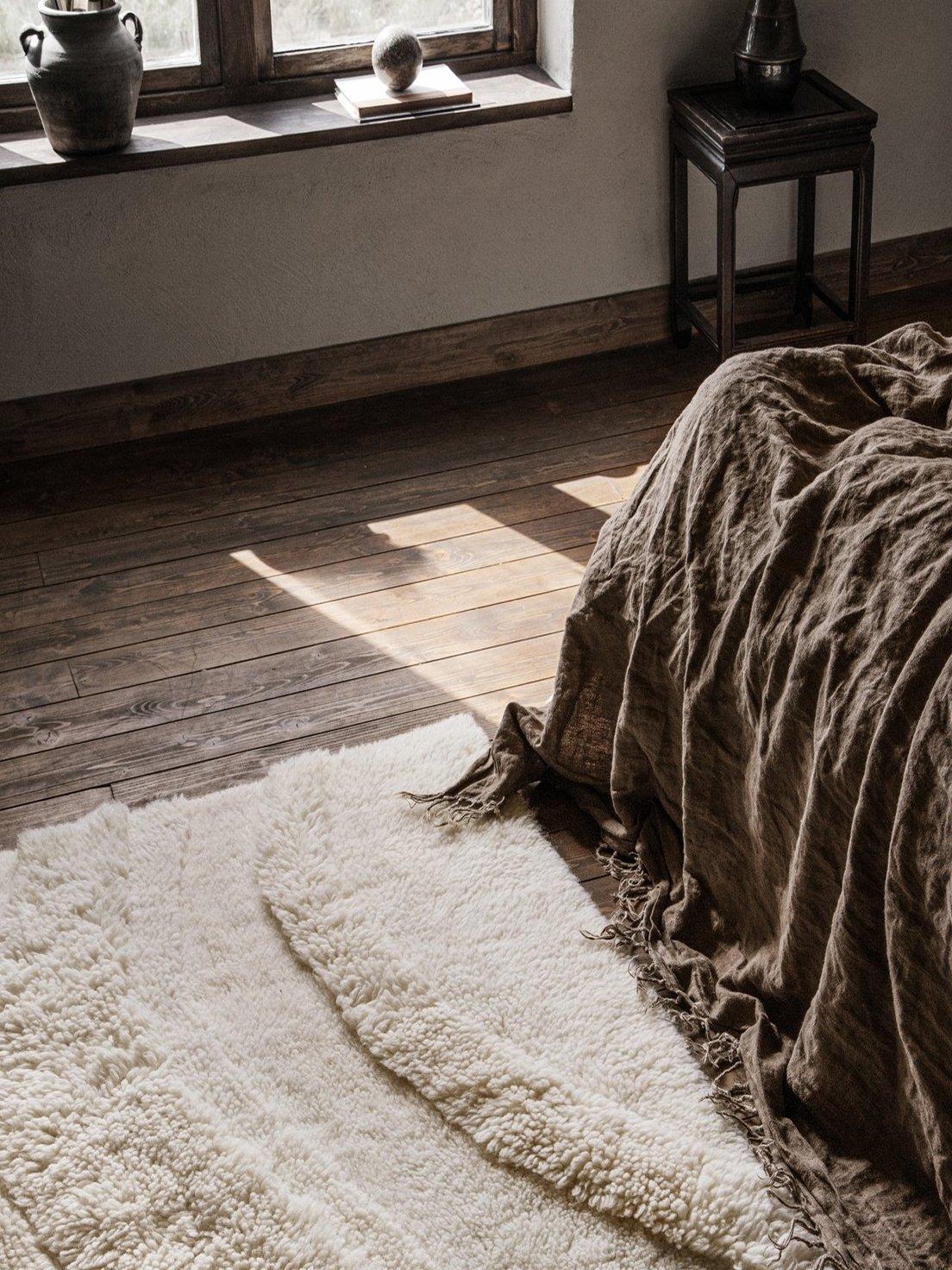
Hand-tufted rugs bring warmth, texture, and individual character into a space — subtle natural variations, layered pile textures, and artisan finishing details that create a soft and personal atmosphere.
Texture and comfort underfoot
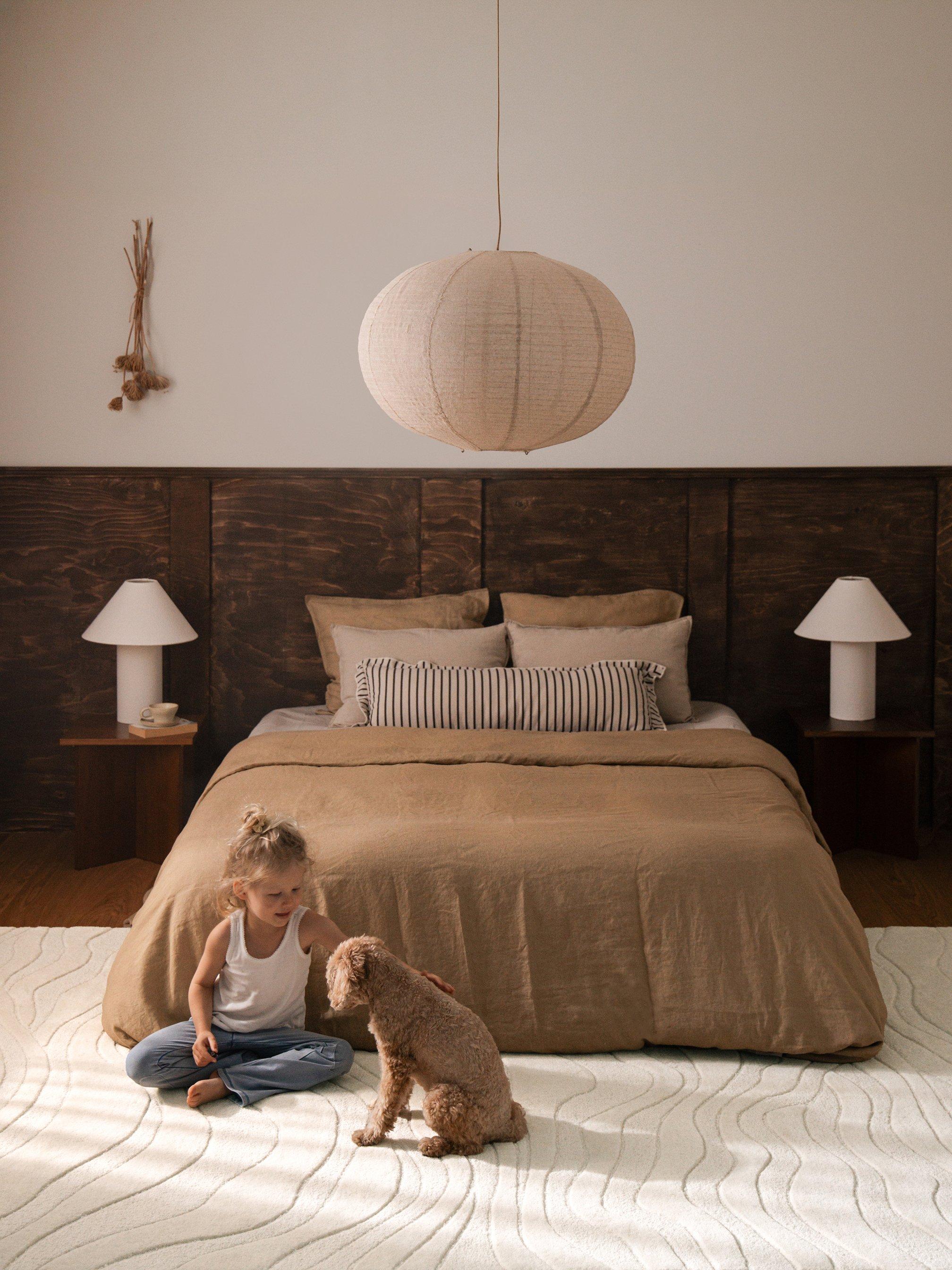
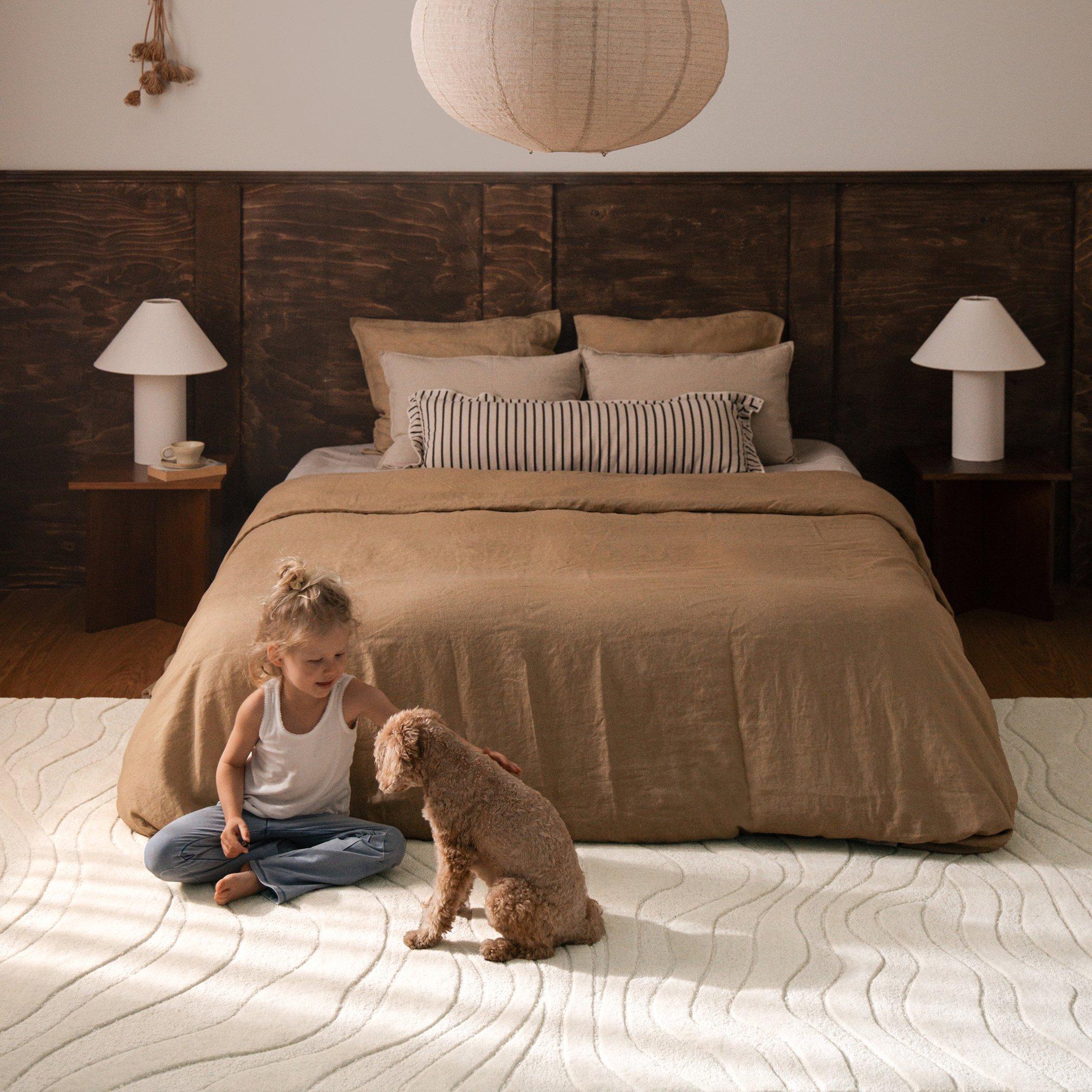
Loop pile adds structure and durability, making it well suited to living rooms and everyday use. Cut pile creates a denser, more cushioned surface that works especially well in bedrooms and quieter spaces where warmth underfoot matters most. Together, the two constructions offer a tactile depth that is both visible and felt.
Natural variation and artisan-made character
Hand-dyed yarn, organic tonal shifts, and subtle abrash effects give each rug its own visual identity. Because every stage of production is guided by hand, no two hand-tufted rugs are ever completely identical.
Crafted by hand, designed to last
From the first pass of the tufting gun to the final trim, each rug carries the visible marks of skilled craftsmanship and careful finishing.
Hand-tufted vs other rug types
Hand-tufted rugs
- Crafted by skilled artisans using a hand-guided tufting gun
- Available in loop pile, cut pile, and high and low constructions
- Mid-range price point with genuine handmade character
Hand-knotted rugs
- Each knot is tied entirely by hand; production takes months to years
- Dense pile construction with intricate detailing and natural variation
- Premium price point reflecting the time and skill involved
Machine-made rugs
- Fully automated production with consistent, uniform construction
- Digitally controlled colour with little natural variation or individual character
- Typically lower in price than handloom and hand-knotted rugs
Frequently asked questions about hand-tufted rugs
Hand-tufted means a rug is made by a skilled artisan using a hand-operated tufting gun to push yarn through a stretched canvas backing. The tufter controls speed, direction, and pressure across the entire design, giving each rug subtle variations and individual detailing that machine-made rugs cannot replicate.
Different pile constructions create different surface qualities:
- Loop pile: yarn loops remain intact, creating a firmer, more textured surface with visible structure.
- Cut pile: loops are sheared to produce a softer, more plush surface with a smoother finish.
Many hand-tufted rugs combine both techniques to create contrast, depth, and visual movement within the same design.
Yes. Latex is applied between the canvas and cotton backing to secure the yarn in place, and the even pile surface ensures long-term resilience. With regular hoovering, prompt cleaning of spills, and occasional rotation, a well-made hand-tufted rug will maintain its texture and appearance for many years. An anti-slip is recommended to protect both the rug and the floor.
Look for subtle variations in pile texture and density, organic tonal shifts from hand-dyed yarn, textural contrast between loop and cut pile areas, hand-carved detailing, and a cotton backing with latex applied between the canvas and backing. These details are the marks of genuine handmade craftsmanship.
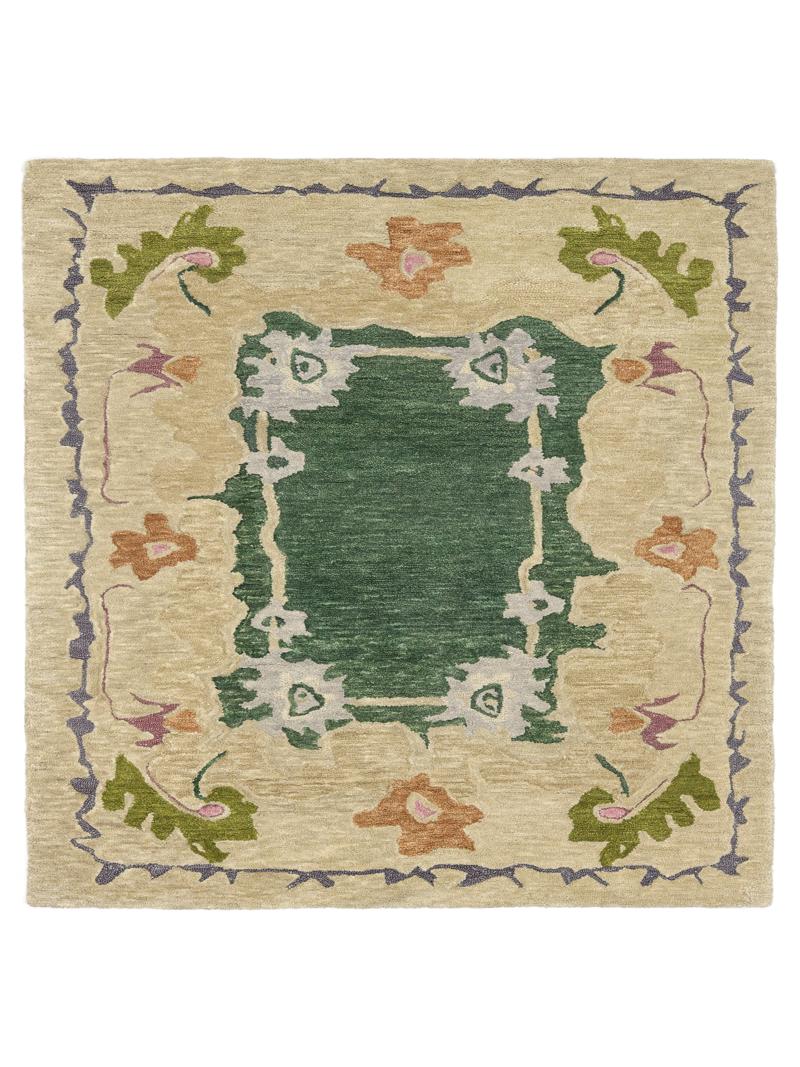
Yes. Artisans use carving tools to create deliberate variations in pile height, define pattern edges, and sculpt raised areas — adding shadow, movement, and three-dimensional detail that would not appear in a flat, uniform pile. The effect is especially noticeable in geometric and floral designs, where carved lines help emphasise pattern definition and handcrafted texture.
A high and low rug combines loop pile and cut pile within the same design to create deliberate contrasts in surface height. Loop areas sit lower and denser; cut pile rises above them, producing a sculpted, dimensional effect. The artisan places these transitions to follow the lines of the pattern through construction technique and skilled carving. The result is a rug with real visual depth that changes with the light.
Shop hand-tufted rugs at Rugvista
Our hand-tufted rugs are selected for their quality of construction and genuine artisan character — each one made by skilled tufters using hand-dyed yarns and careful hand finishing. For tactile surfaces, natural colour variation, and individual expression, explore our full collection of handmade rugs at Rugvista.